At a stop sign, some markings may be missing. In what order do you choose where to stop?
Ontario M1 overview
Ontario M1: Regulatory signs
Stop, yield, school zone and railway crossbuck shapes, green-ring and red-slash signs, turn and lane controls, stopping, standing and parking zones, community safety zones and HOV lanes.
- No sign-up
- Every answer explained
- Independent · not a government site
- 26 questions
- Topic drill
0/26
Study reference: MTO Driver's Handbook (online edition, 2026), Ch. 3 Traffic signs and lights — Signs: special shapes, regulatory signs, HOV signs
All 26 questions in this test
Every question and its answer choices. The correct answers and explanations appear when you take the test above.
At a stop sign, some markings may be missing. In what order do you choose where to stop?
- Sidewalk edge, stop line, crosswalk, intersection edge
- Intersection edge, crosswalk, stop line, sidewalk edge
- Crosswalk, stop line, intersection edge, sidewalk edge
- Stop line, crosswalk, sidewalk edge, intersection edge
You are approaching an intersection and see this sign. What does it tell you?
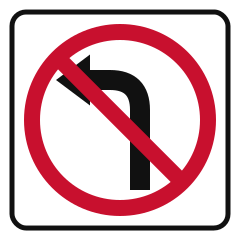
- Left turns only on a green arrow
- You may not turn left here
- The road curves to the left ahead
- The left lane ends ahead
You face this sign where your road joins a busy street. What does it require?

- Merge at your current speed without looking
- Let traffic in or near the intersection go first
- Go first, because you have the right-of-way
- Stop every time, even if the street is empty
An arrow sign like this is posted at a corner. What does it tell you about that street?

- The street ends just ahead
- You must turn right at the corner
- Traffic on it moves both ways
- All traffic on it moves the arrow's way
Your motorcycle is in the centre lane as you near this overhead sign. Which movements are allowed from your lane?
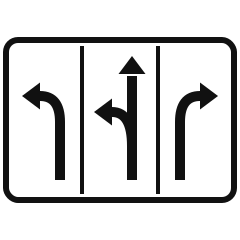
- A right turn only
- Straight through only
- A left turn or straight through
- Any direction, after signalling
What is not allowed where this sign is posted?

- Driving straight through
- Turning to go back the way you came
- Changing lanes in the intersection
- Turning right on a red light
You ride up to this sign at a quiet rural crossroad. What must you do?

- Come to a full stop and wait until the way is clear
- Slow down and roll through if nobody is coming
- Sound your horn and continue with caution
- Stop only if a vehicle is coming from the right
Between two signs like this one, when may you stop your motorcycle?
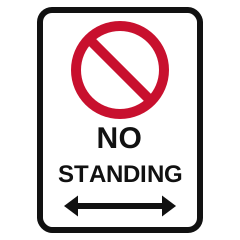
- To park for up to 15 minutes
- Only while loading or unloading cargo
- Never, for any reason
- Only while loading or unloading passengers
Ahead, a city bus at its stop flashes its left signal. The yield sign on its back applies to you. What do you do?
- Pass the bus quickly before it moves
- Let the bus pull back into the lane
- Sound your horn so the driver waits
- Go around it on the shoulder
What does this sign mean?

- One-way road, enter slowly
- Stop and yield to oncoming traffic
- Road closed to motorcycles only
- Do not enter this road
A sign at an intersection forbids right turns on a red light. The light is red. What do you do?
- Turn right if no pedestrians are crossing
- Turn left instead while it is red
- Wait for the green light before turning right
- Turn right after a complete stop
You see this green-ringed sign on a northern road in winter. What does it allow?
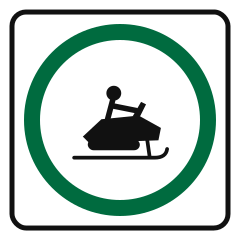
- Snowmobiles may park here only
- A snowmobile trail crosses ahead
- Snowmobile rentals are nearby
- Snowmobiles may travel on this road
Who may use a lane marked with this diamond sign?
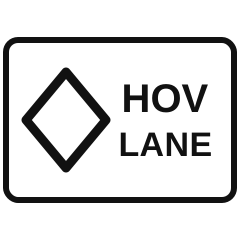
- Trucks over 4,500 kg
- Any vehicle with its lights on during off-peak hours
- Buses or vehicles with the set number of people
- Motorcycles and scooters only
Your scooter is slower than other traffic on a multi-lane road with a sign telling slow traffic to keep right. Where do you ride?
- In whichever lane is emptiest
- In the right-hand lane
- On the paved right shoulder
- In the left-hand lane
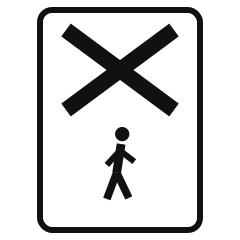
What should you do when you see this X-shaped sign ahead?

- Stop only if a train is already in view
- Slow down, look both ways and be ready to stop
- Speed up so you spend less time on the tracks
- Keep going unless a gate has come down
On a regulatory sign, what does a green circle around a symbol mean?
- The activity shown is not allowed
- The sign is only a suggestion
- You may or must do what is shown
- The activity is allowed only at night
Riding into town, you pass this five-sided fluorescent sign. What is coming up?

- A hospital entrance
- A park with a bike path crossing the road
- A pedestrian crossover
- A school zone, so watch for children
On a multi-lane highway with no centre median, a sign tells drivers to stop for school buses. Who must stop when a bus's signals flash?
- Only drivers of trucks and buses
- Only drivers behind the bus
- Only drivers in the bus's own lane
- Drivers coming from both directions
What does this sign tell you to do?

- Keep to the right of the traffic island
- Turn right at the next corner or driveway
- The road curves right ahead
- The right lane ends soon
What must you be ready to do when you see this sign?
- Stop and yield to pedestrians
- Sound your horn to warn walkers
- Speed up to clear the crossing
- Yield only to children
You are stuck behind a slow car on a road with this sign. What does the sign mean?

- Pass only on the right shoulder
- Pass only if the car is under the limit
- Two lanes merge into one ahead
- Passing is not allowed on this road
You ride into an area marked by this sign. Why does it matter?
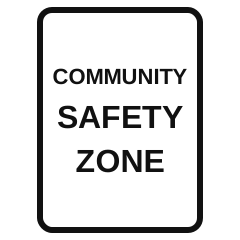
- Using your horn is not allowed
- Fines for traffic offences are higher there
- Motorcycles are banned during school hours
- The speed limit is always 30 km/h
What is a lane marked with this sign meant for?
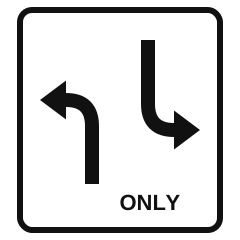
- U-turns in either direction
- Buses and taxis only
- Passing slower vehicles
- Left turns from both directions
A school-zone speed limit sign has yellow lights on it. When does its lower limit apply?
- Only when children can be seen
- Only between 8 a.m. and 4 p.m.
- Only on weekdays in September
- When the yellow lights are flashing
You see this sign at the curb. Can you pull over briefly to let a friend off your bike?
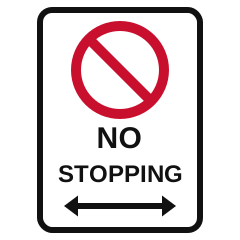
- Yes, if you stay on the motorcycle
- Only if your four-way flashers are on
- No, you may not stop there even for a moment
- Yes, for up to three minutes
In the area marked by this sign, for what reason may you stop?
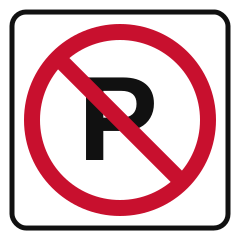
- To let your engine cool down
- To wait for a parking space
- To load or unload passengers or goods
- To check a map on your phone for a minute or two
Regulatory signs: key rules to remember
Our summary of what the official handbook says on this topic, in our own words. Read it before or after the practice questions above, then check the original chapter. Read the official chapter ↗
special shapes
- Stop: eight sides, red with white letters. Full stop. Where to stop, in order: stop line; else crosswalk; else edge of sidewalk; else edge of intersection. Go only when clear.
- School zone: five sides, fluorescent yellow-green, black symbols. Slow down, extra caution, watch for children.
- Yield: triangle, white centre, red border. Let traffic in or near the intersection go first; stop if needed.
- Railway crossing: X shape, white with red outline. Slow down, look both ways, be ready to stop.
Regulatory signs
- Must be obeyed. Usually rectangular/square, white or black background.
- Green ring = you may/must do the activity. Red circle + slash = activity not allowed.
- No stopping: may not stop even for a moment between the signs.
- No standing: may stop only to load/unload passengers.
- No parking: may stop only to load/unload passengers or merchandise.
- Other prohibitions: no left turn, no straight through, no U-turn, no right turn on red, no left turn during posted times, no bicycles, no pedestrians, do not enter, do not pass.
- Keep right of traffic island; slow traffic keep right on multi-lane roads; keep right except to pass where climbing/passing lanes exist.
- Community safety zone: special risk to pedestrians; traffic offences carry increased fines.
- School zone speed sign: lower limit during school hours, obey it when the yellow lights flash.
- School bus sign on multi-lane highways with no median: traffic from both directions must stop for flashing school bus signals.
- Lane-use signs (overhead or on pavement) set the direction each lane must travel.
- One-way; pedestrian crossover (be ready to stop and yield); two-way left-turn lane; reserved lanes (buses, taxis, 3+ occupants, bicycles).
- Sign on back of transit buses: yield to a bus leaving a dedicated stop once it signals.
- Snowmobiles may use this road (green ring).
HOV signs
- HOV lane: only buses or passenger vehicles with the posted minimum number of occupants.
- No lane changes into or out of the HOV lane in the marked area.
Other topics
- Warning, construction and guide signsYellow diamond warning signs for curves, hills, lane endings, crossings and hazards, orange temporary condition signs in work zones, green guide and exit signs, and the slow-moving vehicle sign.
- Traffic lights and pedestrian signalsGreen, yellow and red lights, turns on red, advance green and turn arrows, flashing lights and beacons, blank signals during a power failure, transit priority signals and pedestrian walk signals.
- Pavement markingsYellow and white lines, solid and broken lines for passing, continuity lines, stop lines, crosswalks, lane arrows, pedestrian crossovers and markings around fixed objects.
- M1, M2 and M licensingWho needs a class M licence, the M1 and M2 conditions, minimum times at each level, licence expiry, safety courses, L and M conditions for mopeds, scooters and three-wheelers, and rules for visitors and new residents.
- Helmets and protective gearOntario's helmet law, what makes a helmet approved and well fitted, and choosing jackets, pants, rain suits, boots and gloves that protect you and help others see you.
- Alcohol, drugs and fatigueZero blood-alcohol for novice riders, how alcohol and medication affect balance and judgment, cellphone and screen rules, fatigue, cold and strong emotions.
- Controls and pre-ride checkThe six primary controls, secondary controls such as the kill switch, choke and fuel valve, and the checks to make before every ride: tires, brakes, lights, mirrors and stands.
- Mounting, starting and shiftingGetting on and off the stands, starting a motorcycle, moped or scooter, using the clutch and gears, riding posture, starting on a hill and parking.
- Turning, cornering and brakingSlowing before a turn, leaning and looking through it, counter-steering, using both brakes, the front brake's share of stopping power, and choosing speed and tire track in curves.
- Seeing, being seen and signallingScanning ahead, mirror checks and shoulder checks, making yourself visible, collisions at intersections and with left-turning cars, horn use, turn signals and flashing your brake light.
- Space cushion and sharing the roadThe two-second following distance, space when stopped, side space and passing vehicles, tailgaters, and riding near trucks and buses: blind spots, wide turns, roll-back, spray, turbulence and bus bays.
- Lane positionTire-track blocking positions, which track to use in the curb, passing and centre lanes and in turns, slower mopeds and scooters, lane changes, lane sharing, lane splitting and passing on the shoulder.
- Freeway drivingWho may use freeways, safe speed and scanning, following distance, entering from a ramp, changing lanes near ramps and leaving at an exit.
- Road hazards, night and weatherLeft-turning cars, starting on a hill, riding at night and overdriving your headlight, slippery and uneven surfaces, gravel, gratings, railway crossings, rain, fog, cold and black ice.
- Group riding, passengers and cargoStaggered formation and single file, passing as a group, who may carry a passenger, adjusting the motorcycle and your riding for a passenger, and loading cargo safely.
- EmergenciesEmergency braking and ABS, swerving, running wide in a turn, riding over objects, animals, tire blowouts, stuck throttle, wobble, broken chain, engine seizure and pulling off the road.
- Insurance, registration and maintenanceCompulsory insurance and fines, plates and permits, the six-day reporting rules, buying and selling a used motorcycle, safety standards certificates, weekly maintenance checks and risky modifications.