Ontario G1 overview

Ontario G1: Warning signs

Yellow diamond warning signs for curves, hills, merges, lane endings, crossings, animals and hazards, plus the slow-moving vehicle and long commercial vehicle placards.

  • 45 questions
  • Topic drill
0/45
Warning signs · Question 1Score 0/0
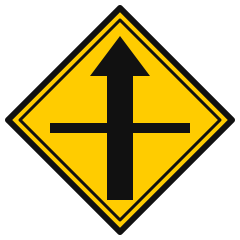
Yellow diamond with a thick upward arrow crossed by a thinner horizontal line

What does the larger arrow on this intersection-ahead sign show?
Study reference: MTO Driver's Handbook (online edition, 2026), Ch. 3 Traffic signs and lights — Signs: warning signs, other signs

All 45 questions in this test

Every question and its answer choices. The correct answers and explanations appear when you take the test above.

  1. What does the larger arrow on this intersection-ahead sign show?

    Yellow diamond with a thick upward arrow crossed by a thinner horizontal line
    1. Which road is a one-way street
    2. Which traffic has the right-of-way
    3. Which way the detour goes
    4. Which road has a stop sign
  2. An underpass warning sign shows a measurement. Who needs to pay most attention to it?

    1. Motorcycle riders
    2. Drivers of tall vehicles
    3. Drivers of small cars
    4. Drivers towing a short trailer
  3. Who does the 'share the road' sign warn to take extra care on the section ahead?

    1. Only cyclists
    2. Only motorists
    3. Both motorists and cyclists
    4. Only drivers of trucks and buses
  4. You see this sign. What is ahead?

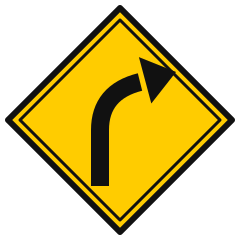
    Yellow diamond with an arrow that curves gently to the right
    1. A slight bend in the road
    2. A right lane ending
    3. A winding road with several curves
    4. A sharp right turn
  5. What should you do when you see this sign?

    Yellow diamond with a small red eight-sided shape above an upward arrow
    1. Stop right at this sign
    2. Slow down; a stop sign is ahead
    3. Speed up before the light changes
    4. Yield to traffic on your left
  6. A vehicle ahead shows this sign on its back. What does it tell you?

    Orange triangle with a dark red border
    1. It travels at 50 km/h or less
    2. It travels at 30 km/h or less
    3. It travels at 40 km/h or less
    4. It travels at 60 km/h or less
  7. What does this sign warn you about?

    Yellow diamond with a wavy S-shaped arrow pointing up
    1. A steep hill ahead
    2. A slippery road ahead
    3. A winding road ahead
    4. A sharp left turn ahead
  8. What does this sign warn you about?

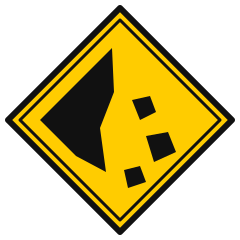
    Yellow diamond with a black cliff on the left and several small black shapes beside it
    1. A steep drop beside the road
    2. A quarry entrance ahead
    3. Rocks may have fallen on the road
    4. A gravel road ahead
  9. What does this sign mean?

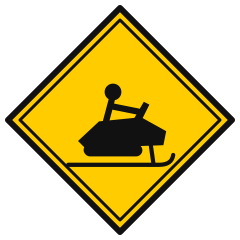
    Yellow diamond with a black snowmobile and rider
    1. Snowmobiles cross this road
    2. Snowmobiles may use this road
    3. Snowmobiles are banned here
    4. Snowmobile rental ahead
  10. What does this sign warn you about?

    Yellow diamond with a black line rising into two rounded humps
    1. A narrow bridge ahead
    2. A railway crossing ahead
    3. A bump or uneven road
    4. A steep hill ahead
  11. At the point this sign shows, two roads join into one. Who is responsible for a smooth, safe merge?

    Yellow diamond with a straight upward arrow and a curved line joining it from the left
    1. Only drivers on the joining road
    2. Drivers on both roads
    3. Only drivers on the main road
    4. Whichever driver is going faster
  12. Which way do the arrows on a roundabout-ahead sign go, and why?

    1. Counter-clockwise, the way traffic flows
    2. Clockwise, toward the exits
    3. Clockwise, the way traffic flows
    4. Counter-clockwise, toward the exits
  13. You see a school crossing sign. Whose directions should you follow there?

    1. The driver of the car ahead
    2. Any adult standing at the corner
    3. The school principal or a teacher on duty
    4. A crossing guard or safety patroller
  14. What does this sign warn you about?

    Yellow diamond with a black traffic light showing red, yellow and green
    1. A railway crossing ahead
    2. A school zone ahead
    3. Traffic lights ahead
    4. A fire station ahead
  15. What does the checkerboard border on this sign warn you about?
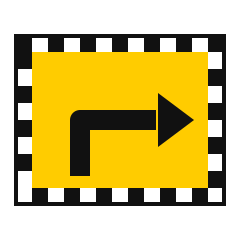
    Yellow rectangle with a black-and-white checkered border and a bent black arrow pointing right
    1. A railway crossing ahead
    2. A dangerous sharp turn; slow down
    3. A race track entrance ahead
    4. A construction zone ahead
  16. This marker is on an obstacle near the edge of the road. On which side may you safely pass it?

    Tall yellow rectangle with black diagonal stripes sloping down from upper left to lower right
    1. Either side
    2. Neither side; stop first
    3. The right side
    4. The left side
  17. How long can a long commercial vehicle (LCV) be?

    1. Up to 30 metres
    2. Up to 25 metres
    3. Up to 40 metres
    4. Up to 50 metres
  18. What does this sign warn you about?

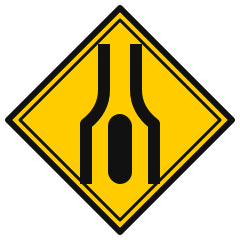
    Yellow diamond with two vertical lines that flare outward at the top and bottom
    1. A lift bridge ahead
    2. The pavement narrows ahead
    3. A divided highway begins ahead
    4. A narrow bridge ahead
  19. What should you do when you see this sign?
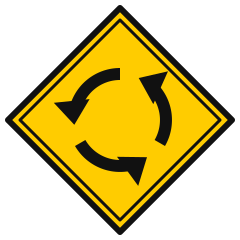
    Yellow diamond with three curved arrows forming a circle
    1. Prepare for a detour route
    2. Reduce speed for a roundabout ahead
    3. Watch for a merge from the right
    4. Get ready to make a U-turn
  20. What does this sign tell you?

    Yellow diamond with two lines coming together below a central island
    1. The left lane ends ahead
    2. A divided highway begins ahead
    3. A one-way road begins ahead
    4. The divided highway ends ahead
  21. Besides warning of a railway crossing ahead, what extra information does this sign give?
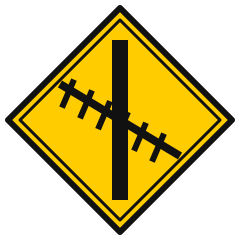
    Yellow diamond with a vertical road crossed at a slant by a track with cross ties
    1. Whether the crossing has gates
    2. The angle at which the tracks cross
    3. How far away the crossing is
    4. How many trains use the tracks
  22. What should you do when you see this sign?

    Yellow diamond with a car and two wavy skid marks behind it
    1. Slow down; slippery when wet
    2. Steer onto the shoulder
    3. Turn on your high beams to see better
    4. Speed up to keep traction
  23. What does the number on the small plate under this sign tell you?

    Yellow diamond with a curved arrow, above a small yellow plate reading 50 km/h
    1. The maximum safe speed for the curve
    2. The minimum speed for the curve
    3. The distance to the curve in metres
    4. The new speed limit for the road
  24. What does this sign tell you?

    Yellow diamond with two lines that split apart around a central island
    1. A traffic island ahead; keep left
    2. A divided highway begins; keep right
    3. A divided highway ends; keep right
    4. The road splits; pick either side
  25. What does this sign mean?

    Yellow diamond with two arrows side by side, one pointing up and one pointing down
    1. Divided highway begins
    2. Passing lane ahead
    3. One-way road ahead
    4. Two-way traffic ahead
  26. What does this sign warn you about?

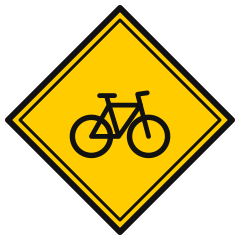
    Yellow diamond with a black bicycle symbol
    1. A bicycle lane ending
    2. No bicycles allowed
    3. An official bicycle route
    4. A bicycle crossing ahead
  27. What should you do when you see this sign?
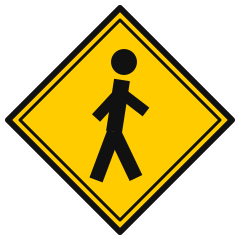
    Yellow diamond with a black walking figure
    1. Watch for pedestrians and share the road
    2. Expect a pedestrian-only street
    3. Stop until a crossing guard waves you on
    4. Sound your horn as you pass
  28. You see a warning sign for a hidden school bus stop. What should you do?

    1. Slow down and watch for children and the bus
    2. Keep your speed; the stop is hidden
    3. Stop and wait until a bus arrives
    4. Honk to warn children you are coming
  29. You see this sign ahead. What might you need to do?

    Yellow diamond with a truck on a steep black slope
    1. Turn on your hazard lights
    2. Shift to a lower gear
    3. Move to the left lane
    4. Switch to high beams
  30. What does this placard on the back of a truck tell you?
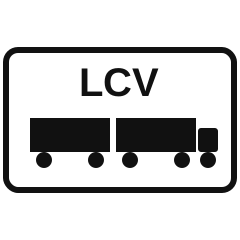
    White rectangular placard with black lettering above a truck pulling two trailers
    1. It is carrying dangerous goods
    2. It is a long double-trailer vehicle
    3. It is a wide load with an escort
    4. It is a slow-moving farm vehicle
  31. A warning sign says drivers on the sideroad ahead don't have a clear view of traffic. What does this tell you?

    1. The sideroad is closed to traffic
    2. You must stop at the sideroad
    3. You must yield to the sideroad
    4. Sideroad drivers may not see you coming
  32. A warning sign shows a bridge that lifts or swings. What is it telling you?

    1. The bridge is closed for repairs
    2. The bridge opens to let boats pass
    3. The bridge has a weight limit
    4. The bridge freezes before the road
  33. You are in the right lane and see this sign. What must you do?

    Yellow diamond with two lines; the right line bends in toward the left one
    1. Speed up and pass on the shoulder
    2. Stop and wait for a gap
    3. Merge safely into the lane on your left
    4. Stay in your lane; others must merge
  34. What does a 'share the road' warning sign ask drivers to do?

    1. Let cyclists use the full lane only at night
    2. Drive in the centre of the lane at all times
    3. Leave safe space for cyclists and other vehicles
    4. Sound the horn before passing a cyclist
  35. You are getting ready to pass an LCV on the highway. What should you plan for?

    1. Its extra length and limited speed
    2. Its sudden bursts of speed
    3. Its tendency to drive on the shoulder
    4. Its short stopping distance
  36. What does this sign warn you about?

    Yellow diamond with a black deer with antlers
    1. Deer regularly cross this road
    2. Hunting is allowed nearby
    3. A farm entrance is ahead
    4. A wildlife park is ahead
  37. What does this sign warn you about?

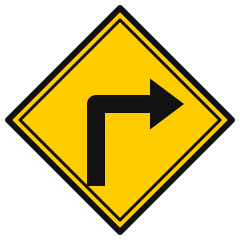
    Yellow diamond with an arrow that bends at a right angle to the right
    1. Right turn only
    2. A sharp bend or turn ahead
    3. A side road on the right
    4. A slight curve ahead
  38. What does this sign warn you about?

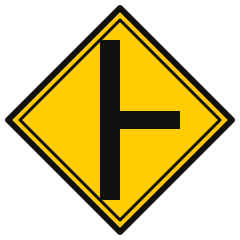
    Yellow diamond with a vertical black line and a shorter line joining it from the right
    1. A road branches off ahead
    2. The right lane ends ahead
    3. A detour to the right ahead
    4. A truck entrance ahead
  39. What shape and colour are most warning signs?

    1. Diamond-shaped and orange
    2. Diamond-shaped and yellow
    3. Rectangular and white
    4. Rectangular and green
  40. A warning sign shows a bus entrance on the right ahead. What should you be prepared to do?

    1. Yield to buses entering the road
    2. Stop until a bus appears
    3. Speed up to get past the bus entrance
    4. Pull into the bus lane
  41. Where is the entrance that this sign warns you about?
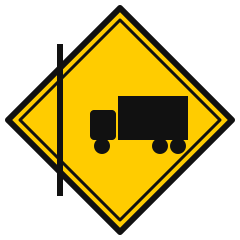
    Yellow diamond with a black truck on the right half and a vertical line on the left
    1. On the right side of the road
    2. On both sides of the road
    3. Straight ahead at a dead end
    4. On the left side of the road
  42. What does this sign warn you about?

    Yellow diamond with two lines that step inward toward each other
    1. The pavement narrows ahead
    2. A lane is closed for work
    3. A narrow bridge ahead
    4. A divided highway ends ahead
  43. Which of these must display a slow-moving vehicle sign when it is on a road?

    1. A farm tractor
    2. A motorcycle
    3. A loaded dump truck
    4. A school bus
  44. After a divided highway begins, what kind of traffic does each of the separated roads carry?

    1. Local traffic only
    2. One-way traffic
    3. Two-way traffic
    4. Trucks only on one side
  45. Signs like this are posted in groups along a road. What are they for?
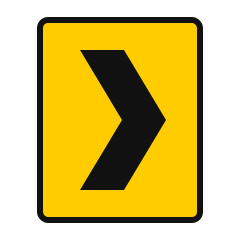
    Yellow rectangle with one large black arrowhead pointing right
    1. Marking a truck entrance
    2. Showing that a lane is ending ahead
    3. Marking a passing zone
    4. Guiding you around a sharp curve

Warning signs: key rules to remember

Our summary of what the official handbook says on this topic, in our own words. Read it before or after the practice questions above, then check the original chapter. Read the official chapter ↗

Warning signs

  • Purpose: warn of dangerous or unusual conditions ahead (e.g. curve, turn, dip, sideroad).
  • Usual look: diamond-shaped, yellow background, black letters or symbols.
  • Narrow bridge ahead.
  • Road branching off ahead.
  • Intersection ahead: the arrow shows which direction of traffic has the right-of-way.
  • Roundabout ahead: reduce speed; counter-clockwise arrows show the direction traffic travels in the roundabout.
  • Hidden sideroad: drivers on the sideroad at the intersection ahead don't have a clear view of traffic.
  • Pavement narrows ahead.
  • Slight bend or curve ahead.
  • Advisory speed tab: posted under a curve warning, shows the maximum safe speed for the curve.
  • Sharp bend or turn ahead.
  • Chevron (arrowhead) signs: posted in groups to guide drivers around sharp curves.
  • Winding road ahead.
  • Lift/swing bridge ahead: bridge lifts or swings to let boats pass.
  • Paved surface ends ahead.
  • Bicycle crossing ahead.
  • Stop sign ahead: slow down.
  • Two-way traffic: share the road with oncoming traffic.
  • Share the road sign: motorists must give safe space to cyclists and other vehicles; also warns motorists AND cyclists to use extra caution on the upcoming section.
  • Slippery when wet: slow down, drive with caution.
  • Hazard marker: hazard close to the road edge; the downward lines point to the side on which you may safely pass.
  • Divided highway begins: separated roads ahead, traffic in both directions; keep to the right-hand road; each road is one-way.
  • Right lane ends: if in the right lane, merge safely with traffic in the lane to the left.
  • Traffic lights ahead: slow down.
  • Steep hill ahead: you may need a lower gear.
  • Merge: two roads going the same direction join into one; drivers on BOTH roads share responsibility for a smooth, safe merge.
  • Snowmobiles cross this road (warning sign; compare the regulatory sign that says snowmobiles may use the road).
  • Divided highway ends: two-way traffic on the same road ahead; keep to the right-hand road.
  • Underpass ahead: take care in a tall vehicle; the sign shows how much room (clearance) there is.
  • Bump or uneven pavement ahead: slow down, keep control.
  • Railway crossing ahead: be alert for trains; the sign also shows the angle at which the tracks cross the road.
  • Checkerboard border sign: sharp turn or bend in the direction of the arrow; the checkerboard border warns of danger; slow down.
  • Deer regularly cross: be alert for animals.
  • Truck entrance: truck shown on the right = entrance on the right side ahead; truck shown on the left = entrance on the left.
  • Ramp advisory: shows the maximum safe speed on the ramp.
  • Pedestrians: watch for them and be ready to share the road.
  • Fallen rock: watch for it and be prepared to avoid a collision.
  • Water may be flowing over the road.
  • Hidden school bus stop ahead: slow down, extra caution, watch for children and for a school bus with flashing red lights.
  • Bus entrance on the right ahead: be prepared to yield to buses entering the road.
  • Fire truck entrance on the right ahead: be prepared to yield to fire trucks entering the road.
  • School crossing signs: watch for children; follow the directions of the crossing guard or school safety patroller.

Other signs (slow-moving vehicle)

  • Shape/colour: orange triangle with a red border.
  • Meaning: the vehicle will travel at 40 km/h or less.
  • Must be displayed (when on a road) by farm tractors, farm implements/machinery, and any vehicle not able to sustain speeds over 40 km/h.
  • Drivers: watch for these vehicles and reduce speed as needed.

Other signs (long commercial vehicle, LCV)

  • Placard on the rear identifies an LCV: a double-trailer truck up to 40 metres long.
  • When preparing to pass one on the highway, anticipate its extended length and limited speed.

Study the Warning signs rules as flashcards →

Other topics

Full practice tests