You have stopped behind a school bus loading children. Which condition must be met before you may drive on?
Ontario G1 overview
Ontario G1 Mock Exam 3
Same format as the real test. Answers stay hidden until you submit. The official time limit is not published; the timer is a practice setting.
- No sign-up
- Every answer explained
- Independent · not a government site
- 40 questions
- untimed
- Pass mark 32/40
0/40
All 40 questions in this test
Every question and its answer choices. The correct answers and explanations appear when you take the test above.
You have stopped behind a school bus loading children. Which condition must be met before you may drive on?
- The driver waves you past the bus
- Thirty seconds have gone by
- The bus moves, its red lights stop and its stop arm retracts
- The children step onto the sidewalk
Why should you avoid following closely behind a bicycle?
- Bicycles throw up loose gravel
- Bicycles cannot stop quickly
- Bicycles must stop at every corner
- Many bicycles have no brake lights
A driver is caught in the warn range for a second time. What penalty applies?
- 90-day suspension and an interlock
- 14-day suspension and a 16-hour treatment program
- 30-day suspension and 6 demerit points
- 3-day suspension and a warning letter
What does this sign mean?
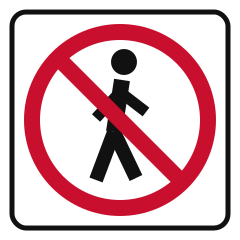
- Pedestrian crossing ahead
- Watch for children playing
- Pedestrians have the right-of-way
- No pedestrians allowed on this road
You are at interchange 250 on a freeway and want to get off at interchange 204. About how far do you have to drive?
- 204 km
- 54 km
- 250 km
- 46 km
How long do demerit points stay on your driving record?
- Three years from the offence date
- Two years from the offence date
- One year from the offence date
- Five years from the offence date
A fully licensed G driver reaches 6 demerit points. What is the result?
- A 30-day suspension
- A licence cancellation
- A warning letter
- A 60-day suspension
A warning sign says drivers on the sideroad ahead don't have a clear view of traffic. What does this tell you?
- The sideroad is closed to traffic
- You must stop at the sideroad
- You must yield to the sideroad
- Sideroad drivers may not see you coming
What does this sign tell you?
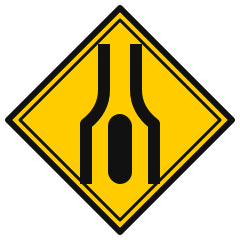
- The left lane ends ahead
- A divided highway begins ahead
- A one-way road begins ahead
- The divided highway ends ahead
When may you turn left on a red light in Ontario?
- Never; left turns on red are illegal
- From a one-way road onto a one-way road
- From a two-way road onto a one-way road
- From any road, if no traffic is coming
A cyclist ahead of you holds their right arm straight out. What are they most likely signalling?
- That they are stopping
- A right turn
- A left turn
- That you may pass
What does this sign warn you about?

- Deer regularly cross this road
- Hunting is allowed nearby
- A farm entrance is ahead
- A wildlife park is ahead
How is a marked crosswalk shown on the road?
- One white line across the road
- Two parallel white lines across the road
- Two parallel yellow lines across the road
- A white X in each lane
You see a warning sign for a hidden school bus stop. What should you do?
- Slow down and watch for children and the bus
- Keep your speed; the stop is hidden
- Stop and wait until a bus arrives
- Honk to warn children you are coming
The light turns yellow just as you reach the stop line and braking hard would not be safe. What should you do?
- Go through the intersection with caution
- Speed up to beat the red light
- Stop past the line, in the crosswalk
- Brake hard and stop in the intersection
What does this placard on the back of a truck tell you?
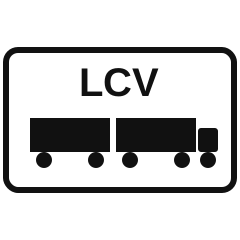
- It is carrying dangerous goods
- It is a long double-trailer vehicle
- It is a wide load with an escort
- It is a slow-moving farm vehicle
When should you turn on your right signal to leave a roundabout?
- After passing the exit before yours
- As soon as you enter the roundabout
- Two exits before the one you want to take
- Only once you are on the exit road
A road has a centre lane marked as a two-way left-turn lane. Which of these is NOT allowed in that lane?
- Entering it shortly before your turn
- Slowing down in it before turning
- Using it to pass slower vehicles
- Waiting there for a gap to turn left
What does the green ring around the arrow on this sign mean?
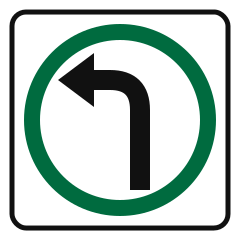
- The action is allowed only at night
- The action is a suggestion only
- The action shown is not allowed
- The action shown is allowed or required
What does this sign warn you about?
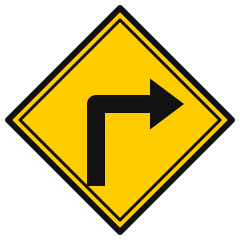
- Right turn only
- A sharp bend or turn ahead
- A side road on the right
- A slight curve ahead
Your car starts to skid on an icy road. What should you do?
- Accelerate and steer the opposite way
- Brake hard and hold the steering wheel perfectly straight
- Pull the parking brake firmly
- Ease off the pedals and steer where you want to go
There is a solid line along the left side of your lane. What does it mean?
- It is unsafe to pass
- You may pass if it is clear
- You must turn left soon
- Your lane is ending ahead
In a construction zone, with no instruction to merge or change lanes, which action should you avoid?
- Obeying lower speed limits
- Changing lanes
- Watching for workers
- Being ready for sudden stops
A pedestrian is still in your turning path when the hand symbol starts flashing. What should you do?
- Turn without checking whether another pedestrian is following
- Turn; the hand means they must stop
- Sound your horn to hurry them along
- Wait; they still have the right-of-way
You are following another car at night. Within what distance must you use low beams?
- Within 30 metres
- Within 150 metres
- Within 60 metres
- Within 100 metres
Your tires have plenty of tread but are 12 years old. Why is this a problem?
- Aged tires may fail unexpectedly
- Only tread depth matters
- They are fine if never used
- Old tires grip better in winter
What does this sign tell you?
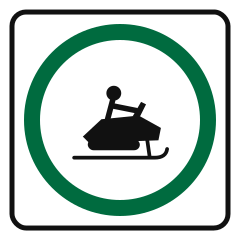
- A snowmobile trail crosses here
- Snowmobiles are banned on this road
- Snowmobiles may use this road
- Snowmobile parking area ahead
After a divided highway begins, what kind of traffic does each of the separated roads carry?
- Local traffic only
- One-way traffic
- Two-way traffic
- Trucks only on one side
For an ordinary car without an exemption, how many people, including the driver, are normally required in an Ontario provincial-highway HOV lane?
- Four or more
- Two or more
- One or more
- Three or more
Which habit helps your tires last longer?
- Mixing tire types
- Braking hard often
- Driving with low pressure
- Rotating them regularly
In the study summarized in the MTO handbook, how much farther did drivers texting or changing music travel before reacting to a hazard?
- 28 metres
- 50 metres
- 8 metres
- 15 metres
The driver ahead holds their left arm out, bent downward at a right angle. What does this signal mean?
- They are slowing down or stopping
- They want you to pass them
- They are about to turn left
- They are about to turn right
According to the handbook, which drivers hit far more pedestrians at signalled crosswalks?
- Drivers backing up
- Drivers turning right
- Drivers turning left
- Drivers going straight
A toddler weighs 15 kg and rides in a forward-facing car seat. Besides the seatbelt or UAS strap, what must be attached?
- A locking lap belt
- Nothing else is needed
- The seat's tether strap
- A second seatbelt
What does this sign tell you?

- A traffic island ahead; keep left
- A divided highway begins; keep right
- A divided highway ends; keep right
- The road splits; pick either side
What increased crash risk does the research summarized in the MTO handbook associate with texting or browsing on a phone?
- 10 times
- 20 times
- 5 times
- 2 times
What does a stop line look like?
- A single white line across the road
- Two parallel white lines across the road
- A white X painted in each lane
- A single yellow line across the road
You are thinking of passing on a broken line, but the line becomes solid a short way ahead. What must you judge?
- Whether the car ahead waves you on
- Whether oncoming drivers flash their lights
- Whether you can finish before it turns solid
- Whether you can pass faster than the limit
Near an interchange, you see continuity lines on the left side of your lane. What does this generally mean?
- Your lane is ending or exiting
- You may pass on the right only
- Your lane continues unaffected
- A bus lane begins just ahead
How far ahead must your headlights be strong enough to light up objects?
- 150 metres
- 60 metres
- 110 metres
- 200 metres
Keep practising
- Ontario G1 Mock Exam 1 – 40 QuestionsUntimed practice · answers explained
- Ontario G1 Mock Exam 2 – 40 QuestionsUntimed practice · answers explained
- Ontario G1 Mock Exam 4 – 40 QuestionsUntimed practice · answers explained
- Ontario G1 Mock Exam 5 – 40 QuestionsUntimed practice · answers explained
- Ontario G1 Practice Test 140 questions with explanations
- Ontario G1 Practice Test 240 questions with explanations
- Ontario G1 Practice Test 340 questions with explanations
- Ontario G1 Practice Test 440 questions with explanations