Some B.C. school zone signs show 50 km/h. When does that limit apply?
BC Class 7 overview
BC Class 7: Regulatory signs
Stop, yield and speed signs, school and playground zone signs, crosswalk signs, lane use and turn control signs, parking signs and reserved lane signs.
- No sign-up
- Every answer explained
- Independent · not a government site
- 44 questions
- Topic drill
0/44
Study reference: Learn to Drive Smart (ICBC, March 2026 edition), Ch. 3 Signs, signals and road markings — Regulatory signs, school, playground and crosswalk signs, lane use signs, turn control signs, parking signs, reserved lane signs, pp. 29–32
All 44 questions in this test
Every question and its answer choices. The correct answers and explanations appear when you take the test above.
Some B.C. school zone signs show 50 km/h. When does that limit apply?
- 8 a.m.–5 p.m. on school days, when children are on the road or shoulder
- 8 a.m.–5 p.m. on school days, whether or not any children are present
- Only during recess and lunch breaks on school days
- Dawn to dusk every day, but only when children are on the road or shoulder
What can happen to a driver who ignores a regulatory sign?
- Nothing, because regulatory signs are only advice
- They can be penalized under the Motor Vehicle Act
- Only a warning unless a crash happens
- A fine only if the sign is on a highway
You are driving slower than regular traffic on a road with two lanes in your direction. A sign tells slower drivers what to do. Where should you be?
- On the paved shoulder
- In the right lane
- In the left lane
- In whichever lane is emptier
Which three features can help you work out the meaning of a sign you have never seen?
- Its colour, its size and its border
- Its size, its height and its location
- Its shape, its colour and its message
- Its shape, its height and its post
It is 2 p.m. on a Saturday and you pass a playground zone sign. Does the 30 km/h limit apply?
- No, it applies only from 8 a.m. to 5 p.m.
- Only if children are on the roadway
- No, it applies only on school days
- Yes, it applies every day from dawn to dusk
What does this sign mean?
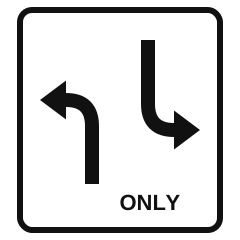
- Vehicles from both directions must turn left; no through traffic
- Traffic in this lane may go straight or turn left
- Buses from both directions may use this lane
- Left turns are not allowed here for traffic coming from either direction
A reserved lane sign for buses and HOVs may include a number. What does that number show?
- The speed limit in the lane
- The fine for misusing the lane
- The hours when trucks may use it
- How many people must be in an HOV
What does this sign mean?

- Two-way traffic ahead
- Do not pass
- No trucks allowed
- Keep right except to pass
This sign has a tab underneath listing hours of the day. What does it mean?
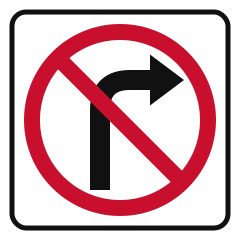
- No right turns during the posted times
- No right turn on a red light at any time
- Only buses may turn right at those times
- Right turns allowed only during the posted times
What does this sign require you to do?

- Come to a full stop every time at the line
- Give way to pedestrians but not to vehicles
- Merge only after the other traffic has stopped for you
- Give way to other vehicles and crossing pedestrians
A no-stopping sign shows a range of hours. When does the restriction apply?
- Only from 8 a.m. to 5 p.m.
- Only on weekends and holidays
- Only during the posted times
- At all hours, every day
On a road with this sign, which lane should you use?
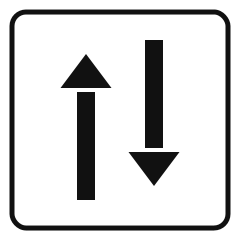
- Stay left except when turning right
- Keep right unless you are passing
- Use either lane as you choose
- Drive near the centre line
You are in the middle lane under this overhead sign. What may you do at the intersection?
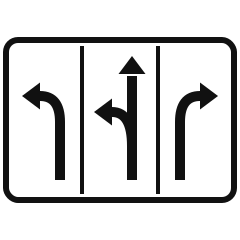
- Turn left only
- Turn right only
- Go straight through or turn left
- Go straight through or turn right
Who may use a parking space marked with the disabled parking sign?
- A vehicle displaying the permit and carrying a person with disabilities
- Any vehicle carrying a person with disabilities, permit or not
- Any driver stopping for less than 15 minutes
- Any vehicle displaying the permit, even if the permit holder is not with it
A sign on a mountain highway says winter tires or chains are required. When does that rule apply?
- Only for commercial trucks
- Only when snow is actually falling
- Whenever the sign is displayed
- Only from December to February
A school zone sign has a tab showing 30 km/h. In the standard B.C. example, when does that 30 km/h limit apply?
- Dawn to dusk every day
- 8 a.m. to 4 p.m. on school days
- 7 a.m. to 6 p.m. every day
- 8 a.m. to 5 p.m. on school days
What can happen if you park illegally in B.C.?
- Your licence is suspended at once
- Only a written warning the first time
- Penalty points but never a fine
- You may be fined, towed, or both
A sign tells you to stay off a road during major disasters. Why?
- It is reserved for local residents and deliveries
- It is closed every winter for snow
- It floods during heavy rain storms
- It may be used only by emergency vehicles
What does this sign mean?
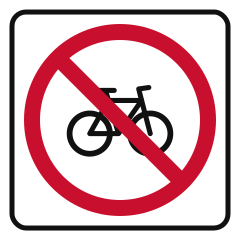
- No bicycle riding beyond this point
- Bicycle parking is not allowed
- Bicycle lane begins ahead
- Cyclists may be on the roadway
Where are lane use signs mounted?
- Directly above the middle of the intersection itself
- On the far side of the intersection
- Above or beside the lane, before the intersection
- Only on the pavement inside each lane
What does this sign mean for the stretch of road it covers?
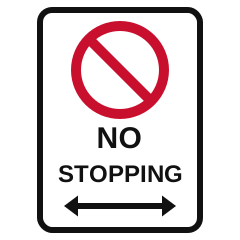
- No parking along here, but brief stops are allowed
- No stopping until the next no-stopping sign
- You may stop only to load passengers
- You may stop for up to 5 minutes
What is the speed limit in a B.C. playground zone, and when does it apply?
- 30 km/h 8 a.m. to 5 p.m. on school days
- 30 km/h every day from dawn to dusk
- 20 km/h only when children are present
- 40 km/h every day from dawn to dusk
A slow vehicle pullout sign shows a number of metres. What does the number tell you?
- How far ahead the pullout is
- How far you must stay back
- How far the no-passing zone runs
- How long the passing lane is
The number on this sign is the maximum legal speed under which conditions?

- Only when no pedestrians are on the sidewalk
- When the road is bare and dry and visibility is good
- Only during daylight hours on weekdays
- At all times, whatever the weather or road condition
You are stopped at an intersection and see this sign facing you across the cross street. What does it tell you?

- The road ahead is closed beyond the cross street
- Traffic on the cross street flows only in the arrow's direction
- Only right turns are allowed from the street you are on
- The cross street has two lanes going each way
What does this sign mean?

- Stop sign ahead
- Road closed to trucks
- No stopping at any time
- Do not enter
When you see this sign, what should you do?

- Stop and wait for a crossing guard
- Keep your speed; the sign is only advice, not law
- Sound your horn to warn the children
- Reduce speed when children are present
A turn control sign over the intersection shows arrows pointing left and right. What may you do?
- Go straight through or turn left only
- Turn left or right; you may not go straight
- Go in any direction once the way is clear
- Turn right only
What does this sign mean?
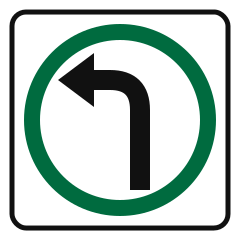
- Sharp curve to the left
- Left lane ends
- No left turn
- Left turn only
At a school crosswalk, a crossing guard is on duty. What must you do?
- Stop only when the light is red
- Sound your horn and continue slowly
- Follow the crossing guard's directions
- Go if no children are in your lane
An overhead sign shows a lane is for buses only. Who may drive in it?
- Only buses
- Any vehicle turning right
- Buses and carpools
- Buses and taxis
You are first in line at a red light. A sign says no right turn on red. You want to turn right. What must you do?
- Turn after a full stop if the way is clear
- Turn only if no pedestrians are present
- Wait for a green light before turning
- Turn after yielding to oncoming traffic
What colour are school zone signs in B.C.?
- White with red letters
- Orange with black symbols
- Yellow with a black border
- Fluorescent yellow-green
What does this sign tell you to do?

- Merge right because the left lane ends
- Keep to the right of the divider
- Keep left of the island ahead
- Turn right at the next intersection
This sign hangs above the intersection. What does it mean?
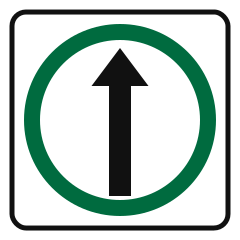
- Go straight or turn right
- Go straight only; no turns
- One-way street ahead
- The through lane ends ahead
You are driving slowly on a two-lane highway with 5 vehicles lined up behind you. A sign says slow traffic delaying 5 vehicles must use the pullout. What must you do?
- Use it only if 10 vehicles are behind
- Pull into the pullout and let them pass
- Carry on; the pullout rule applies to large trucks only
- Speed up to the posted limit instead
Where is a "do not go this way" sign usually mounted?
- On exit ramps
- At railway crossings
- At the start of passing lanes
- At school crosswalks
You are in a lane signed for left turns only and have already entered the intersection when you realize you meant to go straight. What must you do?
- Move into the through lane quickly
- Complete the left turn
- Go straight if no one is beside you
- Stop and wait for a gap to change lanes
You approach a pedestrian-activated crosswalk and its light is flashing. What should you do?
- Prepare to stop for a pedestrian
- Speed up to clear the crosswalk
- Continue; flashing means caution only
- Stop only if a crossing guard signals
The tab under a school zone sign shows only a speed, with no hours. When does that limit apply?
- Only when children can be seen
- From dawn to dusk on school days
- From 8 a.m. to 5 p.m. on school days
- At all times, every day of the year
Where are turn control signs mounted?
- Painted on the road at the stop line
- Directly above the intersection
- Beside the lane well before the intersection
- On the curb at the far corner
What does the white diamond symbol on this sign, also painted on the road, indicate?
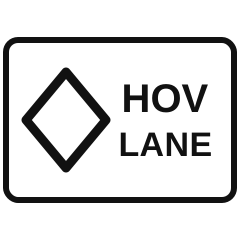
- A lane for left turns only
- A reserved lane for certain vehicles
- A lane closed for construction work ahead
- A lane that merges ahead
What does this sign mean?
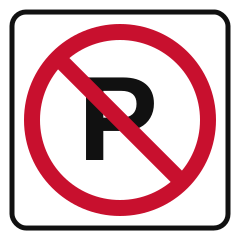
- Pick-up and drop-off only
- Do not park here
- No stopping at any time
- Parking for permit holders only
What must you do when you reach this sign?

- Yield only to vehicles on your right
- Slow down and go if no one is coming either way
- Stop only if other vehicles are present
- Stop completely, then go when it is safe
Regulatory signs: key rules to remember
Our summary of what the official handbook says on this topic, in our own words. Read it before or after the practice questions above, then check the original chapter. Read the official chapter ↗
Signs (reading signs)
- Signs can be read three ways: by shape, by colour and by the message printed on them; knowing these helps you work out signs you have not seen before.
- School zone signs are fluorescent yellow-green.
- Sign categories pictured: stop, yield, driving regulations, lane use, motorist services, permitted action, action not permitted, hazard warnings, construction warnings, railway crossing, distance/direction.
Regulatory signs
- Regulatory signs state driving laws; ignoring them is an offence under the B.C. Motor Vehicle Act and can bring penalties.
- Stop sign: come to a complete stop; continue only when it is safe.
- Yield sign: give the right-of-way to other vehicles and to pedestrians crossing.
- Maximum speed sign: the highest legal speed when the road is bare and dry and visibility is good.
- A sign can warn that a lower speed limit is ahead.
- Do not enter; "do not go this way" signs are usually on exit ramps.
- One way sign: shows the direction traffic moves on the cross street.
- Winter tires or chains must be used while the sign is displayed.
- Keep right of the divider. Passing lane ahead.
- No stopping: between this sign and the next no-stopping sign; a version with posted times applies only during those times.
- No bicycle riding beyond this point.
- No right turn on a red light.
- Disaster route sign: stay off the road during major disasters; it may be used only by emergency vehicles.
- Slower than regular traffic: move into the right lane.
- Do not pass. Two-way traffic — keep right unless passing. Keep right unless passing.
- Slow vehicle pullouts: slow vehicles use pullouts for the stated distance; a sign can give the distance (metres) to a pullout; slow traffic that is delaying 5 vehicles must use the pullout; another sign says slow traffic delaying vehicles should use pullouts.
School, playground and crosswalk signs
- School zone sign with a tab: tab shows the limit and hours; the example is 30 km/h from 8 a.m. to 5 p.m. on school days.
- If the school zone tab shows only a speed (no hours), that limit applies 8 a.m. to 5 p.m. on school days.
- 50 km/h school zone version: applies 8 a.m. to 5 p.m. on school days when children are on the roadway or shoulder.
- School zone sign (no tab): reduce speed when children are present.
- Playground zone: 30 km/h every day from dawn to dusk.
- Playground nearby sign: be ready to slow down.
- Pedestrian-activated crosswalk: prepare to stop if its light is flashing.
- Pedestrian crosswalk: yield to people crossing.
- School crosswalk: yield to pedestrians; if a crossing guard is present, follow the guard's directions.
Lane use signs
- Mounted above the lane or at the side of the lane before the intersection.
- In a designated lane you must go the way the arrows show.
- You may not move into or out of a designated lane while in the intersection.
- Examples: turn left only; straight only; straight or left; straight or right; both directions must turn left (no through traffic); vehicles in both marked lanes must turn left.
Turn control signs
- Mounted directly above the intersection; you must follow the arrow.
- Examples: straight only (no turns); right or left only; no right turns during posted times; left turn only.
Parking signs
- Show where and when you may park; illegal parking can mean a fine, towing, or both.
- Disabled parking: only for vehicles that display the disabled parking sign AND are carrying a person with disabilities.
- Time-limited parking during posted times; no parking; no parking during posted times.
Reserved lane signs
- A white diamond painted on the road marks a reserved lane.
- Signs over or beside lanes reserve them for vehicles such as buses or HOVs; other HOV signs may add who may use the lane.
- Buses-only lane; buses-and-HOV lane (may show how many people an HOV must carry).
- A sign can warn that the curb lane of the cross street ahead is reserved.
Other topics
- Warning signs and object markersYellow diamond warning signs for curves, hills, merges, lane endings, crossings, wildlife and road hazards, plus object markers on obstructions.
- Construction, guide and railway signsOrange construction and work zone signs, information and destination signs, and railway crossing signs.
- Traffic lights and lane control signalsSteady and flashing lights, green and yellow arrows, transit priority signals and overhead lane control signals.
- Road markingsYellow and white lines, passing rules by line type, crosswalk and stop lines, reserved lane and bicycle lane markings, and painted islands.
- Your vehicle and safety equipmentSeat and head restraint adjustment, seatbelts, child car seat stages, airbags, mirrors, controls, lights, anti-lock brakes, pre-trip checks, tires and winter preparation.
- Intersections and right-of-waySignalling, controlled and uncontrolled intersections, where to stop, right-of-way at lights, stop signs and yield signs, traffic circles, roundabouts and entering a roadway.
- Lanes, turns and passingChoosing a lane, turning right and left, multiple and two-way left-turn lanes, U-turns, HOV, bus and bicycle lanes, passing, merging, freeway entrances and exits, and turning around.
- Parking rulesWhere parking is illegal, required distances from hydrants, crosswalks, stop signs and railway crossings, curb distance and hill parking.
- Observation and hazard perceptionScanning ahead, behind and at intersections, mirror and shoulder checks, blind spots, hazard perception, assessing risk and choosing a solution.
- Speed, space and communicationSpeed limits and appropriate speeds, curves, steering, stopping distance, the two-second rule, space behind and beside, safe gaps, signals, lights and the horn.
- Pedestrians, cyclists and motorcyclesYielding to pedestrians, passing distance and rules for cyclists, and sharing the road with motorcycle riders and other passenger vehicles.
- Large vehicles, buses, emergency vehicles and trainsLarge vehicle blind spots, school buses, transit buses, emergency vehicles, stopped vehicles with flashing lights, construction zones, railway crossings and horses.
- Fitness to drive, distraction and attitudeVision, health and fatigue, cellphones and other devices, dangerous emotions, risk taking, peer pressure, unsafe passengers and aggression on the road.
- Alcohol, drugs and impairmentHow alcohol and drugs affect driving, blood alcohol facts, medications, illegal drugs, cannabis and combining drugs with alcohol.
- Emergency driving strategiesEmergency braking, anti-lock brakes, skid recovery, tire blowouts, brake failure and other breakdowns, animals on the road, collision avoidance and what to do at a crash.
- Weather, visibility and night drivingLoss of visibility, glare, rain, hydroplaning, deep water, ice and snow, being stranded, wind and turbulence, headlight use and overdriving your headlights.
- Graduated licensing and penaltiesLearner (L) and novice (N) stage restrictions, supervisor and passenger rules, GLP penalties, fines and penalty points, impaired driving penalties and vehicle impoundment.