A truck is backing into a loading bay across the road. What should you never do?
BC Class 7 overview
BC Class 7 Practice Test 1
50 questions on large vehicles, buses, emergency vehicles and trains, traffic lights and lane control signals, alcohol, drugs and impairment, road markings, construction, guide and railway signs and more.
- No sign-up
- Every answer explained
- Independent · not a government site
- Set 1 of 11
- 50 questions
- Instant feedback
0/50
All 50 questions in this test
Every question and its answer choices. The correct answers and explanations appear when you take the test above.
A truck is backing into a loading bay across the road. What should you never do?
- Wait for it to finish backing
- Stop well back from the truck
- Drive behind it to get past
- Watch for its backup lights
A flashing green arrow appears together with a steady green light. What may you do?
- Stop, then turn when it is safe
- Turn only, because through traffic must stop
- Turn in the arrow's direction or go straight
- Go straight only; turns not allowed
Which of these does the guide list as a possible consequence of drinking and driving?
- Insurance may not cover damage you cause
- A small fine with no other effects
- Only a warning for a first offence
- Points only, and never a loss of licence
You are on a road with a single solid yellow centre line. What does the B.C. guide say about passing?
- Passing is never allowed
- Passing is allowed with extra caution
- Passing is allowed only on the right
- Passing is allowed only in daylight
What should you do when you see this sign?
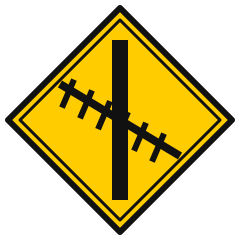
- Be prepared to stop; a railway crossing is ahead
- Turn off; the road ends at the tracks
- Speed up to cross before any train
- Stop at once; a train is crossing the road right now
What rights do horse riders have on a public road in B.C.?
- The same as motor vehicle drivers
- Right-of-way over all vehicles
- None; they must use trails
- Fewer rights than motor vehicle drivers have
Daytime fog has rolled in on the highway. Below what visibility must you turn on your headlights?
- 150 metres
- 300 metres
- 500 metres
- 50 metres
On a road with this sign, which lane should you use?
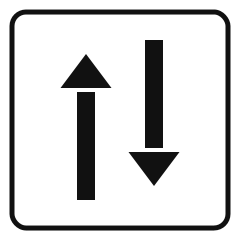
- Stay left except when turning right
- Keep right unless you are passing
- Use either lane as you choose
- Drive near the centre line
You are in the right lane of a freeway and a driver is trying to merge in from an entrance. What can you do?
- Speed up so they merge behind
- Stop to let them in
- Move left if safe or adjust your speed
- Hold your lane and speed
An N driver wants to drive four friends to a game. Which situation would allow it?
- The trip is shorter than 20 km
- All the friends also hold N licences
- The whole drive is during daylight hours
- A qualified supervisor 25+ sits beside them
Some work zone signs give notice of fines. What offence do these signs warn about?
- Driving without headlights
- Speeding in a work zone
- Using a phone in a work zone
- Parking on the shoulder
How can you let drivers behind you know you're about to slow down or stop?
- Sound your horn briefly
- Turn on your left turn signal
- Tap lightly on the brake pedal
- Flash your hazard lights twice
Which action is most likely to cause a skid?
- Slowing down before a curve
- Steering smoothly through a turn
- Slamming on the brakes while steering
- Easing off the gas pedal gently on ice
At a highway exit, a yellow sign shows an advisory speed. What should you do?
- Speed up to merge with exit traffic
- Keep highway speed to the end of the ramp
- Slow to the advisory speed as you exit
- Slow to 30 km/h whatever the sign says
How does your speed affect the chance of hydroplaning?
- Lower speed raises the chance
- Higher speed raises the chance
- Speed has no effect on it
- Only very low speeds cause it
Which type of sign tells you about destinations, route numbers and facilities such as gas or a hospital?
- Warning signs and object markers
- Regulatory and turn control signs
- Construction and maintenance signs
- Information and destination signs
You see a steady white rectangular light at an intersection. Who may go on it?
- Only buses
- Pedestrians and cyclists
- Emergency vehicles only
- Traffic turning right
You're taking your dog on a trip. How does the guide say animals should travel?
- Loose on the back seat
- In the front footwell
- On a passenger's lap
- Secured in a cage
There is a yellow line on your left. What can you expect on the other side of it?
- Traffic coming toward you
- A bicycle lane
- A parking lane
- Traffic going your way
What can happen to a driver who ignores a regulatory sign?
- Nothing, because regulatory signs are only advice
- They can be penalized under the Motor Vehicle Act
- Only a warning unless a crash happens
- A fine only if the sign is on a highway
You took an over-the-counter allergy pill before driving. Which effects does the guide warn it can cause?
- Sharper focus and faster reactions
- No effects, since it's non-prescription
- Effects only if mixed with alcohol
- Drowsiness and inattentiveness
A warning sign says there is a narrow structure ahead. What is that structure most often?
- A toll booth
- A tunnel
- A snow shed
- A bridge
A pedestrian with a white cane is at the corner and raises the cane. What does this tell you?
- They are about to turn around
- Stop and give them the right-of-way
- They are hailing a bus or taxi
- They want you to drive past them first
For one of these impoundment offences, police can immediately impound the vehicle for how long?
- Seven days
- 90 days
- 24 hours
- Three days
You are turning left on a solid green arrow. What is the oncoming through traffic doing?
- Facing a green light too
- Facing a yield sign
- Facing a red light
- Facing a flashing yellow light
According to the guide, what is the main cause of skidding?
- Worn-out tires
- Mechanical failures
- Rain and ice
- Poor driving skills
In which situation is it safe to use cruise control?
- On a dry highway in ideal conditions
- On a winding mountain road
- In steady urban traffic
- On a snowy highway at low speed
You are in the merging area of a freeway entrance and can't find a gap right away. What should you avoid?
- Checking your mirrors
- Signalling your intention
- Stopping in the merging area
- Adjusting your speed
Who may use a bicycle lane marked with a bicycle outline?
- Cyclists and motorcycles
- Cyclists only
- Cyclists and taxis
- Cyclists and buses
What is a 'space conflict'?
- Two road users trying to use the same space at once
- A car parked too far from the curb
- Two vehicles side by side on a highway
- A car taking up two parking stalls
Where should you look up the correct air pressure for your tires?
- The tire shop's general chart
- The owner's manual or the driver's door sticker
- The pressure numbers printed on the side of the tire
- The fuel cap label on every car
You are in the middle lane under this overhead sign. What may you do at the intersection?
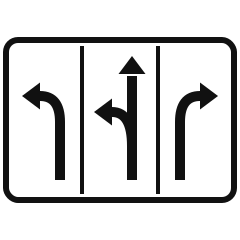
- Turn left only
- Turn right only
- Go straight through or turn left
- Go straight through or turn right
What is the best way to drive through a curve?
- Hold your speed and brake at the exit
- Brake firmly at the middle of the curve
- Speed up as you enter, then coast
- Slow down before it and avoid braking in it
In B.C., what equipment must a bicycle have when ridden at night?
- Flashing red lights at the front and back
- White headlight, red rear light and red reflector
- A red rear reflector only, no front light
- White headlight and amber side reflectors
Your car has no ABS, and it starts to skid as you brake hard. What should you do?
- Press the gas pedal to regain grip
- Release quickly, then brake hard again
- Turn the steering wheel sharply
- Hold the brake pedal down even harder
You notice you're gripping the wheel tightly because you're upset. Why does the guide suggest loosening your grip?
- It keeps the airbag from deploying
- It reduces wear on the steering wheel
- It eases your arm and neck muscles
- It lets you steer faster in a crisis
Traffic is heavy and a motorcycle is riding on one side of its lane. Can you move up beside it in the same lane?
- Yes, on multi-lane highways only
- No, it needs the whole lane
- Only when traffic is stopped
- Yes, if you stay on the far side
On a divided highway, a police car with lights and siren approaches on the far side of the median. Must you stop?
- Not if it can't reach your side
- Yes, but only for ambulances
- Only if you're in the left lane
- Yes, all traffic must always stop
You find a spot just before a stop sign. How far from the sign must you be?
- At least 15 m
- At least 10 m
- At least 3 m
- At least 6 m
You want to park near a crosswalk. What is the minimum distance?
- 3 m
- 6 m
- 5 m
- 15 m
What does this sign warn you about?
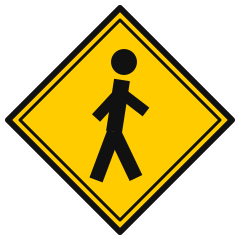
- A pedestrian crosswalk ahead
- A playground nearby
- No pedestrians allowed on the road
- A school zone ahead
Your traffic light is flashing red and no other vehicles are in sight. What must you do?
- Yield to traffic on your right only
- Slow down and proceed with caution
- Stop, then go only when it is safe
- Stop only if traffic is coming
Your new car has blind spot detectors and a back-up camera. How does that change your shoulder checks?
- You can skip them on highways and freeways
- You only need them when backing
- It doesn't; you still turn and look
- You only need them after dark
You have just driven slowly through deep water on the road. What should you do next?
- Lightly apply the brakes to dry them
- Pump the brakes as hard as you can
- Speed up to shake the water off
- Stop and turn off the engine to cool it
You've stopped at a stop sign but bushes block your view of the cross street. What should you do next?
- Wait for a driver to wave you on
- Creep forward slowly until you can see
- Go quickly before any traffic arrives
- Honk, then drive straight through
A baby rides in a rear-facing seat (stage 1). Until when must the child stay at this stage?
- At least one year old and 9 kg (20 lb)
- At least six months old and 5 kg (11 lb)
- At least two years old and 18 kg (40 lb)
- At least one year old or 5 kg (11 lb)
What penalty does the table list for passing without a clear view?
- $138 and 3 points
- $109 and 2 points
- $167 and 2 points
- $109 and 3 points
A sign shows the passing lane is ending. What must drivers in both lanes do?
- Keep side by side to the end
- Merge before the passing lane ends
- Move to the shoulder to merge
- Stop and let others go first
The guide quotes Transport Canada on how long a body at a BAC of .08 takes to get back to zero. About how long is it?
- About six hours
- About one hour
- About two hours
- About twelve hours
In which direction do you travel around a traffic circle?
- Counter-clockwise, keeping to the right
- Clockwise, keeping to the left
- Clockwise, keeping to the right
- Either direction, whichever way is shorter to your exit
All BC Class 7 practice tests
- BC Class 7 Mock Exam 1 – 50 QuestionsTimed practice · 45 minutes · answers explained
- BC Class 7 Mock Exam 2 – 50 QuestionsTimed practice · 45 minutes · answers explained
- BC Class 7 Mock Exam 3 – 50 QuestionsTimed practice · 45 minutes · answers explained
- BC Class 7 Mock Exam 4 – 50 QuestionsTimed practice · 45 minutes · answers explained
- BC Class 7 Mock Exam 5 – 50 QuestionsTimed practice · 45 minutes · answers explained
- Regulatory signsStop, yield and speed signs, school and playground zone signs, crosswalk signs, lane use and turn control signs, parking signs and reserved lane signs.
- Warning signs and object markersYellow diamond warning signs for curves, hills, merges, lane endings, crossings, wildlife and road hazards, plus object markers on obstructions.
- Construction, guide and railway signsOrange construction and work zone signs, information and destination signs, and railway crossing signs.
- Traffic lights and lane control signalsSteady and flashing lights, green and yellow arrows, transit priority signals and overhead lane control signals.
- Road markingsYellow and white lines, passing rules by line type, crosswalk and stop lines, reserved lane and bicycle lane markings, and painted islands.
About this practice test
How many questions are in BC Class 7 practice test 1?
50 original multiple-choice practice questions covering large vehicles, buses, emergency vehicles and trains, traffic lights and lane control signals, alcohol, drugs and impairment, road markings, construction, guide and railway signs, weather, visibility and night driving, regulatory signs, lanes, turns and passing, graduated licensing and penalties, speed, space and communication, emergency driving strategies, warning signs and object markers, fitness to drive, distraction and attitude, pedestrians, cyclists and motorcycles, intersections and right-of-way, your vehicle and safety equipment, observation and hazard perception, parking rules. Each answer includes an explanation. This mixed practice set does not reproduce the official exam format or predict an official score.
Are the questions the same every time?
Yes. Practice test 1 always has the same 50 questions, so you can repeat it until you get them all right. The other 10 sets use different questions.
Are these real test questions?
No. The official question bank is not published. These are original questions written from the official handbook, which is what the real BC Class 7 test is based on.