For the N-stage passenger limit, which of these counts as immediate family?
BC Class 7 overview
BC Class 7 Mock Exam 5
Same format as the real test. Answers stay hidden until you submit.
- No sign-up
- Every answer explained
- Independent · not a government site
- 50 questions
- 45 min
- Pass mark 40/50
0/50
All 50 questions in this test
Every question and its answer choices. The correct answers and explanations appear when you take the test above.
For the N-stage passenger limit, which of these counts as immediate family?
- An aunt
- A first cousin
- A step-brother
- A roommate
Your friend rides sitting on the open tailgate of your pickup. What can police do?
- Fine only the passenger
- Only warn the passenger
- Impound the vehicle
- Nothing on private roads
What does this sign warn you about?

- A sharp curve ahead
- A slippery road ahead
- The road narrows ahead
- A winding road ahead
The advance green arrow has gone off, but the regular green light is still on. Can you still turn left?
- No, left turns end when the arrow does
- No, you must wait for the next arrow
- No, you must wait in the lane for the next green arrow
- Yes, after yielding to pedestrians and oncoming traffic
A lane control signal over your lane tells you to move out of it. Where should you go?
- Onto the right shoulder
- Into the lane with a red X
- Into a lane with a green arrow
- Stay in your lane until the signal changes
Most traffic fines can be reduced by $25 if they're paid within how long?
- 30 days
- 14 days
- 7 days
- 60 days
What does this sign warn you about?

- Merging traffic ahead
- A hidden side road ahead
- The right lane ends ahead
- A divided highway ends ahead
A construction sign warns of a soft shoulder ahead. What should you do?
- Stay off the shoulder
- Use the shoulder only if dry
- Slow to 30 km/h on the shoulder
- Use the shoulder to pass
What happens to traffic fines in construction zones?
- They are doubled
- They are cut in half
- They are tripled
- They stay the same
The traffic light is red at an intersection just past a railway crossing. Where should you stop?
- Anywhere, as long as gates are up
- Before the crossing unless there's room past it
- On the tracks, close to the light
- Just past the first rail
You are driving past a crash scene that police are already handling. What should you avoid?
- Watching for emergency crews
- Staying focused on the road
- Keeping a safe distance ahead
- Slowing more than necessary
Which statement about anti-lock brakes (ABS) is true?
- It always stops you sooner
- It lets you drive faster safely
- On gravel, stopping may take longer
- It works only on dry, clean pavement
You've stopped and want to let another driver go ahead of you. Why is waving them on generally a bad idea?
- They may face hazards you can't see
- It counts as a distracted driving offence
- It cancels your right-of-way later
- Hand gestures are illegal in B.C.
You are driving beside a lane that ends ahead. How can you help merging drivers?
- Adjust your speed or change lanes
- Speed up to close the gap
- Sound your horn to warn them
- Stay beside them until the lane ends
An employer lets a prohibited driver use a company van, and the driver is caught. What can happen?
- The van can be impounded
- Only the employer is fined
- The van's plates are renewed
- Nothing; it's a company vehicle
A reserved lane sign for buses and HOVs may include a number. What does that number show?
- The speed limit in the lane
- The fine for misusing the lane
- The hours when trucks may use it
- How many people must be in an HOV
Your steering wheel has an airbag. Which hand positions may be better than 10 and 2?
- 10 and 2, with hands inside the rim
- 9 and 3, or 8 and 4 o'clock
- Any position, using one hand
- 11 and 1, or 12 and 6 o'clock
What does this sign warn you about?

- A railway crossing ahead
- A yield sign ahead
- A traffic signal ahead
- A stop sign ahead
You're driving and your phone buzzes with a text. What does the guide recommend?
- Read it quickly at the next red light
- Reply using one hand on your lap
- Let it wait or pull over to read it
- Read it while the road is straight
You don't hear a train whistle as you approach a railway crossing. Does that mean no train is coming?
- Yes; trains always whistle first
- Yes, unless it is nighttime
- Only if there are no gates
- No; trains don't whistle at every crossing
You're about to pass a slow truck on a two-lane road. Besides oncoming cars, what should you check for?
- Pedestrians on the far sidewalk
- Cyclists ahead of the truck or oncoming
- Parked cars on the other side
- Bus stops along the right edge
Which sign must a Class 7 novice driver display?
- A 'New Driver' sticker
- No sign is required
- The L (Learner) sign
- The N (Novice) sign
Your car starts to hydroplane. What should you do?
- Brake firmly right away to stop
- Steer sharply toward the shoulder
- Accelerate to regain your grip
- Ease off the gas and keep straight
A sign tells you to stay off a road during major disasters. Why?
- It is reserved for local residents and deliveries
- It is closed every winter for snow
- It floods during heavy rain storms
- It may be used only by emergency vehicles
A sign shows the passing lane is ending. What must drivers in both lanes do?
- Keep side by side to the end
- Merge before the passing lane ends
- Move to the shoulder to merge
- Stop and let others go first
Where is a "do not go this way" sign usually mounted?
- On exit ramps
- At railway crossings
- At the start of passing lanes
- At school crosswalks
Which action is most likely to cause a skid?
- Slowing down before a curve
- Steering smoothly through a turn
- Slamming on the brakes while steering
- Easing off the gas pedal gently on ice
On a 100 km/h highway, you approach a tow truck stopped on the shoulder with flashing lights. What is the fastest you may go as you pass?
- 70 km/h
- 40 km/h
- 60 km/h
- 90 km/h
You drive 15 km/h over the limit in a school zone. What fine and points does the table list?
- $196 and 3 points
- $368 and 4 points
- $138 and 3 points
- $167 and 2 points
At a four-way stop, which vehicle goes first?
- The vehicle that is going straight through the intersection
- The vehicle on the left
- The largest vehicle
- The first to arrive and come to a full stop
Where must you display your L sign?
- At the back, visible to drivers behind
- On the driver's door, visible from the side
- Inside, on the dashboard facing you
- At the front, visible to oncoming drivers
When are you allowed to pass a vehicle on the right?
- When the driver ahead is turning left
- When you are late for an appointment
- When the shoulder is wide and paved
- When the driver ahead is slower than the limit
The traffic lights at an intersection have gone out. How should you treat it?
- As a four-way stop
- As an uncontrolled intersection
- As a yield sign
- As a green light with caution
You turn into a back lane (alleyway) in a municipality. There is no speed sign. What is the maximum speed?
- 15 km/h
- 50 km/h
- 20 km/h
- 30 km/h
Which of these does the guide list as a possible consequence of drinking and driving?
- Insurance may not cover damage you cause
- A small fine with no other effects
- Only a warning for a first offence
- Points only, and never a loss of licence
When you're about to turn left, why do oncoming motorcycles need extra attention?
- They must always yield to turning cars
- They're hard to see and their speed is hard to judge
- They can't brake as well as cars
- Their riders can't see turn signals
How fast can passenger trains travel in Canada?
- Up to 200 km/h
- Up to 100 km/h
- Up to 160 km/h
- Up to 120 km/h
How can you spot possible black ice?
- A dull, very dry-looking road surface
- Shiny black asphalt instead of gray-white
- Small puddles along the road shoulder
- A white, powdery layer on the road
At a highway exit, a yellow sign shows an advisory speed. What should you do?
- Speed up to merge with exit traffic
- Keep highway speed to the end of the ramp
- Slow to the advisory speed as you exit
- Slow to 30 km/h whatever the sign says
A driver is tailgating you. What does the guide suggest you do?
- Turn on your hazard lights
- Speed up so you can pull well away from them
- Brake sharply to warn the driver
- Slow slightly to add space in front
Before you start reversing out of a parking spot, what kind of check should you do?
- A 360-degree check around the car
- A look over your right shoulder
- A quick look in the rear-view mirror
- A glance at the back-up camera
Your new car has blind spot detectors and a back-up camera. How does that change your shoulder checks?
- You can skip them on highways and freeways
- You only need them when backing
- It doesn't; you still turn and look
- You only need them after dark
You are in the merging area of a freeway entrance and can't find a gap right away. What should you avoid?
- Checking your mirrors
- Signalling your intention
- Stopping in the merging area
- Adjusting your speed
What does this sign mean?
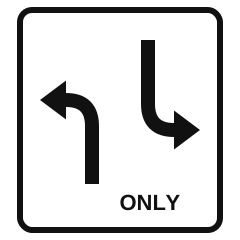
- Vehicles from both directions must turn left; no through traffic
- Traffic in this lane may go straight or turn left
- Buses from both directions may use this lane
- Left turns are not allowed here for traffic coming from either direction
Two cars are stopped at a two-way stop. You want to turn left; the other driver wants to go straight. Who goes first?
- You, because you were the first one to come to a stop
- The other driver, unless you have already started turning
- You, since left turns have priority
- Whoever signals first
Traffic is heavy and a motorcycle is riding on one side of its lane. Can you move up beside it in the same lane?
- Yes, on multi-lane highways only
- No, it needs the whole lane
- Only when traffic is stopped
- Yes, if you stay on the far side
You stop to help at a crash. What should you prevent anyone from doing near the scene?
- Calling emergency services
- Smoking or lighting matches
- Setting out warning triangles
- Staying with injured people
An emergency vehicle with lights and siren approaches as you near a roundabout. What should you do?
- Enter quickly and pull over once you're inside it
- Stop before entering so you don't block it
- Speed up to get ahead of it
- Stop right at the roundabout exit
A large truck passes you going the other way on a highway, and you feel the air push your car. What should you do?
- Steer toward the centre line
- Keep a firm grip and allow side space
- Speed up to get past it quickly
- Brake hard as it goes by so you can stay in control
You need to report a stalled vehicle at a railway crossing. Where do you find the phone number and location?
- On the signal box door
- On the advance warning sign
- Painted on the road near the X
- On the back of the crossing sign
Keep practising
- BC Class 7 Mock Exam 1 – 50 QuestionsTimed practice · 45 minutes · answers explained
- BC Class 7 Mock Exam 2 – 50 QuestionsTimed practice · 45 minutes · answers explained
- BC Class 7 Mock Exam 3 – 50 QuestionsTimed practice · 45 minutes · answers explained
- BC Class 7 Mock Exam 4 – 50 QuestionsTimed practice · 45 minutes · answers explained
- BC Class 7 Practice Test 150 questions with explanations
- BC Class 7 Practice Test 250 questions with explanations
- BC Class 7 Practice Test 350 questions with explanations
- BC Class 7 Practice Test 450 questions with explanations