Nunavut Class 7 Practice Test – Printable PDF
100 original Nunavut Class 7 learner's practice questions, rules and signs mixed, with the answer key on separate pages. Print it or save it as a free PDF.
- No sign-up
- Every answer explained
- Independent · not a government site
- 100 questions
- Answer key included
- Free, no sign-up
If you would rather study on paper or offline, this page gives you 100 Class 7 practice questions to print or save as a PDF. The questions are spread evenly over all 18 topics in our bank, which covers both parts of the written test described in the Nunavut Driver's Manual: rules of the road and safe driving practices, and sign identification. You will find gravel roads and dust, winter and night driving, right-of-way, school buses, alcohol and drugs, and regulatory, warning and school signs. The answer key starts on its own page after question 100.
We wrote every question from the Nunavut Driver's Manual, and each answer in the key includes a short explanation and the manual page it is based on. The Government of Nunavut does not publish its test questions or an official pass mark, so mark your sheet as two parts and aim for at least 80 percent in each, the practice target our mock exams use. Tests are booked in person at a driver examination office, and the examiner can give the test orally if reading is difficult. When you have marked your sheet, go back to the topic tests for the part where you lost the most marks.
Nunavut Class 7 Practice Test – Printable PDF
1.You are passing a car on a two-lane highway. When should you move back into the right lane?
- When your front bumper passes its front bumper
- After one kilometre
- As soon as you are beside it
- When you can see it in your rear-view mirror
2.You are taking an allergy or cold medicine with an antihistamine. What does the manual advise?
- It is safe at any dose
- Don't use it when you will be driving
- Drive only short distances
- Take it with coffee to stay alert
3.Your licence is lost. What must you do before an issuing office can give you a duplicate?
- Retake the written test
- Wait 30 days for it to turn up
- Report the loss to the RCMP
- Get a letter from your employer
4.How much longer than your car should a parallel parking space be?
- Exactly the same length
- At least 3 m longer
- At least 30 cm longer
- At least 1.5 m longer
5.What does this sign tell you?

- The lowest speed you may drive
- The highest speed allowed in ideal conditions
- A speed that is recommended only for heavy trucks
- A speed that applies only at night
6.What is the youngest age at which you can be tested for a full Class 5 car licence?
- 17
- 16
- 15
- 18
7.A warning sign says the pavement ends ahead. What should you expect?
- The road continues with a gravel surface
- A toll booth is ahead
- A bridge deck is ahead
- The road ends at a barrier with no way through
8.You see a vehicle coming toward you on a dusty gravel road. When should you have your headlights on?
- Only if the other driver flashes theirs
- Only after sunset
- Well before you meet it
- Only once you are in the dust
9.A solid yellow line and a broken yellow line run side by side. The solid line is on your side. May you pass?
- No, passing is not permitted
- Yes, if the road ahead is clear
- Yes, but only during daylight
- Only to pass a slow truck
10.A construction sign warns of a diversion ahead. What does that mean?
- The road is closed for good past this point
- The road's path changes temporarily
- The road becomes one-way
- Traffic must stop and wait
11.You drive a manual transmission car over railway tracks. What must you avoid?
- Crossing at a slow, steady speed
- Shifting gears on the crossing
- Crossing in a low gear
- Looking both ways first
12.A person with a white cane at the curb raises the cane toward the street. What does this mean for you?
- Sound your horn to warn them
- Drive past slowly and carefully
- Wave them across and keep moving
- Stop and give them the right-of-way
13.What does a flashing red light mean?
- Treat it like a stop sign
- Stop only if traffic is coming
- Slow down and go with caution
- The light is broken; go through
14.What is a common cause of tire blowouts?
- Driving with snow tires
- Washing the car often
- Using cruise control
- Under-inflated tires
15.You want to make a U-turn but traffic is heavy. What does the manual suggest?
- Make it quickly in a gap
- Use your hazard lights and turn
- Drive around the block instead
- Turn from the right lane
16.Before you drive away, which should you adjust first?
- Your radio, then your seat
- Your seat, then your mirrors
- Your mirrors, then your seat
- Only the inside mirror
17.Your trailer starts to sway from side to side. What should you do?
- Brake hard right away
- Slow down gradually and steer straight
- Steer sharply against each sway of the trailer
- Speed up to pull it straight
18.You must stop at night on a highway. What should you do?
- Turn off all lights to save power
- Stop in your driving lane with your headlights on
- Stop on the centre line
- Pull onto the shoulder and use flashers or flares
19.Why should you avoid changing lanes in an intersection?
- It damages the pavement markings
- It is allowed only on green
- Others can't tell if you are turning
- Intersections are always one lane
20.A driver who uses insulin skips a meal. What could happen?
- The insulin stops working
- Low blood sugar could cause weakness or fainting
- Blood pressure rises sharply and causes a headache
- Nothing, if the dose was right
21.What is the minimum liability insurance a Nunavut vehicle must carry?
- $200,000
- $100,000
- $1,000,000
- $50,000
22.May you park your vehicle on a bridge?
- Only on a two-lane bridge
- Yes, if your hazard lights are on
- Yes, for up to 10 minutes
- No, it is not permitted
23.What does this sign tell you about the street?

- Traffic may move in one direction only
- The road is a dead end
- Turn right at the next intersection
- Two-way traffic is ahead
24.You need glasses to meet the vision standard. What does that mean for your driving?
- You must wear them whenever you drive
- Wear them only at night
- Wear them only for the vision test itself
- Wear them only on highways
25.An underpass warning sign shows a measurement. What does it tell you?
- The distance to the underpass
- How much height clearance there is
- The speed limit under the bridge
- How long the underpass is
26.In which vehicles does the manual suggest adding weight in the trunk for winter traction?
- All vehicles
- Four-wheel-drive trucks only
- Rear-wheel-drive vehicles only
- Front-wheel-drive vehicles only
27.Why are yellow and black markings painted on fixed objects such as concrete islands?
- To show a snow route
- To show where parking is allowed
- To give advance warning of the hazard
- To mark the start of a school zone
28.You come up behind a vehicle showing a slow moving vehicle sign. What should you expect?
- It is about to turn left
- It will pull over to let you pass
- It is an emergency vehicle
- It is going well below the posted speed
29.At a crossing with signal lights, the train has passed but the lights are still flashing. What do you do?
- Drive around the signal post
- Wait until the signal stops
- Cross slowly with hazards on
- Cross, since the train is gone
30.Where on the road should a cyclist normally ride?
- Between lines of cars
- On the far left, facing oncoming traffic
- On the far right, with the traffic
- In the centre of the lane
31.The light turns amber while you are still well back from the intersection. What should you do?
- Keep going through at the same speed
- Stop; do not enter on an amber light
- Sound your horn and continue
- Speed up to get through
32.Your car begins to skid. Which way should you steer?
- Sharply toward the shoulder
- Opposite to the way the rear slides
- Hold the wheel and don't steer
- In the direction the rear is sliding
33.You are turning left from a two-way street onto a one-way street. Which lane should you finish in?
- Any lane that is clear
- The centre lane
- The lane closest to the right curb
- The lane closest to the left curb
34.In normal sunlight, from how far away must your brake lights be visible?
- At least 150 m
- At least 30 m
- At least 110 m
- At least 10 m
35.You are backing up with a trailer and want the trailer to go left. Which way do you turn your steering wheels?
- Keep them straight
- Left, then quickly right
- To the right
- To the left
36.What is highway hypnosis?
- A drowsy state from long, monotonous driving
- A reaction to medication
- Being dazzled by staring at oncoming headlights
- A fear of driving on highways
37.Traffic on the freeway is slow on the left. May you pass on the shoulder?
- Yes, at low speed
- Yes, if you signal
- Only in an emergency lane
- No, never pass on the shoulder
38.A driver has just started taking high blood pressure pills. What side effect does the manual warn about?
- Faster reflexes
- Light-headedness
- Better concentration
- Sharper vision
39.You move to a new address. How soon must you tell the nearest issuing office?
- At your next renewal
- Within 60 days
- Within 30 days
- Within 15 days
40.How far from the nearest rail of a railway crossing must you be if you stop or park?
- At least 5 m
- At least 15 m
- At least 6 m
- At least 30 m
41.Why does the manual say you should know signs by their shape?
- Because shapes change with the season
- So you can read them when the words are hidden
- Because colours are not used in Nunavut
- So you can tell how far away they are
42.What does a Class 7 licence allow you to do?
- Drive any vehicle with a supervisor
- Drive Class 5 or 6 vehicles while learning
- Drive a taxi while supervised
- Drive a car alone after six months
43.What does this sign warn you of?

- A steep hill ahead
- Two-way traffic ahead
- A divided highway is starting ahead
- A narrow structure such as a bridge
44.A blizzard is coming but you absolutely must travel. What does the manual advise?
- Tell no one, to avoid worry
- Drive faster to beat the storm
- Start with a full tank and a call-back plan
- Leave with half a tank to save weight
45.A solid yellow line and a broken yellow line run side by side, with the broken line nearest you. What does that tell you?
- You may never pass here
- You must change lanes now
- You may pass when it is safe
- Only oncoming traffic may pass
46.Who has the right to use a school crosswalk?
- Only children and their parents
- Only school children
- Only children with a crossing guard
- Every pedestrian, of any age
47.You are about to enter a traffic circle. Who has the right-of-way?
- Traffic waiting to enter on your right
- Traffic already in the circle
- Whichever vehicle is larger
- You, because you are entering
48.The car in the lane beside you has stopped at a crosswalk. You cannot see why. What should you do?
- Stop as well, because a pedestrian may be crossing
- Pass it carefully on the left
- Pass it, since your own lane is clear of traffic ahead
- Sound your horn and continue
49.A flashing amber light stands by itself, away from any other signal. Which of these might it be warning you about?
- A toll booth ahead
- A police check stop on the road ahead
- A free parking area ahead
- A railway or school crossing ahead
50.Your car breaks down on the highway. How far in front of and behind it should you place warning flares or a reflector?
- About 30 m
- About 300 m
- About 10 m
- About 60 m
51.Why are left turns harder to make safely than right turns?
- Pedestrians cross only on the right-hand side
- You must judge the speed of oncoming traffic
- They are always made on red lights
- They need a higher speed
52.You start the engine and the brake warning light stays on. What should you do?
- Not drive; it may mean a serious brake problem
- Drive slowly until the light goes off on its own
- Pump the brakes and drive on
- Ignore it in cold weather
53.May two motorcycles ride side by side in the same traffic lane?
- No, they must not ride two abreast
- Yes, in towns only
- Yes, always
- Yes, if both riders are licensed
54.On a long trip, how often does the manual suggest stopping to fight drowsiness?
- About every two hours
- Only when you feel sleepy
- Once a day
- Every six hours
55.About what share of rear-end collisions happen in ideal driving and road conditions?
- About one-quarter
- Nearly all of them
- Nearly two-thirds
- About one in ten
56.Which abilities does alcohol affect first?
- Muscle strength
- Hearing and sense of smell
- Judgment and self-control
- Eyesight in daylight
57.Your licence expired 18 months ago. What will you need to do?
- Be re-examined
- Nothing; renew as usual
- Renew it by mail
- Pay a late fee only
58.At 48 km/h, about how far does your car travel during your reaction time, before the brakes are even applied?
- About 2 m
- About 10 m
- About 24 m
- About 50 m
59.You want to turn left at an intersection where this sign is posted. What should you do?
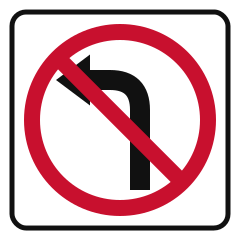
- Turn left after a full stop
- Do not turn left here
- Turn left only on a green arrow
- Turn left if there are no pedestrians
60.What can happen if you have trouble reading the written test?
- You may take it home to study
- The examiner may give it to you orally
- You must take a reading course first
- You are not allowed to test
61.What should you generally do when you see a yellow warning sign?
- Slow down and proceed with caution
- Sound your horn as you pass
- Stop and wait for a signal
- Keep your speed and move left
62.On a snowy road, how far before an intersection should you start slowing down?
- The same distance as on dry roads
- At least three times the usual distance
- Twice the usual distance
- Only once you see the stop line
63.You see diagonal stripes enclosed by two solid lines on the approach to a bridge pier. What are they for?
- To show a passing zone before the bridge
- To mark a bus stop
- To guide you away from the fixed object
- To mark a place to stop
64.A service sign shows an aeroplane. What does it point to?
- An air ambulance base
- A flight school
- The airport
- A weather station
65.How close may you follow a fire engine?
- No closer than 30 m
- No closer than 300 m
- No closer than 60 m
- No closer than 150 m
66.You meet a school bus stopped with its flashing lights on, coming toward you on the other side of the road. What must you do?
- Continue, since it is not in your lane
- Stop before reaching the bus
- Stop only if children are visible
- Slow down and pass carefully
67.A green arrow is shown together with a red light. What does the red light tell you?
- The arrow is about to turn red
- Pedestrians have the right-of-way at this corner
- You must stop before turning
- Other movements are given to other traffic
68.What does the manual advise you not to do at the scene of an accident?
- Exchange insurance details
- Get witnesses' names
- Draw a sketch of the scene
- Discuss who may be at fault
69.Why should you not swing left before making a right turn?
- It wears out your tires
- It makes the turn too slow
- It is only a problem at night
- A driver behind may be passing you
70.Which of these should you carry in your vehicle for winter emergencies?
- A camp stove and fuel
- A spare car battery, engine oil and a funnel
- Road flares and a toolbox only
- Booster cables, a shovel and a traction mat
71.Trucks are travelling on the same highway. What gap should they keep between each other?
- As close as possible in a convoy
- At least 60 m, so traffic can pass
- At least 5 km at all times
- At least 10 m, to save fuel
72.When are roads especially slippery in the rain?
- Once the road has dried
- Just after it starts to rain
- After several hours of rain
- Only during heavy downpours
73.On a four-lane highway, when may you pass another vehicle on the right?
- When it is going well below the posted speed limit
- Whenever the left lane is busy
- Never on any highway
- When it is turning left and the right lane is open
74.According to studies in the manual, in what share of fatal accidents had at least one driver been drinking?
- About 5%
- About 90%
- About 50%
- About 20%
75.What must you show before you can register a vehicle?
- A safety inspection report
- A Class 5 licence
- Proof of insurance
- A road test receipt
76.What is the manual's simple rule for a safe speed?
- Always match the car ahead of you
- Drive the limit in any weather
- Always drive 10 km/h under the posted limit just to be safe
- Never go faster than you can stop in the clear distance
77.This sign is on a traffic island ahead of you. What must you do?

- Stop before reaching the island
- Pass to the left of the island
- Pass on either side of the island
- Pass to the right of the island
78.You hold a Class 7 learner's licence. When may you drive your car to the road test location?
- Never; it must be towed there
- Only if the examiner agrees by phone
- Any time, since it is for a test
- Only with an authorized person in the car
79.What does this sign warn you of?
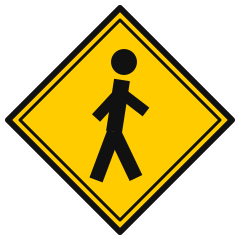
- A school bus stop ahead
- Pedestrian activity ahead
- A playground on the left
- A hiking trail entrance
80.Another vehicle wants to pass you on a dusty gravel road. What should you do?
- Move right and slow to under 60 km/h
- Stop on the road
- Keep your speed and lane
- Speed up to keep out of its dust
81.You are driving on a two-lane road. Where should the yellow line be?
- Under the centre of your car
- On the shoulder
- On your left
- On your right
82.What does this sign mean?

- Snow removal is finished
- A park with hiking trails is just ahead
- A gravel pit is ahead
- Workers are on or near the road ahead
83.Inside a multi-lane traffic circle, which vehicle must yield?
- The vehicle in the outer lane never yields
- The vehicle on the right yields to the vehicle on the left
- The slower vehicle yields
- The vehicle on the left yields to the vehicle on the right
84.When may a cyclist carry a passenger?
- Only on quiet side streets
- Only if the bike has a fixed seat for one
- Whenever the passenger is a child
- Only during daylight hours
85.What is the purpose of the amber light?
- To let pedestrians start crossing
- To show that left and right turns are now allowed
- To tell you to speed up
- To let traffic already in the intersection clear
86.When may you leave the scene of an accident you were involved in?
- When formalities are done or police allow it
- Whenever no one seems hurt
- As soon as you swap phone numbers with the other driver
- After 15 minutes
87.What happens at a road test if your vehicle's signal lights don't work properly?
- The road test is refused
- The examiner fixes them first
- You use hand signals during the test
- You lose a few marks only
88.You are towing a trailer that blocks the view through your inside mirror. What mirrors must your vehicle have?
- Outside mirrors on both the left and right
- A mirror on the left side only, extended out
- A larger inside mirror
- No extra mirrors are needed
89.Who must wear a helmet on a motorcycle in Nunavut?
- Only on highways
- Only the driver
- Only riders under 18
- All riders
90.When should you do your braking for a curve?
- Only if you start to skid
- As you leave the curve
- In the middle of the curve
- Before you enter the curve
91.You are in a school zone and the car ahead is going only 10 km/h. May you pass it?
- Yes, if you sound your horn
- Yes, on the left if clear
- Yes, on the right if clear
- No, not on either side
92.What did tests show about drivers who had used marijuana?
- No effect on driving skills
- Slower eye-hand coordination, yet more confidence
- Faster reactions and more caution behind the wheel
- Better focus on curves
93.Your licence expired eight months ago. Can you still renew it without being re-examined?
- No, you must reapply as a new driver
- Yes, it has expired less than a year
- No, you must retake all tests
- Only with a doctor's note
94.What is the speed limit for trucks outside cities and towns?
- 70 km/h at night only
- 60 km/h at all times
- 80 km/h, day or night
- 90 km/h, day or night
95.You see this sign at the entrance to a street. What does it mean?

- Parking is not allowed on this street
- The street is closed to trucks only
- Stop, then enter when clear
- You must not enter this street
96.What is the minimum age to apply for a Class 7 learner's licence in Nunavut?
- 14
- 18
- 15
- 16
97.What does this sign tell you?

- Animals are kept behind a fence
- Hunting is allowed in this area during the season
- Deer often cross this part of the highway
- A wildlife park is nearby
98.How can you keep dust out of your car on a gravel road?
- Turn off the fan, close all the vents and open a window
- Close windows, run the heater fan and open front vents
- Use the air recirculation only
- Open all windows to clear the air
99.Why can you not always rely on pavement markings during a Nunavut winter?
- They are removed every fall
- They change colour in the cold
- They are not used outside towns
- Snow and ice can cover them
100.Why do construction and maintenance signs ask you to slow down?
- To protect you and the workers from hazards
- So workers can read your licence plate
- To save fuel in work zones
- Because police patrol every work zone
Answer key with explanations
1. D — When you can see it in your rear-view mirror
Wait until you can see the car you passed in your rear-view mirror, signal right, then return promptly to the right lane.
Highways, following distance and passing · Based on: Nunavut Driver's Manual (2022 posting), Ch. 6 Safe Driving Practices, p. 42
2. B — Don't use it when you will be driving
Many antihistamine medicines cause drowsiness, and the manual says none of them should be used when driving.
Alcohol, drugs and driving · Based on: Nunavut Driver's Manual (2022 posting), Ch. 9 Alcohol, Drugs and Driving, p. 61
3. C — Report the loss to the RCMP
You can get a duplicate from any issuing office after reporting the loss or destruction to the RCMP and proving your identity.
Your licence, registration and insurance · Based on: Nunavut Driver's Manual (2022 posting), Ch. 2 Your Licence and Ch. 3 Motor Vehicle Registration, p. 10
4. D — At least 1.5 m longer
A rough rule is that you need at least 1.5 metres (about 5 feet) more than the overall length of your car to park easily.
Stopping distances, parking and speed limits · Based on: Nunavut Driver's Manual (2022 posting), Ch. 6 Safe Driving Practices, p. 44
5. B — The highest speed allowed in ideal conditions
A maximum speed sign shows the top speed allowed when conditions are ideal. In poor conditions you must go slower.
Regulatory signs · Based on: Nunavut Driver's Manual (2022 posting), Ch. 5 Rules of the Road, p. 19
6. B — 16
For Class 5 and Class 6 you must be at least 16 and already hold a valid learner's licence.
Licence classes and the driver examination · Based on: Nunavut Driver's Manual (2022 posting), Ch. 1 Driver Licence Information, p. 6
7. A — The road continues with a gravel surface
A pavement ends sign means the road keeps going but the surface changes to gravel, so slow down for less traction.
Warning signs · Based on: Nunavut Driver's Manual (2022 posting), Ch. 5 Rules of the Road, p. 22
8. C — Well before you meet it
Turn on your headlights well in advance of meeting a vehicle in dust, if they are not already on, so you can be seen.
Gravel roads, dust and winter driving · Based on: Nunavut Driver's Manual (2022 posting), Ch. 7 Hazardous Driving Conditions, p. 48
9. A — No, passing is not permitted
When a solid and a broken line appear together, you may not pass if the solid line is on your side of the road.
Pavement markings · Based on: Nunavut Driver's Manual (2022 posting), Ch. 5 Rules of the Road, p. 27
10. B — The road's path changes temporarily
A diversion sign warns of a temporary change in the roadway's alignment, so follow the new path carefully.
School, construction and service signs · Based on: Nunavut Driver's Manual (2022 posting), Ch. 5 Rules of the Road, p. 23
11. B — Shifting gears on the crossing
Approach in a gear that lets you cross without shifting; changing gears on a railway crossing is both unsafe and illegal.
Right-of-way, emergency vehicles and railway crossings · Based on: Nunavut Driver's Manual (2022 posting), Ch. 5 Rules of the Road, p. 31
12. D — Stop and give them the right-of-way
A raised cane often means the person is unsure about crossing safely; it is your signal to stop and give them the right-of-way.
Pedestrians, school buses and cyclists · Based on: Nunavut Driver's Manual (2022 posting), Ch. 5 Rules of the Road, p. 29
13. A — Treat it like a stop sign
A flashing red light has the same meaning as a stop sign: stop completely and go only when it is safe.
Traffic lights and signals · Based on: Nunavut Driver's Manual (2022 posting), Ch. 5 Rules of the Road, p. 25
14. D — Under-inflated tires
Under-inflation is a common cause of blowouts, so check your tires regularly for pressure, cuts and bulges.
Driving emergencies and accidents · Based on: Nunavut Driver's Manual (2022 posting), Ch. 8 Driving Emergencies and Ch. 12 Accidents, p. 56
15. C — Drive around the block instead
In heavy traffic, going around the block saves time and lowers the risk compared with attempting a U-turn.
Signalling, turning and turnabouts · Based on: Nunavut Driver's Manual (2022 posting), Ch. 5 Rules of the Road, p. 35
16. B — Your seat, then your mirrors
Never drive without first adjusting the seat to suit you, and then checking or adjusting the mirrors.
Your vehicle, equipment and seat belts · Based on: Nunavut Driver's Manual (2022 posting), Ch. 4 Starting Out, p. 13
17. B — Slow down gradually and steer straight
If the trailer starts to sway or fishtail, slow down gradually and steer in a straight path if possible.
Motorcycles, trailers and larger vehicles · Based on: Nunavut Driver's Manual (2022 posting), Ch. 10 Motorcycles; Ch. 11 Towing a Trailer; Ch. 13 Rules for Drivers of Commercial or Emergency Vehicles, p. 66
18. D — Pull onto the shoulder and use flashers or flares
Never stop on the travelled portion of the highway; pull onto the shoulder and use emergency lights, flares, red reflectors or triangles.
Fog, night driving, fatigue, curves and hills · Based on: Nunavut Driver's Manual (2022 posting), Ch. 7 Hazardous Driving Conditions, p. 53
19. C — Others can't tell if you are turning
Other drivers will not know whether your signal means a lane change or a turn at the intersection.
Highways, following distance and passing · Based on: Nunavut Driver's Manual (2022 posting), Ch. 6 Safe Driving Practices, p. 43
20. B — Low blood sugar could cause weakness or fainting
Too much insulin or a missed or late meal can drop blood sugar, leading to weakness, light-headedness, poor judgment and even fainting.
Alcohol, drugs and driving · Based on: Nunavut Driver's Manual (2022 posting), Ch. 9 Alcohol, Drugs and Driving, p. 61
21. A — $200,000
Every registered vehicle must have liability insurance of at least 200,000 dollars from a company registered with the Insurance Registry of Nunavut.
Your licence, registration and insurance · Based on: Nunavut Driver's Manual (2022 posting), Ch. 2 Your Licence and Ch. 3 Motor Vehicle Registration, p. 11
22. D — No, it is not permitted
Stopping, standing or parking on a bridge is prohibited unless an officer or traffic control device directs it.
Stopping distances, parking and speed limits · Based on: Nunavut Driver's Manual (2022 posting), Ch. 6 Safe Driving Practices, p. 44
23. A — Traffic may move in one direction only
One-way signs mark streets and highways where traffic is allowed to travel in a single direction only.
Regulatory signs · Based on: Nunavut Driver's Manual (2022 posting), Ch. 5 Rules of the Road, p. 20
24. A — You must wear them whenever you drive
If you need corrective lenses to meet the vision standard, you must wear them at all times while driving, and your licence is endorsed.
Licence classes and the driver examination · Based on: Nunavut Driver's Manual (2022 posting), Ch. 1 Driver Licence Information, p. 8
25. B — How much height clearance there is
The underpass sign shows the overhead clearance, so drivers of tall vehicles know whether they will fit.
Warning signs · Based on: Nunavut Driver's Manual (2022 posting), Ch. 5 Rules of the Road, p. 22
26. C — Rear-wheel-drive vehicles only
Add weight only if your vehicle is rear-wheel drive, placed over the rear axle; too much weight too far back can lift the front wheels.
Gravel roads, dust and winter driving · Based on: Nunavut Driver's Manual (2022 posting), Ch. 7 Hazardous Driving Conditions, p. 50
27. C — To give advance warning of the hazard
Along with cross-hatching on the road, yellow and black markings on the object itself warn drivers well in advance.
Pavement markings · Based on: Nunavut Driver's Manual (2022 posting), Ch. 5 Rules of the Road, p. 28
28. D — It is going well below the posted speed
The sign warns that the vehicle ahead moves much slower than the speed limit, so slow down early and pass only when safe.
School, construction and service signs · Based on: Nunavut Driver's Manual (2022 posting), Ch. 5 Rules of the Road, p. 23
29. B — Wait until the signal stops
At a signal-controlled crossing, do not proceed until the signal has stopped and it appears safe.
Right-of-way, emergency vehicles and railway crossings · Based on: Nunavut Driver's Manual (2022 posting), Ch. 5 Rules of the Road, p. 30
30. C — On the far right, with the traffic
Cyclists ride on the far right-hand side in the same direction as traffic, unless that space is blocked, they use a cycle lane, or they are turning left.
Pedestrians, school buses and cyclists · Based on: Nunavut Driver's Manual (2022 posting), Ch. 5 Rules of the Road, p. 32
31. B — Stop; do not enter on an amber light
Amber warns that red is coming. Do not enter the intersection on amber; speeding up to beat it risks a collision or a ticket.
Traffic lights and signals · Based on: Nunavut Driver's Manual (2022 posting), Ch. 5 Rules of the Road, p. 25
32. D — In the direction the rear is sliding
Steer in the direction the rear of the car is sliding, take your foot off the gas and pump the brakes gently.
Driving emergencies and accidents · Based on: Nunavut Driver's Manual (2022 posting), Ch. 8 Driving Emergencies and Ch. 12 Accidents, p. 57
33. D — The lane closest to the left curb
Complete this turn in the lane for traffic closest to the left curb of the one-way street.
Signalling, turning and turnabouts · Based on: Nunavut Driver's Manual (2022 posting), Ch. 5 Rules of the Road, p. 34
34. B — At least 30 m
The two red brake lights must be visible in normal sunlight from at least 30 metres (100 feet) and must work with the foot brake.
Your vehicle, equipment and seat belts · Based on: Nunavut Driver's Manual (2022 posting), Ch. 4 Starting Out, p. 15
35. C — To the right
When backing a trailer, turn your wheels to the right to make the trailer back to the left, and the opposite way for the right.
Motorcycles, trailers and larger vehicles · Based on: Nunavut Driver's Manual (2022 posting), Ch. 10 Motorcycles; Ch. 11 Towing a Trailer; Ch. 13 Rules for Drivers of Commercial or Emergency Vehicles, p. 66
36. A — A drowsy state from long, monotonous driving
Being drowsy or half asleep at the wheel is often called highway hypnosis and usually comes from monotonous, uninterrupted driving.
Fog, night driving, fatigue, curves and hills · Based on: Nunavut Driver's Manual (2022 posting), Ch. 7 Hazardous Driving Conditions, p. 53
37. D — No, never pass on the shoulder
You may pass on the right with caution if a right lane is available, but you must not pass on the shoulder.
Highways, following distance and passing · Based on: Nunavut Driver's Manual (2022 posting), Ch. 6 Safe Driving Practices, p. 39
38. B — Light-headedness
Blood pressure pills often cause light-headedness, especially at the start of treatment, so don't drive until your doctor has corrected it.
Alcohol, drugs and driving · Based on: Nunavut Driver's Manual (2022 posting), Ch. 9 Alcohol, Drugs and Driving, p. 61
39. D — Within 15 days
You must notify your nearest issuing office of a change of name or address within 15 days.
Your licence, registration and insurance · Based on: Nunavut Driver's Manual (2022 posting), Ch. 2 Your Licence and Ch. 3 Motor Vehicle Registration, p. 10
40. B — At least 15 m
No stopping, standing or parking within 15 metres (50 feet) of the nearest rail of a railway crossing.
Stopping distances, parking and speed limits · Based on: Nunavut Driver's Manual (2022 posting), Ch. 6 Safe Driving Practices, p. 44
41. B — So you can read them when the words are hidden
Darkness, fog, snow or dust can hide a sign's lettering, but its shape still tells you what kind of sign it is.
Regulatory signs · Based on: Nunavut Driver's Manual (2022 posting), Ch. 5 Rules of the Road, p. 18
42. B — Drive Class 5 or 6 vehicles while learning
Class 7 is the learner class: it lets you operate any vehicle in Class 5 or Class 6 while you are learning to drive it.
Licence classes and the driver examination · Based on: Nunavut Driver's Manual (2022 posting), Ch. 1 Driver Licence Information, p. 6
43. D — A narrow structure such as a bridge
Lines that pinch inward warn of a narrow structure ahead, such as a narrow bridge.
Warning signs · Based on: Nunavut Driver's Manual (2022 posting), Ch. 5 Rules of the Road, p. 21
44. C — Start with a full tank and a call-back plan
Travel in a blizzard is not recommended. If you must go, start with a full tank and arrange for someone to know when you arrive.
Gravel roads, dust and winter driving · Based on: Nunavut Driver's Manual (2022 posting), Ch. 7 Hazardous Driving Conditions, p. 51
45. C — You may pass when it is safe
The broken line on your side allows you to pass when safe; drivers with the solid line on their side may not.
Pavement markings · Based on: Nunavut Driver's Manual (2022 posting), Ch. 5 Rules of the Road, p. 27
46. D — Every pedestrian, of any age
School crosswalks are not just for children; all pedestrians using them have the same crossing privileges.
School, construction and service signs · Based on: Nunavut Driver's Manual (2022 posting), Ch. 5 Rules of the Road, p. 31
47. B — Traffic already in the circle
Traffic entering a traffic circle must yield to traffic already in the circle.
Right-of-way, emergency vehicles and railway crossings · Based on: Nunavut Driver's Manual (2022 posting), Ch. 5 Rules of the Road, p. 30
48. A — Stop as well, because a pedestrian may be crossing
Passing another vehicle that is stopped for pedestrians is both highly dangerous and illegal.
Pedestrians, school buses and cyclists · Based on: Nunavut Driver's Manual (2022 posting), Ch. 5 Rules of the Road, p. 31
49. D — A railway or school crossing ahead
Separate flashing amber lights draw your attention to hazards such as a divided highway starting, signals ahead, railway or school crossings, or an intersection.
Traffic lights and signals · Based on: Nunavut Driver's Manual (2022 posting), Ch. 5 Rules of the Road, p. 25
50. D — About 60 m
Set up an advance warning with a reflectorized sign or flares about 60 metres (200 feet) in front of and behind the car.
Driving emergencies and accidents · Based on: Nunavut Driver's Manual (2022 posting), Ch. 8 Driving Emergencies and Ch. 12 Accidents, p. 57
51. B — You must judge the speed of oncoming traffic
Speed is hard to judge when a vehicle is coming toward you, especially at night, and left turns cross oncoming traffic.
Signalling, turning and turnabouts · Based on: Nunavut Driver's Manual (2022 posting), Ch. 5 Rules of the Road, p. 34
52. A — Not drive; it may mean a serious brake problem
Warning lights should go out once the vehicle starts. Do not drive away if they stay on; a lit brake light could signal a serious brake problem.
Your vehicle, equipment and seat belts · Based on: Nunavut Driver's Manual (2022 posting), Ch. 4 Starting Out, p. 13
53. A — No, they must not ride two abreast
Motorcyclists must not ride two abreast in a traffic lane.
Motorcycles, trailers and larger vehicles · Based on: Nunavut Driver's Manual (2022 posting), Ch. 10 Motorcycles; Ch. 11 Towing a Trailer; Ch. 13 Rules for Drivers of Commercial or Emergency Vehicles, p. 63
54. A — About every two hours
Stop as often as you need, for example every two hours, and get out to walk around. The best cure is proper rest.
Fog, night driving, fatigue, curves and hills · Based on: Nunavut Driver's Manual (2022 posting), Ch. 7 Hazardous Driving Conditions, p. 54
55. C — Nearly two-thirds
Nearly two-thirds of rear-end collisions happen under ideal conditions, so following too closely, not the road, is usually to blame.
Highways, following distance and passing · Based on: Nunavut Driver's Manual (2022 posting), Ch. 6 Safe Driving Practices, p. 39
56. C — Judgment and self-control
Alcohol affects the highest functions of the brain first, removing inhibitions and impairing judgment, before it affects more basic functions.
Alcohol, drugs and driving · Based on: Nunavut Driver's Manual (2022 posting), Ch. 9 Alcohol, Drugs and Driving, p. 59
57. A — Be re-examined
Any licence that has been expired for more than one year requires a re-examination.
Your licence, registration and insurance · Based on: Nunavut Driver's Manual (2022 posting), Ch. 2 Your Licence and Ch. 3 Motor Vehicle Registration, p. 10
58. B — About 10 m
In three-quarters of a second at 48 km/h your car goes about 10 metres, roughly two car lengths, before braking starts.
Stopping distances, parking and speed limits · Based on: Nunavut Driver's Manual (2022 posting), Ch. 6 Safe Driving Practices, p. 44
59. B — Do not turn left here
This sign means no left turns are permitted at that location.
Regulatory signs · Based on: Nunavut Driver's Manual (2022 posting), Ch. 5 Rules of the Road, p. 20
60. B — The examiner may give it to you orally
For people who can't read and understand the written test, the examiner may give an oral test. An interpreter may also be allowed at the examiner's discretion.
Licence classes and the driver examination · Based on: Nunavut Driver's Manual (2022 posting), Ch. 1 Driver Licence Information, p. 7
61. A — Slow down and proceed with caution
Warning signs alert you to hazards you cannot see yet, so the safe response is to slow down and drive carefully.
Warning signs · Based on: Nunavut Driver's Manual (2022 posting), Ch. 5 Rules of the Road, p. 18
62. B — At least three times the usual distance
In winter, start slowing at least three times the distance you normally would before an intersection where you plan to turn or stop.
Gravel roads, dust and winter driving · Based on: Nunavut Driver's Manual (2022 posting), Ch. 7 Hazardous Driving Conditions, p. 50
63. C — To guide you away from the fixed object
Cross-hatching is painted ahead of fixed objects such as bridge piers and concrete islands to steer traffic away from them.
Pavement markings · Based on: Nunavut Driver's Manual (2022 posting), Ch. 5 Rules of the Road, p. 28
64. C — The airport
On service and information signs, the aeroplane symbol points the way to the airport.
School, construction and service signs · Based on: Nunavut Driver's Manual (2022 posting), Ch. 5 Rules of the Road, p. 24
65. D — No closer than 150 m
No driver may follow within 150 metres (500 feet) of a fire engine unless driving another emergency vehicle.
Right-of-way, emergency vehicles and railway crossings · Based on: Nunavut Driver's Manual (2022 posting), Ch. 5 Rules of the Road, p. 29
66. B — Stop before reaching the bus
Whether you approach from the front or the rear, you must stop before reaching a school bus that is loading or unloading with lights flashing.
Pedestrians, school buses and cyclists · Based on: Nunavut Driver's Manual (2022 posting), Ch. 5 Rules of the Road, p. 32
67. D — Other movements are given to other traffic
You may still go only in the arrow's direction; the red indicates that some other movement at the intersection is allowed for other traffic.
Traffic lights and signals · Based on: Nunavut Driver's Manual (2022 posting), Ch. 5 Rules of the Road, p. 26
68. D — Discuss who may be at fault
It is advisable to collect witness names, exchange insurance details and note what happened, but not to discuss who is at fault.
Driving emergencies and accidents · Based on: Nunavut Driver's Manual (2022 posting), Ch. 8 Driving Emergencies and Ch. 12 Accidents, p. 67
69. D — A driver behind may be passing you
Swinging left before a right turn is extremely dangerous because the driver behind does not expect it and may be passing as you move into that lane.
Signalling, turning and turnabouts · Based on: Nunavut Driver's Manual (2022 posting), Ch. 5 Rules of the Road, p. 34
70. D — Booster cables, a shovel and a traction mat
The manual's winter kit is a scraper brush, booster cables, shovel, tow chain or strap, traction mat, sand and a flashlight.
Your vehicle, equipment and seat belts · Based on: Nunavut Driver's Manual (2022 posting), Ch. 4 Starting Out, p. 17
71. B — At least 60 m, so traffic can pass
Trucks should not travel in convoy but keep at least 60 metres (200 feet) apart so other traffic can pass.
Motorcycles, trailers and larger vehicles · Based on: Nunavut Driver's Manual (2022 posting), Ch. 10 Motorcycles; Ch. 11 Towing a Trailer; Ch. 13 Rules for Drivers of Commercial or Emergency Vehicles, p. 68
72. B — Just after it starts to rain
The first drops loosen grease and dirt on the road, creating a slippery film, so slow down as soon as it starts to rain.
Fog, night driving, fatigue, curves and hills · Based on: Nunavut Driver's Manual (2022 posting), Ch. 7 Hazardous Driving Conditions, p. 55
73. D — When it is turning left and the right lane is open
Always pass on the left, except on four-lane highways when the other vehicle is turning left and the right lane is open.
Highways, following distance and passing · Based on: Nunavut Driver's Manual (2022 posting), Ch. 6 Safe Driving Practices, p. 42
74. C — About 50%
Special studies show that in half of fatal accidents at least one driver had been drinking, often heavily.
Alcohol, drugs and driving · Based on: Nunavut Driver's Manual (2022 posting), Ch. 9 Alcohol, Drugs and Driving, p. 59
75. C — Proof of insurance
Proof of insurance is required before a vehicle may be registered in Nunavut.
Your licence, registration and insurance · Based on: Nunavut Driver's Manual (2022 posting), Ch. 2 Your Licence and Ch. 3 Motor Vehicle Registration, p. 11
76. D — Never go faster than you can stop in the clear distance
Safe speed depends on conditions: never drive so fast that you cannot bring your vehicle to a safe stop in the clear distance ahead.
Stopping distances, parking and speed limits · Based on: Nunavut Driver's Manual (2022 posting), Ch. 6 Safe Driving Practices, p. 47
77. D — Pass to the right of the island
The keep right sign is placed on islands and obstructions and requires you to pass on their right side.
Regulatory signs · Based on: Nunavut Driver's Manual (2022 posting), Ch. 5 Rules of the Road, p. 19
78. D — Only with an authorized person in the car
You may drive to or from the test only if you hold a valid learner's licence and are accompanied by someone authorized under the Motor Vehicles Act.
Licence classes and the driver examination · Based on: Nunavut Driver's Manual (2022 posting), Ch. 1 Driver Licence Information, p. 8
79. B — Pedestrian activity ahead
The walking figure warns that pedestrians are likely to be on or near the road ahead.
Warning signs · Based on: Nunavut Driver's Manual (2022 posting), Ch. 5 Rules of the Road, p. 22
80. A — Move right and slow to under 60 km/h
Moving right and slowing below 60 km/h reduces dust and flying stones and lets the other driver get past quickly.
Gravel roads, dust and winter driving · Based on: Nunavut Driver's Manual (2022 posting), Ch. 7 Hazardous Driving Conditions, p. 49
81. C — On your left
On a two-lane roadway the yellow line should always be on your left; if it is on your right, you are on the wrong side.
Pavement markings · Based on: Nunavut Driver's Manual (2022 posting), Ch. 5 Rules of the Road, p. 27
82. D — Workers are on or near the road ahead
This sign warns of people working ahead. Slow down to a speed that keeps you and the workers safe.
School, construction and service signs · Based on: Nunavut Driver's Manual (2022 posting), Ch. 5 Rules of the Road, p. 23
83. B — The vehicle on the right yields to the vehicle on the left
Nunavut's manual says that in a traffic circle the vehicle on the right must yield to the vehicle on the left.
Right-of-way, emergency vehicles and railway crossings · Based on: Nunavut Driver's Manual (2022 posting), Ch. 5 Rules of the Road, p. 30
84. B — Only if the bike has a fixed seat for one
A cyclist may never take a passenger unless the bicycle has a fixed seat for that purpose, such as a tandem.
Pedestrians, school buses and cyclists · Based on: Nunavut Driver's Manual (2022 posting), Ch. 5 Rules of the Road, p. 33
85. D — To let traffic already in the intersection clear
The amber light gives vehicles already in the intersection a chance to clear it safely before cross traffic gets a green.
Traffic lights and signals · Based on: Nunavut Driver's Manual (2022 posting), Ch. 5 Rules of the Road, p. 25
86. A — When formalities are done or police allow it
You must stay at the scene until the legal formalities are complete or a police officer gives you permission to leave.
Driving emergencies and accidents · Based on: Nunavut Driver's Manual (2022 posting), Ch. 8 Driving Emergencies and Ch. 12 Accidents, p. 67
87. A — The road test is refused
The manual warns that a road test will be refused if the signalling devices are not working properly.
Signalling, turning and turnabouts · Based on: Nunavut Driver's Manual (2022 posting), Ch. 5 Rules of the Road, p. 33
88. A — Outside mirrors on both the left and right
When a load or a trailer blocks your view, you need outside mirrors on both sides of the vehicle.
Your vehicle, equipment and seat belts · Based on: Nunavut Driver's Manual (2022 posting), Ch. 4 Starting Out, p. 16
89. D — All riders
The manual's special provisions say all riders must wear helmets, and passengers are allowed only on a motorcycle equipped for two.
Motorcycles, trailers and larger vehicles · Based on: Nunavut Driver's Manual (2022 posting), Ch. 10 Motorcycles; Ch. 11 Towing a Trailer; Ch. 13 Rules for Drivers of Commercial or Emergency Vehicles, p. 63
90. D — Before you enter the curve
Slow down before entering any curve, braking then and not in the curve, and accelerate gradually through the rest of it.
Fog, night driving, fatigue, curves and hills · Based on: Nunavut Driver's Manual (2022 posting), Ch. 7 Hazardous Driving Conditions, p. 54
91. D — No, not on either side
In a school or playground zone you should not overtake another vehicle on either side, even if it is moving very slowly.
Highways, following distance and passing · Based on: Nunavut Driver's Manual (2022 posting), Ch. 6 Safe Driving Practices, p. 41
92. B — Slower eye-hand coordination, yet more confidence
Marijuana dulled thinking and slowed eye-hand coordination, while users felt more confident and less critical of themselves.
Alcohol, drugs and driving · Based on: Nunavut Driver's Manual (2022 posting), Ch. 9 Alcohol, Drugs and Driving, p. 62
93. B — Yes, it has expired less than a year
A Nunavut licence can be renewed as long as it has not been expired for longer than one year.
Your licence, registration and insurance · Based on: Nunavut Driver's Manual (2022 posting), Ch. 2 Your Licence and Ch. 3 Motor Vehicle Registration, p. 10
94. C — 80 km/h, day or night
Trucks are limited to 80 km/h outside cities and towns, both day and night.
Stopping distances, parking and speed limits · Based on: Nunavut Driver's Manual (2022 posting), Ch. 6 Safe Driving Practices, p. 47
95. D — You must not enter this street
This is a do not enter sign. You may not drive into the street it faces.
Regulatory signs · Based on: Nunavut Driver's Manual (2022 posting), Ch. 5 Rules of the Road, p. 19
96. C — 15
The manual lists age 15 as the minimum for a Class 7 licence, along with the written test, a vision check and suitable ID.
Licence classes and the driver examination · Based on: Nunavut Driver's Manual (2022 posting), Ch. 1 Driver Licence Information, p. 6
97. C — Deer often cross this part of the highway
This sign marks a section of highway that deer cross regularly, so watch the road edges and be ready to slow down.
Warning signs · Based on: Nunavut Driver's Manual (2022 posting), Ch. 5 Rules of the Road, p. 22
98. B — Close windows, run the heater fan and open front vents
With windows shut, the heater fan on and the forward vents open, pressure builds inside and keeps most dust from getting in.
Gravel roads, dust and winter driving · Based on: Nunavut Driver's Manual (2022 posting), Ch. 7 Hazardous Driving Conditions, p. 49
99. D — Snow and ice can cover them
The manual notes that markings are obliterated by snow and ice and are hard to see when wet.
Pavement markings · Based on: Nunavut Driver's Manual (2022 posting), Ch. 5 Rules of the Road, p. 27
100. A — To protect you and the workers from hazards
These signs warn of hazards in work zones and ask you to slow to a speed that keeps both you and the workers safe.
School, construction and service signs · Based on: Nunavut Driver's Manual (2022 posting), Ch. 5 Rules of the Road, p. 23
Original practice questions by Canada Exam Prep, written from the official handbook. Not official test questions. Free to print for personal study.
FAQ
Nunavut Class 7 practice test (PDF): common questions
Is there an official Nunavut learner's test PDF?
Not of the questions. The Government of Nunavut publishes the Nunavut Driver's Manual as a free PDF, and it ends with a short list of typical examination questions, but not the test itself. Practice PDFs such as this one are made by third parties.
How do I save this page as a PDF?
Press the Print or save as PDF button and choose Save as PDF as the printer. On a phone the option sits in the print or share menu. Menus, buttons and ads are not included in the printed copy.
How many questions are on the real Nunavut test?
The manual does not say, and we could not find an official number. It describes two parts, rules of the road and sign identification, and you rewrite only a part you fail. Ask your Motor Vehicles office for the current format before you book.
Keep practising
- Nunavut road signs chartEvery sign drawing in our Nunavut Class 7 question bank on one page with its meaning: regulatory, warning, school, construction and service signs explained.
- Nunavut Class 7 study guide
- Nunavut Class 7 Mock Exam 1 – 30 QuestionsUntimed practice · answers explained
- Nunavut Class 7 Mock Exam 2 – 30 QuestionsUntimed practice · answers explained
- Nunavut Class 7 Practice Test 130 questions with explanations
- Nunavut Class 7 Practice Test 230 questions with explanations
- Nunavut Class 7 Practice Test 330 questions with explanations
Practice by topic
- Regulatory signsSign shapes and the Nunavut colour code, stop and yield, speed signs, no U-turn, do not enter, one-way and two-way, keep right, passing signs, turn-control and overhead lane signs, and parking signs.
- Warning signsYellow warning signs for curves, merges, narrow roads, divided highways, intersections, signals, hills, slippery roads, railway crossings, deer, lane endings, fallen rock, soft shoulders, and hazard markers.
- School, construction and service signsThe pedestrian-school advance sign and its speed tab, school and pedestrian crosswalk signs, construction and maintenance signs, the slow moving vehicle sign, and service and information signs.
- Traffic lights and signalsLight colours and order, the fourth red light, red, amber and green lights, right turn on red, flashing red, amber and green, green arrows, lane use signals, pedestrian signals and police or flagman directions.
- Pavement markingsYellow and white lines, broken and solid lines, solid-and-broken pairs, double solid lines, stop lines and crosswalks, cross-hatching and directional arrows.
- Licence classes and the driver examinationNunavut's seven licence classes, what a Class 7 learner may drive, minimum ages, the two-part written test, vision and road tests, test refusals and licence conditions.
- Your licence, registration and insuranceLicence renewal and expiry, new residents, lost licences, name and address changes, licence offences, vehicle registration, the $200,000 insurance minimum, plate-to-owner plates and transfers.
- Your vehicle, equipment and seat beltsPre-drive checks, seating and steering position, warning lights, attitude and distraction, required equipment and light distances, mirrors, equipment inspection, seat belts and winter preparation.
- Right-of-way, emergency vehicles and railway crossingsUncontrolled intersections, entering from driveways and lanes, left turns, emergency vehicles and the 150 m fire engine rule, funeral processions, traffic circles and railway crossing stopping distances.
- Pedestrians, school buses and cyclistsCrosswalks, school and playground zones, pedestrian and driver responsibilities, blind pedestrians, stopping for school buses, and sharing the road with cyclists.
- Signalling, turning and turnaboutsWhen and how far ahead to signal, hand signals, right and left turns, turns between one-way and two-way streets, U-turns, two-point and three-point turns, prohibited turnabouts and approaching intersections.
- Highways, following distance and passingFreeway and controlled access highway driving, the two-second rule and following distances, avoiding rear-end collisions, passing in towns and on highways, meeting other vehicles and changing lanes.
- Stopping distances, parking and speed limitsReaction and braking distance, where you may not stop or park, parallel, angle and hill parking, opening doors, Nunavut's 90, 80 and 50 km/h limits, safe speed and the slow driver.
- Gravel roads, dust and winter drivingDust clouds and the 60 km/h meeting rule, flying stones, loose gravel and washboard, winter equipment, carbon monoxide, blizzards, icy roads, black ice and starting on ice.
- Fog, night driving, fatigue, curves and hillsFog, headlight reach and dimming distances, glare, night speed, drowsiness, curves and hills, coasting, hydroplaning, the first rain, and snowplows with flashing blue lights.
- Driving emergencies and accidentsRunning off the pavement, blowouts, skids, wet brakes, disabled vehicles, head-on threats, fires, sinking vehicles, stuck accelerators, and your legal duties after an accident including the $1,000 reporting rule.
- Alcohol, drugs and drivingHow alcohol affects driving, the 0.08 limit and impairment at any level, the blood-alcohol chart, prescription and over-the-counter drugs, illicit drugs and sobering-up myths.
- Motorcycles, trailers and larger vehiclesMotorcycle equipment and learner rules, sharing the road with motorcycles, towing a trailer, and rules for commercial vehicles such as clearance lights, load flags and trailer brakes.