What does this sign warn you about?
NWT Class 7: Warning signs
Yellow diamond warning signs for stops and signals ahead, curves, crossings, intersections, merging, narrowing roads, lane endings, divided highways and other road conditions.
- No sign-up
- Every answer explained
- Independent · not a government site
- 24 questions
- Topic drill
Study reference: NWT Driver's Manual (rev. August 2022), Ch. 2 Traffic Controls — Warning signs, pp. 31–34
All 24 questions in this test
Every question and its answer choices. The correct answers and explanations appear when you take the test above.
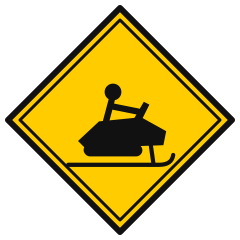
What does this sign warn you about?
- Snowmobiles are allowed on the road
- Motorized snow vehicles may cross
- Snow-clearing equipment is ahead
- The road is closed in winter
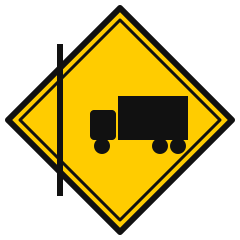
What does this sign warn you about?
- Trucks are prohibited ahead
- Trucks entering from the right
- A truck route begins here
- A weigh scale is ahead
What is this tall striped sign used for?

- To warn of a school crossing
- To mark the end of a road
- To show where a detour starts
- To mark an object near the road
You see this sign on a two-lane road. What should you do?

- Move right to make room for passing
- Be ready to merge left as the lane ends
- Stop and wait for a gap
- Speed up to pass before the merge
What does a chevron sign like this one indicate?
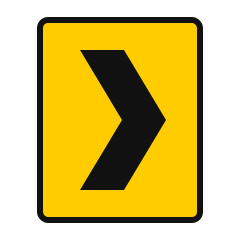
- A change in the road's direction
- A one-way road
- A passing lane is coming up ahead
- An exit lane
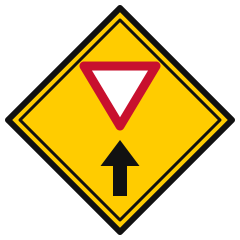
What does this sign warn you about?
- A merge from the left
- A yield sign is ahead
- A railway crossing is ahead
- A one-way road begins
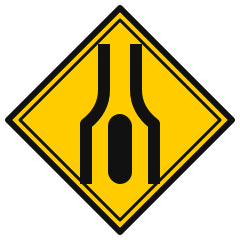
What does this sign mean?
- The road narrows ahead
- The road widens ahead
- A bridge is closed
- A divided highway begins
What does this sign warn of?
- The road may be slippery when wet
- Do not stop on the shoulder
- Watch for ice on bridges
- The road curves sharply
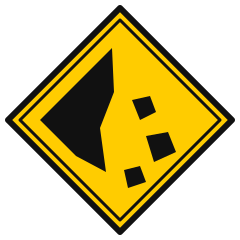
What does this sign warn of?
- A cliff-side viewpoint
- A rough road surface
- A gravel road ahead
- Falling rocks
What does this sign warn of?
- A divided highway ends
- A lane is added on the right
- The road curves left
- Traffic merging ahead
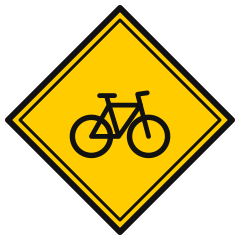
What does this sign warn of?
- A bicycle crossing ahead
- A bike shop is nearby
- Bicycles are prohibited
- A bicycle route begins
What does the speed plate under this curve sign tell you?

- The recommended top speed for the curve
- The new speed limit for the highway
- The speed for trucks only
- The minimum speed through the curve
An advance warning sign before an intersection has two lights, and they are flashing. What does that mean?
- The signal ahead is red or amber, or about to be
- The signal ahead is out of order and not working
- You may go through without slowing
- A train is crossing the road ahead
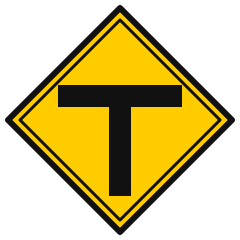
What does this sign warn of?
- A side road on the right
- A Y intersection ahead
- A dead end ahead
- A T intersection ahead
What does this sign warn you about?
- A traffic signal is ahead
- A four-way stop is behind you
- A school bus stop is ahead
- A stop sign is ahead
What does this sign warn of?
- A runaway lane ahead
- A steep hill ahead
- Trucks entering the road
- A truck route
You see this sign. What is ahead?
- Traffic control signals
- A pedestrian crosswalk
- A railway crossing
- A construction zone
What does this sign warn of?
- The road narrows on both sides
- A divided highway begins
- A painted island ahead
- A divided highway ends
What is the main purpose of yellow warning signs?
- To warn of possible hazards ahead
- To state rules you must obey
- To give direction and distance
- To show roadside services
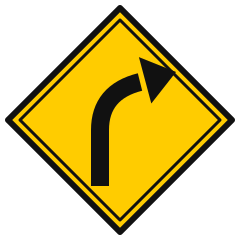
What does this sign warn of?
- The right lane ends
- A road joins from the right
- A curve to the right
- A right turn is required
You are on a road that has been one-way. What does this sign warn you about?

- A divided highway begins
- Passing is allowed in both lanes
- Two-way traffic ahead
- Traffic must keep right
What does this sign warn of?
- A lane shift for construction
- A reverse turn to the left
- A slippery road ahead
- A winding road ahead
You see this sign on a northern highway. What should you watch for?

- A hunting area beside the road
- A wildlife viewing area
- Animals that may cross the road
- A park entrance ahead
What does this sign warn of?
- Rumble strips on the shoulder
- A bump in the road
- A railway crossing
- A hill ahead
Warning signs: key rules to remember
Our summary of what the official handbook says on this topic, in our own words. Read it before or after the practice questions above, then check the original chapter. Read the official chapter ↗
Warning signs (Ch. 2 Traffic Controls)
- Warning signs give advance notice of possible hazards on or near the road.
- Three kinds: advance warning of a traffic rule ahead; physical features or conditions of the road; intermittent or moving hazards that may need a response.
- Examples of advance warning: stop ahead, yield ahead, traffic control signals ahead, school bus stop ahead.
Signal advance warning with two lights; turn and curve signs; crossings
- Some signalized intersections have an advance sign with two lights. When its lights flash, the signal ahead is red or amber or about to become red or amber: be prepared to stop.
- Turn/curve signs: single turn right/left, curve right/left, reverse turn, reverse curve, winding road.
- A speed plate under a curve sign gives the recommended maximum speed for that curve in ideal conditions.
- Crossing warnings: pedestrian crossing ahead, animal crossing, moose crossing, bicycle crossing ahead, motorized snow vehicles crossing, school crosswalk ahead.
Intersections, converging and narrow roadways
- Intersection warnings: concealed road (left/right), T intersection, Y intersection, railway crossing ahead, trucks entering from the right, dead end.
- Converging roadways: merging traffic; added lane (free flow).
- Narrow roadways: road narrows (both sides, left, right), narrow passage.
Lane ends, divided highway, other road conditions
- Lane ends: loss of the left lane or the right lane.
- Divided highway begins / divided highway ends.
- Other conditions: hill, bump, pavement ends, slippery when wet, hazard marker (object on the right or left), pass on either side of an obstacle, rumble strips, falling rocks, chevron (change in road alignment), traffic light ahead, two-way traffic ahead.
Other topics
- Regulatory signs and speed limitsSign shapes and colours, stop and yield signs, permissive green-circle and prohibitive red-slash signs, lane-use, parking and stopping signs, and NWT default speed limits.
- Guide, service and construction signsRoute markers, direction and distance signs, service signs, orange construction signs, doubled fines with workers present, the slow-moving vehicle sign and disabled parking.
- School and playground zonesSchool and playground area versus zone signs, the 30 km/h speed, 24-hour default times, municipal bylaws, no passing and where zones end.
- Traffic lights and signalsLight order, steady and flashing red, amber and green lights, green arrows, turns on red, pedestrian signals and lane control signals.
- Pavement markingsYellow and white lines, broken and solid lines, passing rules, arrows, two-way left-turn lanes, diamonds, railway X markings, painted islands, crosswalks and stop lines.
- Licences, GDL and registrationClass 7 learner conditions, probationary and full stages, licence classes, new residents and visitors, vision and medical rules, exams, renewals, registration and insurance.
- Starting, steering and stoppingPre-drive checks, seat, mirrors, seat belts and head restraints, transmissions, steering, stopping distances, braking technique and backing up.
- ParkingParallel, angle and hill parking, getting in and out of a parked vehicle, and the distances and places where you may not park.
- Intersections and right-of-wayWhere to stop at stop signs, four-way stops, yield signs, traffic circles, controlled and uncontrolled intersections and keeping intersections clear.
- Signalling and turningWhen to signal, hand signals, right and left turns, turning lanes, dual turns, two-way left-turn lanes, U-turns and free-flow lanes.
- Lane driving, passing and mergingLane position, shoulders, blind spots and lane changes, passing lanes, passing on two-lane highways, when passing is illegal, merging, exiting, curves and hills.
- Emergencies, skids and collisionsBreakdowns, brake, steering, tire and headlight failure, emergency braking and ABS, skids, off-road recovery, collision duties and slowing for emergency vehicles.
- Night, weather and animalsHeadlight rules and distances, glare, winter kits, hydroplaning, ice and snow, black ice, smoke and fog, deep water and avoiding animals.
- Defensive and responsible drivingScanning, space cushions, the two-second rule, fatigue, cellphones, child restraints, fuel efficiency, refuelling and other traffic laws.
- Sharing the roadPedestrians, cyclists, motorcycles, large and log-haul vehicles, school buses, emergency vehicles, snowplows, railway crossings, LRT and funeral processions.
- Impaired and distracted drivingZero BAC for new drivers, 50 and 80 mg limits, administrative suspensions, Criminal Code disqualifications, ignition interlock, drugs and distracted-driving penalties.
- Demerit points and suspensionsDemerit thresholds for GDL and fully licensed drivers, interviews, suspension lengths, driver improvement courses, reinstatement and Registrar suspensions.