NWT Learner's Practice Test – Printable PDF
100 NWT Class 7 practice questions, signs and rules mixed, with a separate answer key citing the Driver's Manual page. Print it or save it as a PDF. Free.
- No sign-up
- Every answer explained
- Independent · not a government site
- 100 questions
- Answer key included
- Free, no sign-up
This page turns our Northwest Territories question bank into a 100-question paper test you can print or save as a PDF. The questions are spread across all 18 of our topics, so you get road signs, school and playground zones, traffic signals and pavement markings alongside GDL conditions, right-of-way, winter driving, impaired driving and demerit points. The answer key starts on a fresh page after the last question, so you can work through the whole paper before you check a single answer.
When you mark it, keep two scores: one for sign questions and one for rules questions. The real NWT exam is a 20-question rules test plus a separate 20-question signs test, and missing more than four on either one is a fail, so a good total can hide a weak section. Every question is original, written from the NWT Driver's Manual (Basic Handbook, revised August 2022), and each answer names the manual page. Expect the territory's own numbers: 90 km/h on a primary highway outside a settlement, 30 km/h school and playground zones that apply around the clock unless times are posted, and half the posted limit when emergency lights are flashing ahead.
NWT Learner's Practice Test – Printable PDF
1.According to the manual, how much more fuel do you burn for every 10 km/h above 90 km/h?
- About 25% more
- About 50% more
- About 2% more
- About 10% more
2.A Class 7 learner reaches 6 demerit points. What happens?
- A six-month suspension
- An interview with an examiner
- A warning letter only
- A one-month suspension
3.A white square sign has a green circle around a symbol. What does the green circle tell you?
- The action shown is permitted
- The action shown is prohibited
- A school is close by
- The action is allowed only at night
4.What is the centre lane of a two-way left-turn lane reserved for?
- Buses and taxis
- Left turns from either direction
- Passing slow traffic
- Emergency vehicles and police only
5.According to the manual's chart, about how far does it take to stop from 100 km/h on dry pavement?
- About 76 m
- About 108 m
- About 126 m
- About 66 m
6.Smoke from a forest fire makes it unsafe to keep driving. What should you do?
- Pull well off the road and use four-way flashers
- Stop in your lane with lights on
- Follow the taillights of the vehicle ahead closely
- Speed up to get through it
7.Who must you obey at all times near a school?
- School patrols
- Teachers on the sidewalk
- Parents waiting at the curb
- Older students crossing
8.About how far may a train need to stop under full emergency braking?
- About 50 metres
- About 100 metres
- A kilometre or more
- About 300 metres
9.A stop sign has no stop line, but there is a marked crosswalk. Where must you stop?
- Just past the crosswalk
- Before the marked crosswalk
- Inside the crosswalk
- Even with the stop sign
10.After a minor collision, what should you avoid discussing at the scene?
- The time and weather
- Insurance details
- Witness names
- Who was at fault
11.What do route markers show?
- The number or name of a road
- The distance to the next town
- The posted speed limit
- Where services are located
12.You have a steady green light and want to turn left. What must you do?
- Sound your horn and turn
- Wait for the light to turn amber
- Yield to vehicles and people lawfully in the intersection
- Turn first, since the green light gives you the right of way
13.After moving to the NWT, how long do you have to register your vehicle?
- 14 days
- 30 days
- 60 days
- 90 days
14.A first-time offender's impaired driving causes a death. What is the minimum licence suspension?
- Three years
- One year
- Exactly ten years, then it ends
- Indefinite, at least five years
15.How close may you park in front of a stop sign at the side of the road?
- No closer than 5 m
- No closer than 3 m
- No closer than 10 m
- No closer than 15 m
16.How should you drive through a curve?
- Slow down before it, accelerate slightly in it
- Speed up before it, brake in it
- Keep your full speed and steer smoothly through it
- Brake hard in the middle of it
17.You see an added lane (free flow) sign where two roads join. What does it mean for you?
- No stopping, yielding or merging is needed
- You must yield to traffic on the left
- You must stop before joining
- You must merge within 100 m
18.You see this sign on a northern highway. What should you watch for?

- A hunting area beside the road
- A wildlife viewing area
- Animals that may cross the road
- A park entrance ahead
19.A driver is following you much too closely. What does the manual suggest?
- Move onto the shoulder
- Brake hard suddenly so they back off
- Speed up to get away
- Slow down and encourage them to pass
20.Your suspension term is over. What must you still do before you can drive?
- Nothing; your licence is reinstated automatically by mail
- Mail in your old licence
- Take a new knowledge test
- Pay a fee at an office and prove you met the conditions
21.You see this sign before a median. What does it mean?

- The road narrows to one lane
- A divider is ahead, keep to the right
- Turn right at the next corner
- Passing on the right is allowed
22.On a rural highway the centre line is solid yellow on your side. May you pass the slow vehicle ahead?
- Yes, if you stay under the limit
- Yes, but only during daylight
- Yes, if the road ahead looks clear
- No, passing is not allowed
23.If your head restraint tilts, what is the ideal gap between your head and the restraint?
- About 15 cm
- Less than 10 cm
- About 20 cm
- More than 25 cm
24.It is daytime, but heavy snow means you cannot clearly see 150 m ahead. What must you do?
- Use only your daytime running lights
- Turn on your hazard lights only
- Keep your lights off until dark
- Turn on your headlights
25.It is 10 p.m. on a Saturday and you enter a playground zone that has no times posted. What speed applies?
- Any speed if the park is empty
- The posted playground speed
- The normal street limit
- Only half the normal limit
26.You are approaching a crosswalk and the vehicle ahead is moving slowly. What should you not do?
- Look for pedestrians
- Keep a safe distance
- Cover your brake
- Pass it
27.You plan to leave a two-lane traffic circle at the first exit. Which lane should you use?
- The right-hand lane
- The left-hand lane
- The inside lane, then move over
- Either lane
28.You see emergency vehicle lights flashing at an incident ahead on the highway. How much should you slow down?
- To 30 km/h
- To half the posted speed limit
- To 60 km/h, or 40 km/h in towns
- By 10 km/h
29.What kind of sign is this?
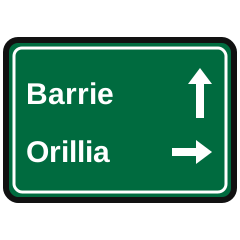
- A detour sign
- A highway lane control sign
- A destination guide sign
- A route marker
30.You face a double red light. How should you treat it?
- As a flashing red light
- As a red light for trucks only
- The same as a single red light
- As a sign that the signal is broken
31.A Class 5 holder wants to drive a van with 12 seats, including the driver's, and carry friends. May they?
- Yes, any van is allowed
- Yes, as long as the van has no air brakes
- No, not over 10 seats with passengers
- Yes, if no one pays to ride
32.What is the base fine for using a cellphone while driving in the NWT?
- $172
- $1,000
- $322
- $500
33.You are backing out of an angle parking stall. Who has the right-of-way?
- You do, if your lights are on
- You do, once you signal
- Whoever moves first
- Traffic in the lane behind you
34.When driving, what is meant by your vehicle's blind spot?
- A dark section of highway
- A spot hidden by sun glare
- The area right in front of the hood
- An area you cannot see in your mirrors
35.You are on a two-way street at a red light and want to turn left onto a one-way street. May you turn?
- Yes, after a full stop
- Yes, with your hazard lights on
- No, not on a red light
- Yes, if no traffic is coming
36.What does this sign warn you about?
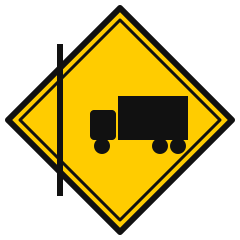
- Trucks are prohibited ahead
- Trucks entering from the right
- A truck route begins here
- A weigh scale is ahead
37.In the NWT, who is responsible for making sure passengers under 15 are properly restrained?
- The driver
- The vehicle owner
- The child's parent only
- Each passenger
38.Can you appeal a demerit point suspension in the NWT?
- No, never
- Only if the points were assigned in error
- Yes, always within 90 days
- Yes, if you need to drive for work
39.Who is this sign aimed at?
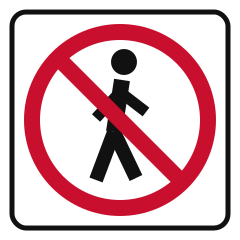
- Pedestrians, who have priority here
- Drivers, who must stop for walkers
- Drivers approaching a school
- Pedestrians, who are not allowed here
40.What do arrows painted in a lane tell you?
- Where the lane will end
- Which movements are allowed from that lane
- Which way the wind is blowing
- How fast you should travel while in the lane
41.A passenger tucks the shoulder belt behind their back because it is uncomfortable. What does the manual say?
- It is fine on short trips
- Do not do it; the belt must cross the chest
- It is fine if the lap belt is on
- It is fine in a car that has front air bags
42.Why do bridge decks and overpasses need extra caution in winter?
- They have lower speed limits
- They are always gravel
- They are cleared less often by snowplows
- They form slippery patches more readily
43.Who may set the hours and speed of a school zone in an NWT community?
- Each school principal, through a notice
- The RCMP detachment
- The school bus operator
- The municipality, through bylaws
44.You are stopped behind a large truck on a hill. Why leave extra space in front of you?
- Trucks must stop at every hill
- Its exhaust is dangerous
- It may roll back when it starts
- It needs room to back up
45.You are entering a traffic circle. Who has the right-of-way?
- You do, as the entering driver
- Traffic already in the circle
- The largest vehicle
- Traffic on your right
46.You back into a parking meter and cause $300 of damage. Must you report it to police?
- No, only injuries are reported
- Yes, damage to public property must be reported
- No, since the damage is under the $2,000 threshold
- Only if a witness saw it
47.What does this sign give you?
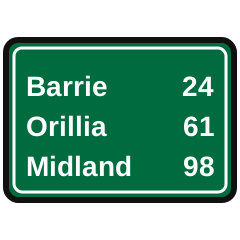
- Exit numbers for each town
- Directions to services
- Distances to places ahead
- Speed limits for each town
48.What does a flashing amber light at an intersection require?
- Go with caution after yielding
- Speed up to clear the area
- Stop completely, then go
- Stop and wait for green
49.A 15-year-old is learning to ride a motorcycle on a Class 7. Where may the supervising rider be?
- On the motorcycle or following in another vehicle
- Only standing at the roadside
- Anywhere within one kilometre
- Only on the motorcycle, seated behind as a passenger
50.You are caught texting while driving through a school zone. What is the fine?
- $644
- $966
- $1,288
- $322
51.You park facing uphill beside a curb. Which way should your front wheels point?
- Straight ahead
- To the left, away from the curb
- To the right, toward the curb
- It does not matter with the park brake on
52.Which of these is a situation where passing is illegal?
- When the vehicle ahead is a truck
- On a broken yellow line with a clear road
- In a school zone while its limits are in effect
- On a multi-lane highway in the left lane
53.You turn right onto a street with several lanes. Which lane should you turn into?
- The first available lane on the right
- The lane nearest the centre
- The left lane, then move right
- Any lane that is open
54.What does this sign warn of?

- A divided highway ends
- A lane is added on the right
- The road curves left
- Traffic merging ahead
55.When should a block heater be switched on before a winter drive?
- About two hours before
- The night before
- Six hours before
- Ten minutes before
56.How are demerit suspension notices sent in the NWT?
- By registered or certified mail
- By text message to your phone
- By email to your address on file
- In person from an RCMP officer
57.What does this sign mean?
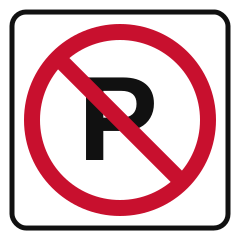
- Parking lot ahead
- No parking
- Parking for permit holders
- Pick-up and drop-off only
58.The centre line is a solid yellow line beside a broken yellow line. The broken line is on your side. What does this mean for you?
- Only oncoming drivers may pass
- You may pass when it is safe
- You may not pass
- You may pass only on the right
59.What is threshold braking?
- Pumping the brakes quickly
- Braking only with the parking brake to avoid a skid
- Braking until the wheels lock
- Braking almost to the point of locking the wheels
60.The temperature is rising to the melting point after a cold night. How does this affect the road?
- It only affects gravel roads
- It becomes less slippery
- It can become more slippery
- It has no effect on traction
61.What is the difference between a playground area sign and a playground zone sign?
- An area sign has a speed sign on its post
- A zone sign has a speed sign on its post
- A zone sign is used only near schools
- An area sign applies only on weekends
62.An ambulance with siren and lights is coming up behind you on a two-way street. What must you do?
- Pull to the left and keep going
- Pull close to the right edge and stop
- Speed up to clear the way
- Stop right where you are in the lane
63.At a four-way stop, who normally goes first?
- The larger vehicle
- The vehicle on the left
- The vehicle that arrived first
- The vehicle going straight
64.In a car with anti-lock brakes, how should you brake in an emergency?
- Press hard and steadily without pumping
- Use only the parking brake
- Press lightly and release the pedal often
- Pump the pedal quickly
65.What happens to speeding fines in a construction zone when workers are present?
- They stay the same
- They are tripled
- They are doubled
- They are reduced by half
66.You face a steady green arrow pointing straight ahead. What may you do?
- Turn in any direction
- Turn right or go straight
- Turn left after yielding
- Go straight only
67.What is the heaviest total weight of towed vehicles a Class 5 licence allows?
- 2,500 kg gross
- 5,500 kg gross
- 3,500 kg gross
- 4,500 kg gross
68.With an ignition interlock, what BAC reading lets the vehicle start with no violation?
- Below 50 mg per 100 mL
- Below 80 mg per 100 mL
- Below 20 mg per 100 mL
- Below 30 mg per 100 mL
69.On a two-way street you see an empty angle stall on the left side. What does the manual say?
- Back into it from the far lane
- Never enter a stall on the left of a two-way road
- Enter only if no car is behind you
- Turn in after checking oncoming traffic
70.Your mirrors are properly adjusted. Can you skip the shoulder check before changing lanes?
- Yes, on a multi-lane highway
- No, mirrors never replace a shoulder check
- Yes, if your mirrors are adjusted properly
- Yes, if you signal early
71.How far before an intersection should you be in the proper lane for a turn?
- At least 5 m
- At least 30 m
- At least 15 m
- At least 50 m
72.What does the speed plate under this curve sign tell you?

- The recommended top speed for the curve
- The new speed limit for the highway
- The speed for trucks only
- The minimum speed through the curve
73.What label must a child safety seat used in Canada have?
- One from the vehicle dealer
- One showing it meets CMVSS 213
- One showing it meets CSA Z94
- One from the RCMP
74.A driver with 10 demerit points passes an approved driver improvement course. How many points are removed?
- Two points
- All ten points
- None; the course only teaches
- Half, so five points
75.What do brown or blue square signs usually show?
- Direction and distance
- Roadside facilities
- Construction zones
- Lane use rules
76.Traffic is slow and there is a painted island beside your lane. May you drive across it to get past?
- Yes, but only to turn left
- Yes, if traffic is stopped in your lane
- Yes, if you signal first
- No, never drive over a painted island
77.In an automatic transmission, which position locks the transmission and is used for starting and parking?
- P (Park)
- D (Drive)
- 1 (Low gear)
- N (Neutral)
78.An oncoming driver's headlights are dazzling you. Where should you look?
- Straight at the oncoming headlights
- At the centre line
- Into your rear-view mirror
- Down and toward the right edge of your lane
79.Flashing amber lights are mounted with a school zone sign. What does the manual say you must do?
- Slow down only if children are near the road
- Stop, then go when the lights stop
- Reduce to the posted speed and yield to pedestrians
- Keep your speed but sound your horn
80.A cyclist gets off and walks their bicycle across the street. How does the law treat them?
- As an obstruction
- As a cyclist with right-of-way
- As a vehicle
- As a pedestrian
81.You reach a yield sign and there are no vehicles or pedestrians to yield to. What may you do?
- Go through without stopping
- Wait three seconds, then go
- Stop fully, then go
- Sound your horn, then go
82.You have a blowout at highway speed. What should you do first?
- Brake hard right away
- Ease off the gas and hold the wheel firmly
- Shift into neutral
- Steer quickly onto the shoulder and brake hard
83.What does this sign warn you about?

- A parade route ahead
- A school crossing guard is just ahead
- A border crossing ahead
- A flag person ahead directing traffic
84.You come to a flashing red light at an intersection. What must you do?
- Go if no one is directly ahead
- Stop, then go only when it is safe
- Slow down and go with caution
- Stop and wait until it turns green
85.Can you practise driving on a public road before you have any driver's licence?
- Yes, if you are 15 or older
- No, learning without a licence is not allowed
- Yes, on roads outside towns
- Yes, with a fully licensed supervisor beside you
86.A fully licensed NWT driver has a BAC over 50 mg per 100 mL but under 80 mg. What does the manual say?
- They get a warning only
- Nothing, it is under the limit
- They face Criminal Code charges only
- They may face charges
87.You are about to parallel park. How much space should you leave beside the vehicle in front when you stop to begin?
- About three metres
- About 30 centimetres
- About half a car length
- About one metre
88.You are about to go down a very steep hill. What should you do first?
- Turn on your high beams
- Speed up to keep momentum
- Shift to neutral and coast down the hill
- Slow down and shift to a lower gear
89.You stop in the intersection waiting to turn left. How should your front wheels be?
- Pointed straight ahead
- Turned right, toward the curb
- It does not matter
- Turned left, ready to go
90.What does this sign warn of?

- The road may be slippery when wet
- Do not stop on the shoulder
- Watch for ice on bridges
- The road curves sharply
91.A four-year-old weighs 16 kg. What must they ride in?
- A child safety seat
- Any rear seat position
- A seat belt alone
- A booster seat or seat belt
92.Your licence expires while you are under suspension. What happens to the suspension?
- It becomes a warning
- It remains in effect
- It is cut in half
- It ends when the licence expires
93.You approach this sign. To whom must you give the right-of-way?

- Only pedestrians waiting on the corner
- Only large trucks and buses on the cross road
- Traffic not facing the sign and all pedestrians crossing
- Only vehicles approaching from your left side
94.You are on a rural two-lane highway with a broken yellow centre line. What does it tell you?
- Passing is never allowed here
- You must pass within 10 seconds
- Only trucks may pass here
- There is enough sight distance to pass
95.Your steering wheel has an air bag. How far back from it does Transport Canada recommend you sit?
- At least 10 cm
- At least 15 cm
- At least 25 cm
- At least 50 cm
96.How can you sometimes spot black ice?
- Your tires make a loud hum
- The road looks white and dusty
- Snow is piled on the shoulders
- The asphalt looks shiny and black
97.Unless another speed is posted, what is the speed limit in an NWT school zone?
- 30 km/h
- 50 km/h
- 20 km/h
- 40 km/h
98.A motorcycle ahead is riding in the left part of its lane. What does that usually mean?
- The rider wants you to pass on the right
- The rider is making themselves more visible
- The rider is about to turn left
- The rider is about to stop
99.A rural stop sign has no stop line and no marked crosswalk. Where must you stop?
- Wherever you can see best
- Right beside the sign
- Within 3 m of the intersecting road
- Within 10 m of the intersecting road
100.You accelerate too hard on ice and the drive wheels spin. What type of skid is this, and what do you do?
- A cornering skid; steer hard left
- A power skid; ease up on the gas
- A power skid; press the gas harder
- A braking skid; press the brake
Answer key with explanations
1. D — About 10% more
Every 10 km/h above 90 km/h increases fuel use by about 10%.
Defensive and responsible driving · Based on: NWT Driver's Manual (rev. August 2022), Ch. 7 The Responsible Driver, p. 116
2. D — A one-month suspension
When a GDL driver reaches 6 or more demerit points, the Registrar suspends the licence for one month and a reinstatement fee applies.
Demerit points and suspensions · Based on: NWT Driver's Manual (rev. August 2022), Ch. 9 Driving Within the Law, p. 149
3. A — The action shown is permitted
A green circle is the permissive symbol: the movement or use shown inside the circle is allowed.
Regulatory signs and speed limits · Based on: NWT Driver's Manual (rev. August 2022), Ch. 2 Traffic Controls, p. 26
4. B — Left turns from either direction
A two-way left-turn lane is shared by left-turning traffic coming from both directions.
Pavement markings · Based on: NWT Driver's Manual (rev. August 2022), Ch. 2 Traffic Controls, p. 48
5. B — About 108 m
At 100 km/h the chart totals about 108 metres; 126 m is the figure for 110 km/h.
Starting, steering and stopping · Based on: NWT Driver's Manual (rev. August 2022), Ch. 3 Starting Your Vehicle, p. 58
6. A — Pull well off the road and use four-way flashers
When visibility is too poor, slow down, move well off the road to a safe spot, turn on your four-way flashers and wait for conditions to improve.
Night, weather and animals · Based on: NWT Driver's Manual (rev. August 2022), Ch. 6 Handling Emergency Situations, p. 104
7. A — School patrols
The manual states that school patrols must be obeyed at all times.
School and playground zones · Based on: NWT Driver's Manual (rev. August 2022), Ch. 2 Traffic Controls, p. 38
8. C — A kilometre or more
The manual warns that it may take a kilometre or more for a train to stop, even under full emergency braking.
Sharing the road · Based on: NWT Driver's Manual (rev. August 2022), Ch. 8 Sharing the Road, p. 134
9. B — Before the marked crosswalk
With no stop line, you stop before the marked crosswalk so pedestrians can cross safely.
Intersections and right-of-way · Based on: NWT Driver's Manual (rev. August 2022), Ch. 4 Intersections and Turns, p. 70
10. D — Who was at fault
Exchange information and record details, but do not discuss who was at fault.
Emergencies, skids and collisions · Based on: NWT Driver's Manual (rev. August 2022), Ch. 6 Handling Emergency Situations, p. 106
11. A — The number or name of a road
Route markers identify roads by number, name or other designation, such as the Trans-Canada or Yellowhead Highway.
Guide, service and construction signs · Based on: NWT Driver's Manual (rev. August 2022), Ch. 2 Traffic Controls, p. 35
12. C — Yield to vehicles and people lawfully in the intersection
On a steady green you may turn, but you must yield to other vehicles and pedestrians lawfully in the intersection.
Traffic lights and signals · Based on: NWT Driver's Manual (rev. August 2022), Ch. 2 Traffic Controls, p. 42
13. D — 90 days
When you move to the Northwest Territories, you must register your vehicle within 90 days.
Licences, GDL and registration · Based on: NWT Driver's Manual (rev. August 2022), Ch. 1 Information about Driver's Licences, p. 22
14. D — Indefinite, at least five years
If a death results from an impaired offence, the minimum suspension is indefinite and not less than five years, even for a first offence.
Impaired and distracted driving · Based on: NWT Driver's Manual (rev. August 2022), Ch. 9 Driving Within the Law, p. 146
15. A — No closer than 5 m
Do not park within five metres in front of a stop sign, yield sign or traffic light located at the side of the roadway.
Parking · Based on: NWT Driver's Manual (rev. August 2022), Ch. 3 Starting Your Vehicle, p. 66
16. A — Slow down before it, accelerate slightly in it
Slow down before entering a curve and stay in your lane, then accelerate slightly after entering to keep a safe speed.
Lane driving, passing and merging · Based on: NWT Driver's Manual (rev. August 2022), Ch. 5 Lane Driving, p. 91
17. A — No stopping, yielding or merging is needed
The added lane sign means the two roads converge into separate lanes, so stopping, yielding or merging is not required.
Signalling and turning · Based on: NWT Driver's Manual (rev. August 2022), Ch. 4 Intersections and Turns, p. 82
18. C — Animals that may cross the road
Animal crossing signs warn that animals may be on or crossing the road, so slow down and scan ahead.
Warning signs · Based on: NWT Driver's Manual (rev. August 2022), Ch. 2 Traffic Controls, p. 32
19. D — Slow down and encourage them to pass
If someone follows too close, slow down and encourage them to pass when safe; if they don't, increase the space ahead of you.
Defensive and responsible driving · Based on: NWT Driver's Manual (rev. August 2022), Ch. 7 The Responsible Driver, p. 111
20. D — Pay a fee at an office and prove you met the conditions
Even after the term ends, you must visit a Driver and Vehicle office, pay the reinstatement fee and prove all requirements are met.
Demerit points and suspensions · Based on: NWT Driver's Manual (rev. August 2022), Ch. 9 Driving Within the Law, p. 150
21. B — A divider is ahead, keep to the right
This traffic direction sign warns of a divider ahead and tells you to pass it on the right side.
Regulatory signs and speed limits · Based on: NWT Driver's Manual (rev. August 2022), Ch. 2 Traffic Controls, p. 27
22. D — No, passing is not allowed
In rural areas, single or double solid yellow lines mean passing is not permitted.
Pavement markings · Based on: NWT Driver's Manual (rev. August 2022), Ch. 2 Traffic Controls, p. 47
23. B — Less than 10 cm
Tilt the restraint forward so the space is small; less than 10 cm (4 inches) is ideal.
Starting, steering and stopping · Based on: NWT Driver's Manual (rev. August 2022), Ch. 3 Starting Your Vehicle, p. 53
24. D — Turn on your headlights
Headlights must be on at night and any time you cannot clearly see 150 metres in front of you.
Night, weather and animals · Based on: NWT Driver's Manual (rev. August 2022), Ch. 6 Handling Emergency Situations, p. 100
25. B — The posted playground speed
Without posted times, a playground zone limit is in effect 24 hours a day, 7 days a week, including nights and weekends.
School and playground zones · Based on: NWT Driver's Manual (rev. August 2022), Ch. 2 Traffic Controls, p. 39
26. D — Pass it
Never pass another vehicle when you are approaching a crosswalk; it may be slowing or stopping for a pedestrian.
Sharing the road · Based on: NWT Driver's Manual (rev. August 2022), Ch. 8 Sharing the Road, p. 123
27. A — The right-hand lane
Enter the right-hand lane when you intend to leave at the first exit; the left lane is recommended for the second exit or beyond.
Intersections and right-of-way · Based on: NWT Driver's Manual (rev. August 2022), Ch. 4 Intersections and Turns, p. 73
28. B — To half the posted speed limit
The NWT manual says to slow down to half of the posted speed limit, change lanes if needed and pull right to let the emergency vehicle pass.
Emergencies, skids and collisions · Based on: NWT Driver's Manual (rev. August 2022), Ch. 6 Handling Emergency Situations, p. 108
29. C — A destination guide sign
Green destination guide signs give the direction to places; arrows show which way to go for each one.
Guide, service and construction signs · Based on: NWT Driver's Manual (rev. August 2022), Ch. 2 Traffic Controls, p. 35
30. C — The same as a single red light
The manual states that a double red light has the same meaning as a single red: stop and stay stopped.
Traffic lights and signals · Based on: NWT Driver's Manual (rev. August 2022), Ch. 2 Traffic Controls, p. 41
31. C — No, not over 10 seats with passengers
A Class 5 driver may not carry passengers in a vehicle seating more than 10 people including the driver.
Licences, GDL and registration · Based on: NWT Driver's Manual (rev. August 2022), Ch. 1 Information about Driver's Licences, p. 9
32. C — $322
Using a restricted electronic device while driving brings a $322 fine and 3 demerit points; the fine doubles in school and construction zones.
Impaired and distracted driving · Based on: NWT Driver's Manual (rev. August 2022), Ch. 9 Driving Within the Law, p. 144
33. D — Traffic in the lane behind you
You do not have the right-of-way when backing out of an angle stall; back slowly and be ready to stop.
Parking · Based on: NWT Driver's Manual (rev. August 2022), Ch. 3 Starting Your Vehicle, p. 64
34. D — An area you cannot see in your mirrors
Whatever you cannot see in your mirrors is in your blind spot, so you need a shoulder check before moving over.
Lane driving, passing and merging · Based on: NWT Driver's Manual (rev. August 2022), Ch. 5 Lane Driving, p. 85
35. C — No, not on a red light
A left turn from a two-way road into a one-way road must not be made on a red light.
Signalling and turning · Based on: NWT Driver's Manual (rev. August 2022), Ch. 4 Intersections and Turns, p. 79
36. B — Trucks entering from the right
This intersection warning shows a truck beside a road: trucks may enter the highway from the right.
Warning signs · Based on: NWT Driver's Manual (rev. August 2022), Ch. 2 Traffic Controls, p. 33
37. A — The driver
It is the driver's responsibility to ensure all passengers under 15 are properly restrained, and the driver may be fined if they are not.
Defensive and responsible driving · Based on: NWT Driver's Manual (rev. August 2022), Ch. 7 The Responsible Driver, p. 114
38. B — Only if the points were assigned in error
There is no remedy or appeal against a demerit point suspension unless it can be proven the points were assigned in error.
Demerit points and suspensions · Based on: NWT Driver's Manual (rev. August 2022), Ch. 9 Driving Within the Law, p. 148
39. D — Pedestrians, who are not allowed here
The red circle and slash over a walking figure is a prohibitive access sign: pedestrians may not use this road.
Regulatory signs and speed limits · Based on: NWT Driver's Manual (rev. August 2022), Ch. 2 Traffic Controls, p. 30
40. B — Which movements are allowed from that lane
Pavement arrows show which vehicle movements, such as turning or going straight, are permitted from that lane.
Pavement markings · Based on: NWT Driver's Manual (rev. August 2022), Ch. 2 Traffic Controls, p. 48
41. B — Do not do it; the belt must cross the chest
The shoulder belt must fit over the chest and shoulder; never tuck it behind your back or under your arm, even with air bags.
Starting, steering and stopping · Based on: NWT Driver's Manual (rev. August 2022), Ch. 3 Starting Your Vehicle, p. 52
42. D — They form slippery patches more readily
Bridge decks and overpasses tend to ice up sooner than other road surfaces, so avoid unnecessary lane or speed changes.
Night, weather and animals · Based on: NWT Driver's Manual (rev. August 2022), Ch. 6 Handling Emergency Situations, p. 104
43. D — The municipality, through bylaws
The manual notes that hours and speed limits of school zones may be regulated by municipal bylaws.
School and playground zones · Based on: NWT Driver's Manual (rev. August 2022), Ch. 2 Traffic Controls, p. 38
44. C — It may roll back when it starts
A large vehicle on a hill may roll back when the driver releases the brakes, so leave extra space.
Sharing the road · Based on: NWT Driver's Manual (rev. August 2022), Ch. 8 Sharing the Road, p. 126
45. B — Traffic already in the circle
Traffic entering a traffic circle must yield to traffic already in the circle.
Intersections and right-of-way · Based on: NWT Driver's Manual (rev. August 2022), Ch. 4 Intersections and Turns, p. 72
46. B — Yes, damage to public property must be reported
Damage to a traffic control device, railway sign, signal, parking meter or any public property must be reported to police even if it is under $2,000.
Emergencies, skids and collisions · Based on: NWT Driver's Manual (rev. August 2022), Ch. 6 Handling Emergency Situations, p. 106
47. C — Distances to places ahead
A distance sign lists destinations with the distance to each one, so you can plan your trip.
Guide, service and construction signs · Based on: NWT Driver's Manual (rev. August 2022), Ch. 2 Traffic Controls, p. 35
48. A — Go with caution after yielding
At a flashing amber you may proceed carefully after yielding to pedestrians and vehicles lawfully in the intersection.
Traffic lights and signals · Based on: NWT Driver's Manual (rev. August 2022), Ch. 2 Traffic Controls, p. 43
49. A — On the motorcycle or following in another vehicle
A motorcycle learner must be accompanied by a fully licensed, non-GDL rider with 24 months on a full Class 6, seated on the motorcycle or following in or on another vehicle.
Licences, GDL and registration · Based on: NWT Driver's Manual (rev. August 2022), Ch. 1 Information about Driver's Licences, p. 6
50. A — $644
The distracted driving fine of $322 doubles to $644 in school and construction zones.
Impaired and distracted driving · Based on: NWT Driver's Manual (rev. August 2022), Ch. 9 Driving Within the Law, p. 144
51. B — To the left, away from the curb
Uphill with a curb, turn the wheels left and let the car roll back until the right front tire touches the curb.
Parking · Based on: NWT Driver's Manual (rev. August 2022), Ch. 3 Starting Your Vehicle, p. 65
52. C — In a school zone while its limits are in effect
You may not pass in a school or playground zone while reduced limits apply, among other no-passing situations.
Lane driving, passing and merging · Based on: NWT Driver's Manual (rev. August 2022), Ch. 5 Lane Driving, p. 88
53. A — The first available lane on the right
When turning right, turn into the first available traffic lane on the right.
Signalling and turning · Based on: NWT Driver's Manual (rev. August 2022), Ch. 4 Intersections and Turns, p. 77
54. D — Traffic merging ahead
A straight line joined by a curved one warns that traffic from another road is merging with yours.
Warning signs · Based on: NWT Driver's Manual (rev. August 2022), Ch. 2 Traffic Controls, p. 33
55. A — About two hours before
Use a timer to switch the block heater on about two hours before you drive; leaving it on overnight wastes electricity.
Defensive and responsible driving · Based on: NWT Driver's Manual (rev. August 2022), Ch. 7 The Responsible Driver, p. 117
56. A — By registered or certified mail
Suspension notices are sent by registered or certified mail to your last recorded address, so keep your address current.
Demerit points and suspensions · Based on: NWT Driver's Manual (rev. August 2022), Ch. 9 Driving Within the Law, p. 150
57. B — No parking
A letter P inside a red circle with a slash means parking is not allowed where the sign applies.
Regulatory signs and speed limits · Based on: NWT Driver's Manual (rev. August 2022), Ch. 2 Traffic Controls, p. 30
58. B — You may pass when it is safe
With a solid-and-broken yellow line, passing is allowed only for the side next to the broken line; drivers with the solid line on their side may not pass.
Pavement markings · Based on: NWT Driver's Manual (rev. August 2022), Ch. 2 Traffic Controls, p. 47
59. D — Braking almost to the point of locking the wheels
Threshold braking gives maximum braking just short of lock-up; if the wheels lock, ease up slightly to regain steering.
Starting, steering and stopping · Based on: NWT Driver's Manual (rev. August 2022), Ch. 3 Starting Your Vehicle, p. 59
60. C — It can become more slippery
Near the melting point a thin layer of water forms on the surface as frost comes out of the ground, making roads more slippery.
Night, weather and animals · Based on: NWT Driver's Manual (rev. August 2022), Ch. 6 Handling Emergency Situations, p. 103
61. B — A zone sign has a speed sign on its post
An area sign alone is a warning to use extra caution; when a speed sign is attached to the post, you are in a zone and must obey that speed.
School and playground zones · Based on: NWT Driver's Manual (rev. August 2022), Ch. 2 Traffic Controls, p. 39
62. B — Pull close to the right edge and stop
Yield by moving clear of any intersection, driving as close as possible to the right curb or edge and stopping until it passes.
Sharing the road · Based on: NWT Driver's Manual (rev. August 2022), Ch. 8 Sharing the Road, p. 129
63. C — The vehicle that arrived first
At four-way stops, normal courtesy lets the vehicle that arrived first proceed first.
Intersections and right-of-way · Based on: NWT Driver's Manual (rev. August 2022), Ch. 4 Intersections and Turns, p. 71
64. A — Press hard and steadily without pumping
With ABS, apply steady hard pressure; the pulsing you feel is normal. Do not pump the brake pedal.
Emergencies, skids and collisions · Based on: NWT Driver's Manual (rev. August 2022), Ch. 6 Handling Emergency Situations, p. 97
65. C — They are doubled
The NWT manual says that if workers are present, fines for speeding in construction areas are doubled.
Guide, service and construction signs · Based on: NWT Driver's Manual (rev. August 2022), Ch. 2 Traffic Controls, p. 36
66. D — Go straight only
With a steady green arrow you may enter the intersection only to travel in the direction the arrow shows.
Traffic lights and signals · Based on: NWT Driver's Manual (rev. August 2022), Ch. 2 Traffic Controls, p. 42
67. D — 4,500 kg gross
A Class 5 driver may pull towed vehicles as long as they do not exceed a gross weight of 4,500 kg.
Licences, GDL and registration · Based on: NWT Driver's Manual (rev. August 2022), Ch. 1 Information about Driver's Licences, p. 9
68. C — Below 20 mg per 100 mL
The pass range is below 20 mg; 20 to 29 mg starts the vehicle but records a warn violation; 30 mg or more is a fail.
Impaired and distracted driving · Based on: NWT Driver's Manual (rev. August 2022), Ch. 9 Driving Within the Law, p. 139
69. B — Never enter a stall on the left of a two-way road
The manual is clear: never enter a parking stall on the left side of a two-way roadway.
Parking · Based on: NWT Driver's Manual (rev. August 2022), Ch. 3 Starting Your Vehicle, p. 64
70. B — No, mirrors never replace a shoulder check
Mirror checks do not replace shoulder checks; turn your head to check the area your mirrors cannot show.
Lane driving, passing and merging · Based on: NWT Driver's Manual (rev. August 2022), Ch. 5 Lane Driving, p. 86
71. C — At least 15 m
For both right and left turns, the manual says to be in the proper turning lane at least 15 metres before the intersection.
Signalling and turning · Based on: NWT Driver's Manual (rev. August 2022), Ch. 4 Intersections and Turns, p. 77
72. A — The recommended top speed for the curve
The plate shows the recommended maximum speed through that curve under ideal driving conditions.
Warning signs · Based on: NWT Driver's Manual (rev. August 2022), Ch. 2 Traffic Controls, p. 32
73. B — One showing it meets CMVSS 213
All child seats used in Canada must have a label stating they meet Canada Motor Vehicle Safety Standard 213.
Defensive and responsible driving · Based on: NWT Driver's Manual (rev. August 2022), Ch. 7 The Responsible Driver, p. 116
74. D — Half, so five points
Passing an approved driver improvement course removes half your demerit points; if you have five or fewer, all are removed.
Demerit points and suspensions · Based on: NWT Driver's Manual (rev. August 2022), Ch. 9 Driving Within the Law, p. 149
75. B — Roadside facilities
Brown or blue squares point you to roadside facilities. Green rectangles give direction information.
Regulatory signs and speed limits · Based on: NWT Driver's Manual (rev. August 2022), Ch. 2 Traffic Controls, p. 26
76. D — No, never drive over a painted island
You must not travel over a painted island or use it to pass other vehicles.
Pavement markings · Based on: NWT Driver's Manual (rev. August 2022), Ch. 2 Traffic Controls, p. 50
77. A — P (Park)
Park locks the transmission and is the position to use when starting the engine and parking.
Starting, steering and stopping · Based on: NWT Driver's Manual (rev. August 2022), Ch. 3 Starting Your Vehicle, p. 54
78. D — Down and toward the right edge of your lane
Avoid looking directly at bright headlights; look somewhat down and to the right edge of your lane until the vehicle passes.
Night, weather and animals · Based on: NWT Driver's Manual (rev. August 2022), Ch. 6 Handling Emergency Situations, p. 101
79. C — Reduce to the posted speed and yield to pedestrians
When flashing amber lights accompany a school or playground zone sign, reduce your speed as posted and yield the right-of-way to all pedestrians.
School and playground zones · Based on: NWT Driver's Manual (rev. August 2022), Ch. 2 Traffic Controls, p. 43
80. D — As a pedestrian
A cyclist who dismounts completely and walks beside the bicycle is considered a pedestrian by law.
Sharing the road · Based on: NWT Driver's Manual (rev. August 2022), Ch. 8 Sharing the Road, p. 123
81. A — Go through without stopping
If there is no traffic or pedestrian you need to yield to, you may proceed through a yield-controlled intersection without stopping.
Intersections and right-of-way · Based on: NWT Driver's Manual (rev. August 2022), Ch. 4 Intersections and Turns, p. 71
82. B — Ease off the gas and hold the wheel firmly
Resist the urge to brake; take your foot off the gas, grip the wheel firmly and keep a straight course, then brake gently once slowed.
Emergencies, skids and collisions · Based on: NWT Driver's Manual (rev. August 2022), Ch. 6 Handling Emergency Situations, p. 96
83. D — A flag person ahead directing traffic
This construction sign warns of a flag person ahead. You must obey the flag person's signals.
Guide, service and construction signs · Based on: NWT Driver's Manual (rev. August 2022), Ch. 2 Traffic Controls, p. 36
84. B — Stop, then go only when it is safe
A flashing red light means stop before the stop line or crosswalk and proceed only when safe to do so.
Traffic lights and signals · Based on: NWT Driver's Manual (rev. August 2022), Ch. 2 Traffic Controls, p. 43
85. B — No, learning without a licence is not allowed
The manual states that learning without a driver's licence is not permitted; you need a Class 7 first.
Licences, GDL and registration · Based on: NWT Driver's Manual (rev. August 2022), Ch. 1 Information about Driver's Licences, p. 13
86. D — They may face charges
Fully licensed drivers over 50 mg of alcohol in 100 mL of blood may face charges; over 80 mg, additional Criminal Code charges apply.
Impaired and distracted driving · Based on: NWT Driver's Manual (rev. August 2022), Ch. 9 Driving Within the Law, p. 138
87. D — About one metre
Line up your rear bumper with the other vehicle's rear bumper and leave about one metre of space between the vehicles.
Parking · Based on: NWT Driver's Manual (rev. August 2022), Ch. 3 Starting Your Vehicle, p. 61
88. D — Slow down and shift to a lower gear
Before a steep downgrade, adjust your speed and shift to a lower gear; your braking distance will increase.
Lane driving, passing and merging · Based on: NWT Driver's Manual (rev. August 2022), Ch. 5 Lane Driving, p. 92
89. A — Pointed straight ahead
Keep your wheels straight and stay right of the centre line so a rear-end crash won't push you into oncoming traffic.
Signalling and turning · Based on: NWT Driver's Manual (rev. August 2022), Ch. 4 Intersections and Turns, p. 78
90. A — The road may be slippery when wet
A car with wavy tire marks warns that the surface can become slippery when it is wet.
Warning signs · Based on: NWT Driver's Manual (rev. August 2022), Ch. 2 Traffic Controls, p. 34
91. A — A child safety seat
A child under six who weighs 18 kg (40 lb) or less must be restrained in a child safety seat used according to the manufacturer's instructions.
Defensive and responsible driving · Based on: NWT Driver's Manual (rev. August 2022), Ch. 7 The Responsible Driver, p. 114
92. B — It remains in effect
If your licence expires during the suspension period, the suspension remains in effect until all conditions are met.
Demerit points and suspensions · Based on: NWT Driver's Manual (rev. August 2022), Ch. 9 Driving Within the Law, p. 150
93. C — Traffic not facing the sign and all pedestrians crossing
At a yield sign you let traffic that is not facing the sign go first, along with every pedestrian in the intersection or crosswalk.
Regulatory signs and speed limits · Based on: NWT Driver's Manual (rev. August 2022), Ch. 2 Traffic Controls, p. 27
94. D — There is enough sight distance to pass
Broken yellow means sight distance allows passing, but you must still be sure the lane is clear and the pass can be completed safely.
Pavement markings · Based on: NWT Driver's Manual (rev. August 2022), Ch. 2 Traffic Controls, p. 47
95. C — At least 25 cm
The manual cites Transport Canada's advice to sit at least 25 cm (10 inches) back from an air-bag steering wheel while still reaching the brake.
Starting, steering and stopping · Based on: NWT Driver's Manual (rev. August 2022), Ch. 3 Starting Your Vehicle, p. 52
96. D — The asphalt looks shiny and black
Black ice is often invisible, but asphalt that looks shiny and black instead of grey and white is a warning to use caution.
Night, weather and animals · Based on: NWT Driver's Manual (rev. August 2022), Ch. 6 Handling Emergency Situations, p. 104
97. A — 30 km/h
The manual says the speed in school zones is generally 30 km/h unless a different speed is posted.
School and playground zones · Based on: NWT Driver's Manual (rev. August 2022), Ch. 2 Traffic Controls, p. 38
98. B — The rider is making themselves more visible
Motorcyclists often ride in the left portion of the lane to be more visible; it does not necessarily mean a left turn.
Sharing the road · Based on: NWT Driver's Manual (rev. August 2022), Ch. 8 Sharing the Road, p. 125
99. C — Within 3 m of the intersecting road
Without a stop line or marked crosswalk you must stop within three metres of the intersecting roadway, without blocking pedestrians.
Intersections and right-of-way · Based on: NWT Driver's Manual (rev. August 2022), Ch. 4 Intersections and Turns, p. 70
100. B — A power skid; ease up on the gas
A power skid comes from too much acceleration. Ease up on the gas until the wheels stop spinning and steer as needed without overcorrecting.
Emergencies, skids and collisions · Based on: NWT Driver's Manual (rev. August 2022), Ch. 6 Handling Emergency Situations, p. 99
Original practice questions by Canada Exam Prep, written from the official handbook. Not official test questions. Free to print for personal study.
FAQ
NWT learner's practice test (printable PDF): common questions
Is there an official NWT learner's test PDF?
No. Driver and Vehicle Services does not publish its exam questions. Its free study material is the NWT Driver's Manual PDF, also published in French as the Manuel du conducteur. Practice question PDFs, including this one, are written by third parties.
How do I save this test as a PDF?
Press the print button on this page and choose Save as PDF as the printer. The site header, buttons and ads are left out of the printed copy, and the answer key prints on its own pages.
How should I score this paper against the real pass mark?
Count signs and rules separately. The real exam needs 16 of 20 in each part, so aim for at least 80 percent on the sign questions and 80 percent on the rules questions here, not just 80 percent overall.
Keep practising
- NWT road signs chartEvery road sign in our NWT Class 7 bank on one page, including snowmobile and animal crossings, with what each one means for the 20-question signs test.
- NWT Class 7 study guide
- NWT Class 7 Mock Exam 1 – 40 QuestionsTimed practice · 30 minutes · answers explained
- NWT Class 7 Mock Exam 2 – 40 QuestionsTimed practice · 30 minutes · answers explained
- NWT Class 7 Practice Test 140 questions with explanations
- NWT Class 7 Practice Test 240 questions with explanations
- NWT Class 7 Practice Test 340 questions with explanations
Practice by topic
- Regulatory signs and speed limitsSign shapes and colours, stop and yield signs, permissive green-circle and prohibitive red-slash signs, lane-use, parking and stopping signs, and NWT default speed limits.
- Warning signsYellow diamond warning signs for stops and signals ahead, curves, crossings, intersections, merging, narrowing roads, lane endings, divided highways and other road conditions.
- Guide, service and construction signsRoute markers, direction and distance signs, service signs, orange construction signs, doubled fines with workers present, the slow-moving vehicle sign and disabled parking.
- School and playground zonesSchool and playground area versus zone signs, the 30 km/h speed, 24-hour default times, municipal bylaws, no passing and where zones end.
- Traffic lights and signalsLight order, steady and flashing red, amber and green lights, green arrows, turns on red, pedestrian signals and lane control signals.
- Pavement markingsYellow and white lines, broken and solid lines, passing rules, arrows, two-way left-turn lanes, diamonds, railway X markings, painted islands, crosswalks and stop lines.
- Licences, GDL and registrationClass 7 learner conditions, probationary and full stages, licence classes, new residents and visitors, vision and medical rules, exams, renewals, registration and insurance.
- Starting, steering and stoppingPre-drive checks, seat, mirrors, seat belts and head restraints, transmissions, steering, stopping distances, braking technique and backing up.
- ParkingParallel, angle and hill parking, getting in and out of a parked vehicle, and the distances and places where you may not park.
- Intersections and right-of-wayWhere to stop at stop signs, four-way stops, yield signs, traffic circles, controlled and uncontrolled intersections and keeping intersections clear.
- Signalling and turningWhen to signal, hand signals, right and left turns, turning lanes, dual turns, two-way left-turn lanes, U-turns and free-flow lanes.
- Lane driving, passing and mergingLane position, shoulders, blind spots and lane changes, passing lanes, passing on two-lane highways, when passing is illegal, merging, exiting, curves and hills.
- Emergencies, skids and collisionsBreakdowns, brake, steering, tire and headlight failure, emergency braking and ABS, skids, off-road recovery, collision duties and slowing for emergency vehicles.
- Night, weather and animalsHeadlight rules and distances, glare, winter kits, hydroplaning, ice and snow, black ice, smoke and fog, deep water and avoiding animals.
- Defensive and responsible drivingScanning, space cushions, the two-second rule, fatigue, cellphones, child restraints, fuel efficiency, refuelling and other traffic laws.
- Sharing the roadPedestrians, cyclists, motorcycles, large and log-haul vehicles, school buses, emergency vehicles, snowplows, railway crossings, LRT and funeral processions.
- Impaired and distracted drivingZero BAC for new drivers, 50 and 80 mg limits, administrative suspensions, Criminal Code disqualifications, ignition interlock, drugs and distracted-driving penalties.
- Demerit points and suspensionsDemerit thresholds for GDL and fully licensed drivers, interviews, suspension lengths, driver improvement courses, reinstatement and Registrar suspensions.