Saskatchewan Class 7 overview

Saskatchewan Class 7: Warning signs and railway crossings

Yellow diamond warning signs for curves, hills, lane endings, intersections, animals and hazards, school and playground signs, chevrons, the slow-moving vehicle sign, railway crossings and crossroad delineators.

  • 36 questions
  • Topic drill
0/36
Warning signs and railway crossings · Question 1Score 0/0
Yellow diamond with two black lines, the right one curving in to meet the left one

What does this sign tell you?

Study reference: Saskatchewan Driver's Handbook (online edition, Rev. 2026), Ch. 4 Traffic signs and signals — Warning signs, Railway crossings, Crossroad delineators

All 36 questions in this test

Every question and its answer choices. The correct answers and explanations appear when you take the test above.

  1. What does this sign tell you?

    Yellow diamond with two black lines, the right one curving in to meet the left one
    1. The left lane ends ahead
    2. A bike lane begins
    3. The right lane ends ahead
    4. An extra lane is added
  2. The gates are down at a railway crossing but you can't see a train. What must you do?

    1. Cross if you look both ways first
    2. Drive around the gates carefully
    3. Wait until the gates go up
    4. Back up and use the shoulder
  3. What does this sign warn of?

    Yellow diamond with a black arrow that snakes back and forth upward
    1. A detour route ahead
    2. A sharp right turn only
    3. A slippery road ahead
    4. A winding road ahead
  4. What does a pavement ends sign tell you?

    1. The road is closed ahead
    2. A parking lot entrance
    3. A bridge deck begins
    4. The road continues as gravel
  5. You see this sign before a very steep downhill grade. What should you do?

    Yellow diamond showing a black vehicle on a black triangular slope
    1. Brake hard at the top
    2. Shift to neutral and coast
    3. Slow down or shift to a lower gear
    4. Speed up to climb the next hill
  6. The tab under this sign shows 50 km/h. What is that number?

    Yellow diamond with a black arrow curving to the right, above a yellow tab reading 50 km/h
    1. Speed limit for trucks only on the curve
    2. Minimum speed on the curve
    3. Recommended safe speed for the curve
    4. Speed after the curve ends
  7. A school bus stop ahead sign is posted. What does it tell you to be ready to do?

    1. Drive in the bus lane
    2. Use your horn near the stop
    3. Pass buses quickly on the left
    4. Stop for a bus with flashing lights
  8. What does this marker beside the road tell you?

    Tall narrow yellow board with diagonal black stripes
    1. A school is near the road
    2. The road is closed a short way ahead
    3. The lane ends in 100 m
    4. A hazard is close to the road edge
  9. What does a concealed intersection warning sign tell you?

    1. A hidden road joins from the side
    2. A police check stop is ahead
    3. A traffic light is hidden by trees
    4. A road ahead is closed
  10. A sign post at a rural stop sign has three triangular reflectors. What kind of road are you approaching?

    1. A private driveway
    2. A highway, grid road or major street
    3. A minor rural road
    4. A main farm access road with heavy traffic
  11. An added lane sign shows two roads converging. What does it mean?

    1. The left lane ends shortly
    2. Traffic on the right must stop
    3. Traffic must zipper merge
    4. Merging is not required
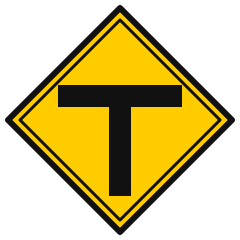
  12. What does this sign warn you about?

    Yellow diamond with a thick black T shape
    1. A four-way stop ahead
    2. The road ends; turn left or right
    3. A side road on the right
    4. A dead end with no exit for vehicles
  13. Traffic is heavy and backed up past a railway crossing. Where should you wait?

    1. Beside the crossing on the shoulder
    2. On the approach until you can clear it
    3. Just past the first rail
    4. On the tracks behind the car ahead
  14. What does this sign tell you?

    Yellow diamond with a black silhouette of a leaping deer
    1. Wildlife park entrance
    2. Farm animals on the road
    3. Deer often cross this section
    4. Hunting area ahead
  15. What does this sign warn you about?

    Yellow diamond showing a black car with wavy skid marks behind it
    1. Road is slippery when wet
    2. Loose gravel on the shoulder
    3. Winding road ahead
    4. Car wash entrance ahead
  16. You see this sign. What should you expect?
    Yellow diamond showing two black lines coming together after a rounded black median
    1. Two roads merging into one lane
    2. A divided highway begins ahead
    3. The divided highway ends ahead
    4. A bridge with a median ahead
  17. The last car of a train has just cleared the crossing. What should you do before starting?

    1. Wait one full minute every time
    2. Sound your horn and drive across
    3. Make sure no train is on another track
    4. Go right away before the gates lift
  18. What should you be prepared to do when you see this sign?

    Yellow diamond showing a black traffic light with red, yellow and green circles
    1. Stop at traffic signals ahead
    2. Turn right at the next road
    3. Merge with faster traffic
    4. Yield to a railway train
  19. What does this sign mean?

    Yellow diamond showing two black lines that split apart around a rounded black median
    1. Turn lane opens on the left
    2. Road narrows to one lane
    3. Divided highway begins; keep right
    4. Divided highway ends ahead
  20. A reverse curve sign warns of two turns in opposite directions. What separates them?

    1. A straight stretch over 500 m
    2. A stop sign between them
    3. A bridge or overpass
    4. A straight stretch under 120 m
  21. A playground ahead sign has a km/h tab mounted underneath. What does the tab mean?

    1. It is a suggested speed
    2. It is the minimum speed
    3. It applies only on weekends
    4. That speed must be observed
  22. At a crossing with flashing red lights but no gates, when may you cross?

    1. Only after a signal person waves
    2. Without stopping if you slow down
    3. After stopping, if no train is close
    4. Never while the lights are flashing
  23. On a hazard marker, what do the downward-sloping lines show?

    1. How far away the hazard is
    2. Where the shoulder ends
    3. Which way the road curves
    4. The side you may safely pass on
  24. Signs like this are posted in groups along the road. What do they do?
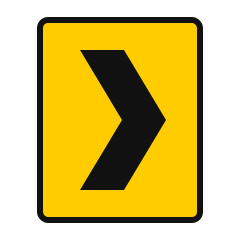
    Tall yellow rectangle with a single black arrowhead pointing right
    1. Mark a turn-off for trucks
    2. Show a lane is closed
    3. Guide you around a sharp curve
    4. Mark the end of a passing zone
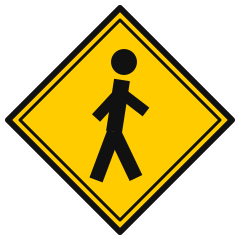
  25. What does this sign warn of?

    Yellow diamond with a black walking person
    1. A sidewalk closed ahead
    2. A pedestrian crosswalk or corridor ahead
    3. Pedestrians prohibited ahead
    4. A school zone that ends a short way ahead
  26. What does this sign warn you about?

    Yellow diamond with two black arrows side by side, one pointing up and one pointing down
    1. Divided highway begins
    2. Passing lane ahead
    3. Two-way traffic ahead
    4. One-way street ahead
  27. What does this sign warn of?

    Yellow diamond with a black horizontal shape that rises in two humps
    1. A speed bump in a parking lot
    2. A narrow bridge ahead
    3. A bump or rough road ahead
    4. A hill with a steep grade
  28. What should you watch for when you see this sign?
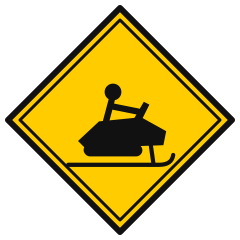
    Yellow diamond with a black silhouette of a rider on a snowmobile
    1. Snowmobiles allowed on the road
    2. A snowmobile trail beside the road
    3. Snowmobiles crossing the road
    4. A winter road closure
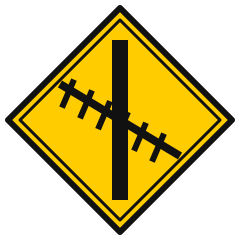
  29. What does this sign show?

    Yellow diamond with a black vertical line crossed at an angle by a line of short black ties
    1. A rough road with cracks
    2. A ladder on a work truck
    3. Tracks cross the road ahead at that angle
    4. A narrow bridge over a river or creek ahead
  30. What does this sign warn of?

    Yellow diamond with two black lines that bend inward toward each other near the top
    1. A lane opens on both sides
    2. The road ahead becomes narrower
    3. A divided highway ends
    4. A bridge is out ahead
  31. A sign warns that a bridge surface is subject to icing. When is it most likely to be slippery?

    1. Only during the night
    2. Around zero degrees Celsius
    3. Only after a heavy snowfall
    4. Only below minus 20 degrees
  32. You drive a manual transmission and are about to cross railway tracks. When should you shift down?

    1. Before the crossing
    2. Only if the car stalls
    3. While on the tracks
    4. Just after the first rail
  33. How many crossroad delineators mark a main farm access road?

    1. Two
    2. Four
    3. Three
    4. One
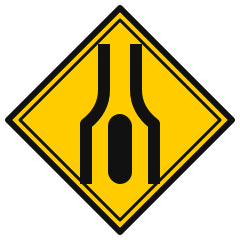
  34. What does this sign warn you of?

    Yellow diamond with a small red octagon above a black arrow pointing up
    1. A red light camera ahead
    2. A school bus stop ahead
    3. A four-way stop that has ended
    4. A stop sign ahead
  35. What does this sign warn you of?

    Yellow diamond with two black lines that pinch inward along the middle and flare out at both ends
    1. A divided highway ahead
    2. A road with two lanes merging
    3. A narrow bridge ahead
    4. An underpass with low clearance
  36. This sign is mounted on the back of a vehicle. What does it tell you?

    Orange triangle with a wide dark red border
    1. The vehicle carries dangerous goods
    2. The vehicle travels under 40 km/h
    3. The vehicle is wider than its lane
    4. The vehicle stops at railway crossings

Warning signs and railway crossings: key rules to remember

Our summary of what the official handbook says on this topic, in our own words. Read it before or after the practice questions above, then check the original chapter. Read the official chapter ↗

introduction

  • Modern signs use symbols instead of words, but drivers must know both versions.

list (meanings in our words)

  • Two-way traffic ahead. Divided highway ahead / begins (keep right). Divided highway ends.
  • Road slippery when wet. Bump or rough road ahead. Obstruction: pass on either side.
  • Deer: section of road regularly crossed by deer. Cattle crossing ahead. Snowmobile crossing ahead.
  • Steep hill ahead: shift to a lower gear or slow down if going down a very steep hill.
  • Photo enforced / speed limit photo enforced signs. Current photo speed locations listed at sgi.sk.ca/photo-speed-enforcement.
  • Stop sign ahead. Traffic signals ahead: be prepared to stop.
  • Railway ahead: road crosses tracks ahead at the angle shown.
  • Road narrows (road ahead not as wide). Narrow bridge (pavement narrower than the approach).
  • Lane ends (right lane ends). Winding road (first curve right). Reverse curve: two turns in opposite directions separated by a tangent of less than 120 m.
  • Curve to the right ahead. Sharp curve to the right with a recommended safe speed tab.
  • Underpass: overhead clearance as shown.
  • Concealed / hidden intersection: road from the right and/or left.
  • Added lane: two roads converge and merging is not required. Two lanes merge ahead: traffic entering from the right.
  • Checkerboard: road ends. Pavement ends: continues as gravel.
  • Surface subject to icing: bridge or road may be slippery at zero degrees Celsius, slow down.
  • T-intersection: road turns sharply right and left.
  • Playground ahead: with a km/h tab, that speed must be observed.
  • Pedestrian crosswalk or corridor ahead. School bus stop ahead: stop for a bus with flashing lights. School crosswalk ahead.
  • Chevron (arrowhead): posted in groups to guide drivers around sharp curves.
  • Slow moving vehicle sign: on the rear of vehicles that travel under 40 km/h; warns drivers behind to slow down.
  • Hazard marker: hazard close to the edge of the road; the downward lines show the side you may pass on.
  • Warning sign on overdimension loads or escort vehicles.

Railway crossings

  • Check for trains at every crossing, even with automatic signals.
  • In heavy traffic, wait on the approach until you can clear the crossing. After a train passes, do not start until you are sure no train is coming on another track.
  • Never race a train. Manual transmission: shift down before the crossing, not on it.
  • Be ready to stop behind buses, school buses or large trucks that must stop at crossings.
  • Never drive around lowered gates; it is against the law. Wait until gates rise.
  • Flashing red lights without gates: you may cross after stopping if safe, but not if a train is closely approaching or a signal person tells you to stop.
  • Some concealed crossings have an advance flashing amber light and sign.

Crossroad delineators

  • Triangular reflectors on both sides of a sign post at rural intersections controlled by stop or yield signs; show the road classification.
  • Three: provincial and public highways, community access roads, grid roads, major streets.
  • Two: main farm access roads, improved all-weather roads, intermediate urban streets.
  • One: all other minor rural roads and local urban streets.

Study the Warning signs and railway crossings rules as flashcards →

Other topics

Full practice tests