SGI Class 7 Questions and Answers – Printable PDF
100 original SGI Class 7 practice questions, sign and Basic test rules mixed, with the answer key on separate pages. Print it or save it as a PDF.
- No sign-up
- Every answer explained
- Independent · not a government site
- 100 questions
- Answer key included
- Free, no sign-up
If you study better with a pen in hand, or want something to work through without a data connection, this page sets out 100 Class 7 practice questions you can print or save as a PDF. They mix both parts of the SGI knowledge test, sign identification and the Basic rules of the road, drawn evenly from all 18 topics in our bank. The answers are kept on separate pages after the last question, so you can mark yourself honestly.
Every question is our own, written from the Saskatchewan Driver's Handbook (online edition, Rev. 2026), and the answer key gives a short explanation and the handbook page for each one. SGI does not publish its real test questions, so no PDF you find online is the actual exam. When you have marked your sheet, go back to the topic tests for your weak areas, then take a mock exam that scores signs and rules separately, the way SGI does.
SGI Class 7 Questions and Answers – Printable PDF
1.Which phone call is allowed for both new and experienced drivers?
- A call made while parked at the roadside
- A voice-to-text message
- A hands-free call to a friend while moving
- A one-touch call while moving
2.You are on a one-way street when a fire truck approaches with lights and siren. Where should you pull over?
- To the middle of the street
- Always to the right curb
- Stay in your lane and stop
- To the nearest curb, left or right
3.You fail your Class 5 road test. How long must you wait before the next one?
- Thirty days
- Two weeks
- Twenty-four hours
- One week
4.What three steering movements take you around an obstacle?
- Steer, brake, reverse
- Brake, steer, and accelerate back out
- Steer, counter-steer, straighten out
- Look, honk, steer
5.Which ability does alcohol affect first?
- Balance
- Judgment
- Hearing
- Steering
6.At a crossing with flashing red lights but no gates, when may you cross?
- Only after a signal person waves
- Without stopping if you slow down
- After stopping, if no train is close
- Never while the lights are flashing
7.On an airport guide sign, what shows you which way to go?
- An arrow under the sign
- The direction the plane points
- The colour of the border
- The number on the tab
8.You missed your exit on Circle Drive. What should you do?
- Make a U-turn across the median
- Stop in the lane and wait
- Stop and back up on the shoulder
- Continue to the next interchange
9.A large X is painted on the pavement before a stop. Where should you stop?
- Behind the X
- On top of the X
- Beside the X on the shoulder
- Just past the X
10.How much liability coverage does basic Saskatchewan plate insurance provide?
- Up to $200,000
- Up to $50,000
- Up to $1 million
- Up to $2 million
11.You are in the outside (left) lane of a double right-turn lane at a red light. May you turn right?
- Yes, without stopping
- No, only the curb lane may turn
- Yes, after stopping and yielding
- No, not until the light is green
12.What is the starting fine for speeding past workers or occupied equipment in a work zone?
- $500 plus four demerit points
- $240 plus a per-km/h amount
- $60 per km/h over
- $120 flat
13.When may you drive in a two-way centre turning lane?
- To wait out a traffic jam
- Only to make a left turn
- To pass slower traffic
- As an extra driving lane
14.To begin parallel parking, how far out from the car in front should you be?
- About two metres
- Touching its side mirror
- About one car width
- About half a metre
15.Who must wear a seatbelt in Saskatchewan?
- Only passengers under 16
- Only the driver
- Every occupant where belts are provided
- Only front-seat occupants, including the driver
16.You are turning left at an intersection and an oncoming car is close. What must you do?
- Wait for it to pass
- Flash your lights and turn
- Turn quickly in front of it
- Turn if you signalled first
17.An overhead lane sign hangs over the roadway. Which lane does each sign control?
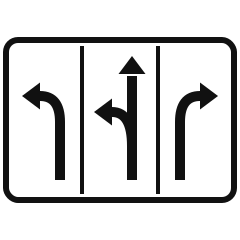
- Every lane in that direction
- Only the curb lane
- The lane to its right
- The lane it is centred over
18.On a gravel road you approach a hill crest where you can't see oncoming traffic. Where should you drive?
- To the right of centre
- On the far left
- On the shoulder
- In the centre path
19.You just received upsetting news and feel very angry. What should you do about driving?
- Drive only on side streets
- Have someone else drive
- Drive slowly with the radio off
- Drive, but avoid the highway
20.A snow plow is stopped on the highway with blue and amber lights flashing. How fast may you pass it?
- No more than 60 km/h
- No more than 80 km/h
- No more than 30 km/h
- At the posted limit
21.A police officer asks for your licence but you left it at home. How long might you be given to produce it?
- Up to 24 hours
- Up to 7 days
- Up to 48 hours
- Up to 15 days
22.You are going into a ditch. What is the main cause of rollovers in this situation?
- Driving down the ditch slope
- Easing off the accelerator as you leave the road
- Trying to get back on the road too early
- Holding the wheel firmly
23.Who counts as an experienced driver for the .04 roadside limit?
- Age 22+, out of GDL, Class 5 or higher
- Anyone over 18
- Anyone who passed the road test
- Anyone with a Class 5 licence
24.What does this sign warn you about?

- Divided highway begins
- Passing lane ahead
- Two-way traffic ahead
- One-way street ahead
25.An orange overhead lines sign is posted in a work area. Who most needs to be ready to stop?
- A driver with a high load
- A driver towing a short trailer
- A driver of a small car
- A motorcycle rider
26.Your car starts acting up on a freeway. When should you pull over?
- When warning lights flash red
- At the next exit, however far
- Only when it stalls
- At the first sign of trouble
27.What do yellow lines on the road separate?
- Bicycles from motor vehicles
- Parking spaces from lanes
- Traffic going in opposite directions
- Traffic going the same direction
28.Under Safe Driver Recognition, what does each incident-free year earn you?
- Two safety points
- A $50 refund
- A free licence renewal
- One safety point
29.You want to turn right at a red light and no sign prohibits it. What must you do first?
- Signal and turn without stopping
- Wait for the light to turn green
- Slow down and turn if clear
- Stop and yield to pedestrians and traffic
30.An ambulance is stopped on the highway shoulder with its lights flashing. What is the most you may drive while passing it?
- 50 km/h
- 60 km/h
- 40 km/h
- 80 km/h
31.In a two-lane roundabout you plan to go past the second exit. Which lane should you use?
- The shoulder
- Either lane
- The left lane
- The right lane
32.Before backing in a straight line, where should your left hand be on the wheel?
- At the 12 o'clock position
- At 9 o'clock, as when driving
- Off the wheel
- At 6 o'clock
33.Which of the six basic driving conditions does the handbook call the most important?
- Traffic condition
- Weather condition
- Road condition
- Driver condition
34.A person in a motorized wheelchair is crossing at an intersection. How do the rules treat them?
- They must yield to all cars
- The same as a motor vehicle
- The same as a pedestrian
- The same as a cyclist
35.What does this sign mean?
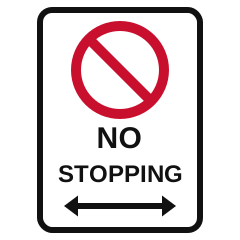
- Parking for up to 15 minutes
- Stopping is prohibited in the area shown
- Stop here for inspection
- No standing on weekends and holidays only
36.At night you spot something on the road but can't tell what it is. What should you do?
- Swerve around it at full speed
- Wait until you see it clearly
- Slow down right away while you identify it
- Switch to low beams and keep going
37.Which screen may you watch while driving?
- A sports game on the dashboard
- A video call on your phone
- A movie on a mounted tablet
- One showing only driving information
38.You are driving close behind a large truck and can't see its side mirrors. What does this mean?
- The truck is about to turn
- You are at a safe distance
- The truck's mirrors are folded
- The driver can't see you
39.You move to Saskatchewan from Manitoba with a valid licence. How long may you drive on it?
- 30 days
- One year
- 60 days
- 90 days
40.On which surface does four-wheel lock braking not give the shortest stop?
- Wet pavement
- Dry pavement
- Packed gravel
- Glare ice
41.How long is the provincial disqualification after a first Criminal Code driving conviction?
- Three years
- Six months
- Five years
- One year
42.A playground ahead sign has a km/h tab mounted underneath. What does the tab mean?
- It is a suggested speed
- It is the minimum speed
- It applies only on weekends
- That speed must be observed
43.What does this sign warn you of?

- A survey crew on a farm
- A pedestrian crossing ahead
- A school crossing guard
- Highway workers ahead
44.Your normal passing time is 15 seconds. What is your safe passing time using the handbook's minimum margin?
- 15 seconds
- 30 seconds
- 18 seconds
- 20 seconds
45.A curb lane has diamond markings and a bus lane sign whose hours are in effect. When may you drive in it?
- Any time traffic is light
- To drop off a passenger
- Only to make a right turn
- To pass slower cars
46.You lend your car to a friend who gets it impounded for stunting. Who pays the towing and storage?
- Nobody, since you weren't driving
- You, the owner
- Your friend, directly to police
- SGI
47.When may a pedestrian not start crossing at a signal?
- When facing a red or amber light
- When traffic is light
- When facing a green light
- When a walk symbol is lit
48.A driver is caught going 52 km/h over the posted limit. How long is the vehicle impounded?
- 60 days
- 3 days
- 7 days
- 30 days
49.You need to move across two lanes. How should you do it?
- One signal, shoulder check each lane
- Stop between the two lanes
- No signal needed for two lanes
- Signal twice, shoulder check once
50.You are backing out of an angle stall next to a large truck that blocks your view. What should you do?
- Back out quickly to get clear
- Back out slowly, watching for others
- Honk and reverse at normal speed
- Rely on your inside mirror
51.With a three-second gap, how does your distance at 100 km/h compare with 50 km/h?
- Half as far back
- About twice as far back
- Four times as far back
- About the same distance
52.At a four-way stop, three cars arrive at the same time. How is the order decided?
- Each yields to the car on their left
- The driver who waves goes first
- Each yields to the car on their right
- The car going straight goes first
53.You approach a pedestrian crosswalk sign with lights that are flashing. What must you do?
- Stop, then go when it is safe
- Slow down and keep going
- Stop only if a child is crossing
- Sound your horn and continue
54.An icy road looks the same at -2 C and -22 C. When is it more slippery?
- Only when snow is falling
- The same at both
- At -22 C
- At -2 C
55.When during a rainstorm are roads the most slippery?
- Only when it stops raining
- In the first 10 minutes
- After an hour of rain
- Only at night
56.About how fast does farm equipment travel on Saskatchewan highways?
- Under 5 km/h
- 60 to 80 km/h
- 10 to 40 km/h
- 40 to 60 km/h
57.As a Novice 1 driver, how many passengers who are not immediate family may you carry?
- None
- Three
- Two
- One
58.After a minor collision with no injuries, what must you give the other driver?
- Name, address, licence and plate number
- Only your phone number and your first name
- An admission of fault
- Your insurance payment
59.A Class 7 driver is caught with a small amount of alcohol for the first time. How long is the roadside suspension?
- 18 months
- 60 days
- 3 days
- 30 days
60.How many crossroad delineators mark a main farm access road?
- Two
- Four
- Three
- One
61.Signs showing symbols for food, fuel and camping tell you what?
- Services that are available nearby
- Routes for trucks only
- Places with special speed limits
- Areas where stopping is banned
62.How long does it normally take to pass another vehicle on a highway?
- 2 to 5 seconds
- 60 to 90 seconds
- 10 to 40 seconds
- 5 to 8 seconds
63.What do white lane lines separate?
- Bus lanes from bike lanes
- Traffic going the same direction
- Traffic going opposite directions
- The road from the ditch
64.You are found 25% responsible for a two-car collision. How much of your deductible do you pay?
- 25% of it
- None of it
- Half of it
- All of it
65.The light turns amber as you approach and you can stop safely. Where must you stop?
- Before entering the crosswalk
- In the middle of the crosswalk
- Wherever traffic behind allows
- Past the crosswalk at the corner
66.A tow truck with amber and blue lights flashing is helping a stalled car on the roadside. How fast may you pass it?
- No faster than 80 km/h
- No faster than 60 km/h
- No faster than 30 km/h
- At the posted speed limit
67.A street has a centre turning lane. May you turn left from the lane beside it instead?
- Yes, if the centre lane is busy
- No, use the centre lane to turn left
- Yes, at night only
- Yes, if you signal early
68.You stop on a rural highway. How far must you be from a vehicle stopped on the opposite side?
- At least 100 m
- At least 10 m
- At least 30 m
- At least 5 m
69.You and another car approach an intersection, and it stays in the same spot in your view. What does this mean?
- It is going much slower
- It is turning away from you
- It is stopped and waiting
- You are on a collision course
70.At a two-way stop, you and the car opposite stop together. You are turning left; it is going straight. Who goes first?
- The car going straight
- You, because you signalled
- Whoever honks first
- Both at the same time
71.What does this sign tell you?

- Traffic moves only in the arrow's direction
- Turn in the arrow's direction at the next corner
- Two-way traffic ahead
- The road ends in one block
72.In winter, how low should you let your gas tank get?
- It doesn't matter in winter
- Until the warning light comes on
- Not below a quarter
- Not below half full
73.Which headlights help you see best in fog or heavy rain?
- High beams
- Low beams
- No lights at all
- Parking lights only
74.Where e-scooters are allowed by local bylaw, what must riders have?
- Registration and plates from a licence issuer
- Insurance and a seatbelt
- A Class 7 licence
- Be 16 or older with an approved helmet
75.Which of these is prohibited for all drivers in the GDL program?
- Driving after dark
- Driving with any passenger in the car
- Driving a right-hand drive vehicle
- Driving on a highway
76.A front tire blows out on the highway. What should you do?
- Brake hard immediately
- Speed up to keep control
- Steer sharply to the shoulder to get off the road
- Hold the wheel firmly and brake gently
77.How does an ignition interlock device work?
- It limits the car's top speed
- It won't start the car if it detects alcohol
- It tracks the driver's location for the police
- It locks the doors at night
78.What does this sign warn you about?

- A four-way stop ahead
- The road ends; turn left or right
- A side road on the right
- A dead end with no exit for vehicles
79.What does a pavement drop-off sign warn about?
- The pavement ends and a gravel surface begins ahead
- Rocks may fall onto the road
- A bridge deck is grooved
- The next lane or shoulder is at a different height
80.How does higher speed change the way you steer into a highway curve?
- Turn the wheel less, and sooner
- Turn sharply at the curve's middle
- Brake hard in the curve
- Turn the wheel more, and later
81.You are on a road with no lane lines painted. How should you drive?
- On the shoulder when possible
- As if the lanes were marked
- Anywhere on the road surface
- Down the middle of the road
82.Police ask for your vehicle registration and you don't have it. What may they allow?
- Up to 48 hours to produce it
- Up to 7 days to produce it
- Nothing; it is an instant suspension
- Up to 30 days to produce it
83.You are on a one-way street at a red light and want to turn left onto another one-way street. What applies?
- You may turn without stopping
- You must wait for a left arrow
- Left turns on red are never allowed
- You may turn after stopping and yielding
84.Another driver slows down on purpose to stop you from passing. What is this considered?
- A stunting offence
- Proper courtesy
- A parking offence
- Legal defensive driving
85.You want to change lanes just before an intersection. What does the handbook recommend?
- Change lanes without a signal
- Finish before it or wait until after
- Change lanes in the middle of it
- Signal only once inside it
86.Why should you shift into reverse as soon as possible when parallel parking?
- To lock the doors
- To turn on your back-up lights
- To turn off the engine
- To fold in the side mirrors first
87.Airbags typically inflate in crashes above what speed?
- 5 km/h
- 40 km/h
- 16 km/h
- 60 km/h
88.You are driving down a parking lane toward a thoroughfare that runs through the lot. Who yields?
- Whoever is closer to the exit
- Thoroughfare traffic yields to you
- Whoever is on the right
- You yield to the thoroughfare traffic
89.What does this sign mean?
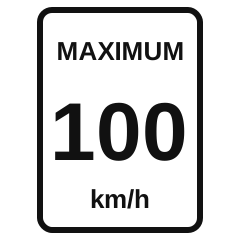
- Suggested speed for bad weather
- Minimum speed allowed on the road
- Fastest speed allowed in ideal conditions
- Speed limit only for trucks
90.Before a winter drive, what should you check to learn road conditions?
- The Highway Hotline
- The fuel gauge only
- Your tire tread only
- A weather app's temperature
91.What is an early warning sign that you are getting tired at the wheel?
- You feel more alert than usual
- You stare straight ahead and stop scanning
- You check your mirrors more often
- You drive slightly under the limit
92.What following distance should you keep behind a motorcycle in good conditions?
- One second
- At least three seconds
- Two to three car lengths
- Half a second
93.A Novice 2 driver gets a traffic conviction eight months into the stage. What happens?
- They drop back to Learner
- Nothing, if they pay the fine
- They lose the eight months only
- The 12-month period restarts
94.During threshold braking, a wheel begins to lock. What should you do?
- Pull the parking brake
- Push harder to the floor
- Release the brake completely
- Ease off slightly, then reapply
95.At .05 to .09% BAC, how much more likely is a crash?
- About 48 times
- About 2 times
- About 11 times
- About 380 times
96.What does this sign mean?

- Turn lane opens on the left
- Road narrows to one lane
- Divided highway begins; keep right
- Divided highway ends ahead
97.What should you be prepared to do when you see this sign?

- Pull onto the shoulder
- Stop for a traffic control person
- Merge into the left lane
- Speed up past the work area
98.You want to reach a business on the other side of a divided highway. Where may you cross the median?
- Anywhere the ditch is shallow and dry enough
- Wherever traffic is light
- At an intersection or provided cross-over
- At any farm approach
99.You are driving in a city lane marked with double wide lines. What should you expect?
- A school zone starts
- Your lane is about to end
- You may pass on the right
- A bus lane begins here
100.Under the Driver Improvement Program, at how many points does a driver get a warning letter?
- 9 or more
- 6 or more
- 12 or more
- 21 or more
Answer key with explanations
1. A — A call made while parked at the roadside
Both new and experienced drivers may call 9-1-1 while driving and may make a call when parked at the side of the road.
Distracted driving, fatigue and road rage · Based on: Saskatchewan Driver's Handbook (online edition, Rev. 2026), Ch. 3 Basic information and rules of the road, Distracted driving — Cellphones
2. D — To the nearest curb, left or right
On one-way streets you may pull to the nearest curb, whether it is on the left or the right.
Sharing the road · Based on: Saskatchewan Driver's Handbook (online edition, Rev. 2026), Ch. 3 Basic information and rules of the road, Sharing the road — Emergency vehicles
3. B — Two weeks
Class 5 applicants who fail the road test must wait two weeks before they are eligible to try again, and pay the test fee again.
Class 7 and Graduated Driver Licensing · Based on: Saskatchewan Driver's Handbook (online edition, Rev. 2026), Ch. 2 Saskatchewan driver's licence program, Your test — Road test
4. C — Steer, counter-steer, straighten out
Twist the wheel the way you want to go, turn it back past centre to counter-steer, then straighten out once the wheels are straight.
Braking, emergencies and collisions · Based on: Saskatchewan Driver's Handbook (online edition, Rev. 2026), Ch. 6 Advanced driving skills, Emergency driving — Emergency steering
5. B — Judgment
The first part of the body affected is the brain, especially judgment. This starts with one drink and is usually not noticed by the drinker.
Alcohol, drugs and impaired driving penalties · Based on: Saskatchewan Driver's Handbook (online edition, Rev. 2026), Ch. 7 Drinking, drugs and driving, Alcohol — Sequence of effects
6. C — After stopping, if no train is close
Without gates you may cross after stopping while the lights flash if it is safe, unless a train is closely approaching or a signal person tells you to stop.
Warning signs and railway crossings · Based on: Saskatchewan Driver's Handbook (online edition, Rev. 2026), Ch. 4 Traffic signs and signals, Railway crossings — Flashing lights
7. B — The direction the plane points
On the airport sign the plane symbol points in the direction of the airport.
Construction, guide and information signs · Based on: Saskatchewan Driver's Handbook (online edition, Rev. 2026), Ch. 4 Traffic signs and signals, Guide signs — Airport
8. D — Continue to the next interchange
Never stop or back up on a freeway. Continue to the next interchange and come back to the exit you wanted.
Passing, highways and freeways · Based on: Saskatchewan Driver's Handbook (online edition, Rev. 2026), Ch. 3 Basic information and rules of the road, Highway driving — If you miss an exit
9. A — Behind the X
Where a clearly marked X is painted on the road, you must stop behind it.
Pavement markings, bus lanes and bike lanes · Based on: Saskatchewan Driver's Handbook (online edition, Rev. 2026), Ch. 3 Basic information and rules of the road, Stopping positions
10. A — Up to $200,000
Plate insurance provides up to $200,000 in liability coverage. Extended insurance can raise that amount.
Traffic law, points, insurance and registration · Based on: Saskatchewan Driver's Handbook (online edition, Rev. 2026), Ch. 8 Complying with the law when driving, Vehicle registration — Licence plate insurance coverage
11. C — Yes, after stopping and yielding
The outside lane of a double right-turn lane may also turn on red after stopping and yielding. The handbook says to use extra caution.
Traffic signals · Based on: Saskatchewan Driver's Handbook (online edition, Rev. 2026), Ch. 4 Traffic signs and signals, Traffic signals — Red light
12. B — $240 plus a per-km/h amount
Fines for speeding past highway workers or occupied equipment start at $240, with $6 to $12 added for each km/h over the limit depending on speed.
Speed limits, stunting and racing · Based on: Saskatchewan Driver's Handbook (online edition, Rev. 2026), Ch. 3 Basic information and rules of the road, Speeding, stunting and racing
13. B — Only to make a left turn
A centre turning lane is for left turns from either direction. It may not be used as a passing lane or a driving lane.
Turning, signalling and changing lanes · Based on: Saskatchewan Driver's Handbook (online edition, Rev. 2026), Ch. 3 Basic information and rules of the road, Centre turning lanes
14. D — About half a metre
Position your vehicle parallel to the front vehicle about 0.5 m out, with your back bumper lined up with its back bumper.
Stopping, parking and backing · Based on: Saskatchewan Driver's Handbook (online edition, Rev. 2026), Ch. 3 Basic information and rules of the road, Parking — Parallel parking
15. C — Every occupant where belts are provided
Every vehicle occupant must wear a properly adjusted and securely fastened seatbelt where one is provided.
Basic driving skills and getting ready · Based on: Saskatchewan Driver's Handbook (online edition, Rev. 2026), Ch. 5 Basic driving skills, Before you drive — Seatbelts
16. A — Wait for it to pass
When turning left, yield to oncoming vehicles that are close enough that your turn would interfere with them.
Right of way, pedestrians and parking lots · Based on: Saskatchewan Driver's Handbook (online edition, Rev. 2026), Ch. 3 Basic information and rules of the road, Right of way — Uncontrolled intersections
17. D — The lane it is centred over
When lane designation signs are mounted above the road, each one is centred over the lane it controls.
Regulatory road signs · Based on: Saskatchewan Driver's Handbook (online edition, Rev. 2026), Ch. 4 Traffic signs and signals, Regulatory lane designation signs
18. A — To the right of centre
Even though the main path on gravel is often in the centre, stay right of centre on hills and blind curves so oncoming vehicles have room.
Headlights, night, winter and rural roads · Based on: Saskatchewan Driver's Handbook (online edition, Rev. 2026), Ch. 3 Basic information and rules of the road, Grid, municipal and resource access roads
19. B — Have someone else drive
Emotional or physical stress distracts you from the thinking part of driving. If you know you are under stress, don't drive; have someone else who is not involved drive.
Distracted driving, fatigue and road rage · Based on: Saskatchewan Driver's Handbook (online edition, Rev. 2026), Ch. 3 Basic information and rules of the road, Impairing factors — Personal stress and illness
20. A — No more than 60 km/h
Drivers must slow to 60 km/h when passing snow plows or other highway equipment stopped on the highway with blue and amber lights flashing.
Sharing the road · Based on: Saskatchewan Driver's Handbook (online edition, Rev. 2026), Ch. 3 Basic information and rules of the road, Sharing the road — Snow plows
21. C — Up to 48 hours
You must show your licence when a peace officer asks. If you don't have it with you, the officer may allow up to 48 hours to produce it.
Class 7 and Graduated Driver Licensing · Based on: Saskatchewan Driver's Handbook (online edition, Rev. 2026), Ch. 2 Saskatchewan driver's licence program, Driver's licence
22. C — Trying to get back on the road too early
Don't brake hard, turn violently or try to get back on the road. Drive down the ditch; returning to the road too early is the main cause of rollovers.
Braking, emergencies and collisions · Based on: Saskatchewan Driver's Handbook (online edition, Rev. 2026), Ch. 6 Advanced driving skills, Emergency driving — Ditches
23. A — Age 22+, out of GDL, Class 5 or higher
Experienced drivers are 22 or older, not in the GDL program, and hold a Class 5 or higher licence. Everyone else is a new driver.
Alcohol, drugs and impaired driving penalties · Based on: Saskatchewan Driver's Handbook (online edition, Rev. 2026), Ch. 7 Drinking, drugs and driving, The Traffic Safety Act — Experienced driver suspensions
24. C — Two-way traffic ahead
This yellow warning sign tells you the road ahead carries traffic in both directions, so stay right and watch for oncoming vehicles.
Warning signs and railway crossings · Based on: Saskatchewan Driver's Handbook (online edition, Rev. 2026), Ch. 4 Traffic signs and signals, Warning signs — Two-way traffic ahead
25. A — A driver with a high load
The overhead lines sign warns of low wires. Be prepared to stop if your vehicle is carrying a high load.
Construction, guide and information signs · Based on: Saskatchewan Driver's Handbook (online edition, Rev. 2026), Ch. 4 Traffic signs and signals, Construction signs — Overhead lines
26. D — At the first sign of trouble
Don't wait for your car to stall. At the first sign of trouble, signal, check and pull onto the shoulder as far right as possible.
Passing, highways and freeways · Based on: Saskatchewan Driver's Handbook (online edition, Rev. 2026), Ch. 3 Basic information and rules of the road, Highway driving — Emergencies on the freeway
27. C — Traffic going in opposite directions
Yellow directional dividing lines separate traffic travelling in opposite directions. White lines separate traffic going the same way.
Pavement markings, bus lanes and bike lanes · Based on: Saskatchewan Driver's Handbook (online edition, Rev. 2026), Ch. 3 Basic information and rules of the road, Directional dividing lines
28. D — One safety point
For every year you drive without an incident you earn one safety point. In the Good Driver zone each point is a 2% insurance discount.
Traffic law, points, insurance and registration · Based on: Saskatchewan Driver's Handbook (online edition, Rev. 2026), Ch. 8 Complying with the law when driving, Safe Driver Recognition
29. D — Stop and yield to pedestrians and traffic
A right turn on red is allowed unless a sign prohibits it, but you must first stop and yield to pedestrians and other traffic.
Traffic signals · Based on: Saskatchewan Driver's Handbook (online edition, Rev. 2026), Ch. 4 Traffic signs and signals, Traffic signals — Red light
30. B — 60 km/h
You must slow to no more than 60 km/h when passing emergency vehicles, tow trucks and service vehicles stopped with lights flashing.
Speed limits, stunting and racing · Based on: Saskatchewan Driver's Handbook (online edition, Rev. 2026), Ch. 3 Basic information and rules of the road, Speeding, stunting and racing
31. C — The left lane
The right lane is mainly for leaving at the first exit. If you are going beyond the second exit, use the left lane.
Turning, signalling and changing lanes · Based on: Saskatchewan Driver's Handbook (online edition, Rev. 2026), Ch. 3 Basic information and rules of the road, Interchanges — Roundabouts
32. A — At the 12 o'clock position
Shift onto your right hip, put your right arm along the seat and palm the top centre (12 o'clock) of the wheel with your left hand.
Stopping, parking and backing · Based on: Saskatchewan Driver's Handbook (online edition, Rev. 2026), Ch. 3 Basic information and rules of the road, Low speed skills — Backing
33. D — Driver condition
Driver condition, your physical, mental and emotional fitness, is the most important because a fit driver can adjust to all the other conditions.
Basic driving skills and getting ready · Based on: Saskatchewan Driver's Handbook (online edition, Rev. 2026), Ch. 5 Basic driving skills, Basic information — The six basic driving conditions
34. C — The same as a pedestrian
Pedestrians include people using wheelchairs, motorized wheelchairs and medical scooters, so you must yield to them in the same way.
Right of way, pedestrians and parking lots · Based on: Saskatchewan Driver's Handbook (online edition, Rev. 2026), Ch. 3 Basic information and rules of the road, Wheelchairs and mobility aids
35. B — Stopping is prohibited in the area shown
A no stopping sign means you may not stop your vehicle in the area it covers. A 'no stopping any time' sign means do not stop even to wait.
Regulatory road signs · Based on: Saskatchewan Driver's Handbook (online edition, Rev. 2026), Ch. 4 Traffic signs and signals, Regulatory parking signs — No stopping
36. C — Slow down right away while you identify it
The most important action at night is to slow immediately when you detect something ahead. Brake while you work out what it is.
Headlights, night, winter and rural roads · Based on: Saskatchewan Driver's Handbook (online edition, Rev. 2026), Ch. 3 Basic information and rules of the road, Choosing the right speed
37. D — One showing only driving information
You may not watch a television, video or computer screen while driving unless it shows only information to help you drive safely, like a navigation display.
Distracted driving, fatigue and road rage · Based on: Saskatchewan Driver's Handbook (online edition, Rev. 2026), Ch. 3 Basic information and rules of the road, Rules related to vehicles
38. D — The driver can't see you
A good rule of thumb is that if you can't see the large truck's mirrors, the truck driver can't see you.
Sharing the road · Based on: Saskatchewan Driver's Handbook (online edition, Rev. 2026), Ch. 3 Basic information and rules of the road, Sharing the road — Large trucks
39. D — 90 days
New residents may drive with their valid out-of-province licence for 90 days after moving to Saskatchewan.
Class 7 and Graduated Driver Licensing · Based on: Saskatchewan Driver's Handbook (online edition, Rev. 2026), Ch. 2 Saskatchewan driver's licence program, Saskatchewan driver's licence program
40. D — Glare ice
Locking all four wheels produces the shortest stopping distance on all surfaces except glare ice.
Braking, emergencies and collisions · Based on: Saskatchewan Driver's Handbook (online edition, Rev. 2026), Ch. 6 Advanced driving skills, Braking — Four-wheel lock braking
41. D — One year
Disqualification is based on Criminal Code convictions in the last 10 years: one conviction, one year; two, three years; three, five years.
Alcohol, drugs and impaired driving penalties · Based on: Saskatchewan Driver's Handbook (online edition, Rev. 2026), Ch. 7 Drinking, drugs and driving, The Criminal Code of Canada — Licence disqualifications
42. D — That speed must be observed
When the playground ahead sign carries a km/h tab, that speed is to be observed in the area.
Warning signs and railway crossings · Based on: Saskatchewan Driver's Handbook (online edition, Rev. 2026), Ch. 4 Traffic signs and signals, Warning signs — Playground ahead
43. D — Highway workers ahead
This orange diamond warns that highway workers are on or near the road ahead. Slow down and give them room.
Construction, guide and information signs · Based on: Saskatchewan Driver's Handbook (online edition, Rev. 2026), Ch. 4 Traffic signs and signals, Construction signs — Highway workers
44. D — 20 seconds
Add a safety margin of at least five seconds to your passing time. Fifteen seconds plus five gives a safe passing time of 20 seconds.
Passing, highways and freeways · Based on: Saskatchewan Driver's Handbook (online edition, Rev. 2026), Ch. 3 Basic information and rules of the road, Advanced passing — Estimation of safe passing time
45. C — Only to make a right turn
During bus lane hours only buses and emergency vehicles may use the curb lane, except other drivers making a right turn onto or off that block.
Pavement markings, bus lanes and bike lanes · Based on: Saskatchewan Driver's Handbook (online edition, Rev. 2026), Ch. 3 Basic information and rules of the road, Bus lanes and bicycle lanes
46. B — You, the owner
All towing and storage costs are the owner's responsibility. The owner may recover the amount from the driver in any way the law allows.
Traffic law, points, insurance and registration · Based on: Saskatchewan Driver's Handbook (online edition, Rev. 2026), Ch. 8 Complying with the law when driving, The Traffic Safety Act — Vehicle impoundments
47. A — When facing a red or amber light
Pedestrians may not cross when they face a red light, an amber light or a 'don't walk' light or symbol.
Traffic signals · Based on: Saskatchewan Driver's Handbook (online edition, Rev. 2026), Ch. 4 Traffic signs and signals, Traffic signals — Pedestrians
48. D — 30 days
Excessive speeding of 50 km/h or more over the limit, or double the limit, brings a 30-day vehicle impoundment.
Speed limits, stunting and racing · Based on: Saskatchewan Driver's Handbook (online edition, Rev. 2026), Ch. 3 Basic information and rules of the road, The Traffic Safety Act — Vehicle impoundments
49. A — One signal, shoulder check each lane
Make it one continual action with a single signal, but shoulder check before moving into each lane.
Turning, signalling and changing lanes · Based on: Saskatchewan Driver's Handbook (online edition, Rev. 2026), Ch. 3 Basic information and rules of the road, Changing lanes
50. B — Back out slowly, watching for others
Shoulder check both sides and the rear. If a vehicle beside you blocks your vision, move back cautiously and watch for pedestrians or vehicles.
Stopping, parking and backing · Based on: Saskatchewan Driver's Handbook (online edition, Rev. 2026), Ch. 3 Basic information and rules of the road, Parking — Angle parking
51. B — About twice as far back
A time gap lengthens automatically with speed. At 100 km/h a three-second gap is about 84 m, roughly twice the 42 m gap at 50 km/h.
Basic driving skills and getting ready · Based on: Saskatchewan Driver's Handbook (online edition, Rev. 2026), Ch. 5 Basic driving skills, Time - the key to judgment
52. C — Each yields to the car on their right
After the first vehicle to stop, the remaining drivers yield the right of way to the driver on their right.
Right of way, pedestrians and parking lots · Based on: Saskatchewan Driver's Handbook (online edition, Rev. 2026), Ch. 3 Basic information and rules of the road, Right of way — Controlled intersections
53. A — Stop, then go when it is safe
At a crosswalk with lights, traffic must stop when the lights are flashing and may go only when it is safe.
Regulatory road signs · Based on: Saskatchewan Driver's Handbook (online edition, Rev. 2026), Ch. 4 Traffic signs and signals, Regulatory pedestrian crossing signs
54. D — At -2 C
Traction varies with temperature. Ice near the freezing point, such as -2 C, is far more slippery than ice at -22 C.
Headlights, night, winter and rural roads · Based on: Saskatchewan Driver's Handbook (online edition, Rev. 2026), Ch. 3 Basic information and rules of the road, Winter driving
55. B — In the first 10 minutes
Roads are most slippery during the first 10 minutes of a rainstorm. Slow down and make only small, gentle movements.
Distracted driving, fatigue and road rage · Based on: Saskatchewan Driver's Handbook (online edition, Rev. 2026), Ch. 3 Basic information and rules of the road, Impairing factors — Fog, dust, heavy rain
56. C — 10 to 40 km/h
Farm equipment moves very slowly, about 10 to 40 km/h, so you can come up on it very quickly. Pass only when it is safe.
Sharing the road · Based on: Saskatchewan Driver's Handbook (online edition, Rev. 2026), Ch. 3 Basic information and rules of the road, Sharing the road — Farm equipment
57. D — One
Novice 1 drivers may carry one passenger who is not immediate family. Any others must be immediate family and limited to the number of seatbelts.
Class 7 and Graduated Driver Licensing · Based on: Saskatchewan Driver's Handbook (online edition, Rev. 2026), Ch. 2 Saskatchewan driver's licence program, Graduated Driver Licensing program — Restrictions
58. A — Name, address, licence and plate number
Saskatchewan drivers must give their name, address, driver's licence number and plate number to others involved, regardless of severity. Don't admit fault.
Braking, emergencies and collisions · Based on: Saskatchewan Driver's Handbook (online edition, Rev. 2026), Ch. 6 Advanced driving skills, What to do if you're in a collision — Exchange information
59. B — 60 days
A first new-driver roadside suspension is 60 days, with a three-day vehicle impoundment and the Driving Without Impairment program.
Alcohol, drugs and impaired driving penalties · Based on: Saskatchewan Driver's Handbook (online edition, Rev. 2026), Ch. 7 Drinking, drugs and driving, The Traffic Safety Act — New driver suspensions
60. A — Two
Two delineators mark main farm access roads, improved all-weather roads and intermediate urban streets. One marks other minor roads.
Warning signs and railway crossings · Based on: Saskatchewan Driver's Handbook (online edition, Rev. 2026), Ch. 4 Traffic signs and signals, Crossroad delineators
61. A — Services that are available nearby
Information signs use symbols to show services such as food, fuel, camping, accommodation and hospitals.
Construction, guide and information signs · Based on: Saskatchewan Driver's Handbook (online edition, Rev. 2026), Ch. 4 Traffic signs and signals, Information signs
62. C — 10 to 40 seconds
Passing time varies from 10 to 40 seconds depending on your vehicle, your technique and the speed difference with the vehicle you are passing.
Passing, highways and freeways · Based on: Saskatchewan Driver's Handbook (online edition, Rev. 2026), Ch. 3 Basic information and rules of the road, Advanced passing — Estimation of safe passing time
63. B — Traffic going the same direction
White line markings separate lanes of traffic travelling in the same direction.
Pavement markings, bus lanes and bike lanes · Based on: Saskatchewan Driver's Handbook (online edition, Rev. 2026), Ch. 3 Basic information and rules of the road, Directional dividing lines
64. A — 25% of it
When two drivers share responsibility, each pays the same share of their deductible as their share of fault.
Traffic law, points, insurance and registration · Based on: Saskatchewan Driver's Handbook (online edition, Rev. 2026), Ch. 8 Complying with the law when driving, Vehicle registration — Coverage for multiple-vehicle losses
65. A — Before entering the crosswalk
When approaching an amber light you must stop before the crosswalk. Only if you are already in it, or cannot stop safely, do you proceed with caution.
Traffic signals · Based on: Saskatchewan Driver's Handbook (online edition, Rev. 2026), Ch. 4 Traffic signs and signals, Traffic signals — Amber light
66. B — No faster than 60 km/h
Drivers must slow to 60 km/h when passing a tow truck stopped on the roadside with its amber, or amber and blue, lights flashing while it helps a disabled vehicle.
Speed limits, stunting and racing · Based on: Saskatchewan Driver's Handbook (online edition, Rev. 2026), Ch. 3 Basic information and rules of the road, Speeding, stunting and racing
67. B — No, use the centre lane to turn left
Where a centre turning lane is provided, you may not make a left turn from any other lane.
Turning, signalling and changing lanes · Based on: Saskatchewan Driver's Handbook (online edition, Rev. 2026), Ch. 3 Basic information and rules of the road, Centre turning lanes
68. C — At least 30 m
When stopping on a rural road or highway, you must be at least 30 m (98 ft.) away from any vehicle stopped on the opposite side.
Stopping, parking and backing · Based on: Saskatchewan Driver's Handbook (online edition, Rev. 2026), Ch. 3 Basic information and rules of the road, Stopping and parking
69. D — You are on a collision course
If another vehicle stays in the same position relative to you as you both approach, you are on a collision course. Slow down and be ready to yield.
Basic driving skills and getting ready · Based on: Saskatchewan Driver's Handbook (online edition, Rev. 2026), Ch. 5 Basic driving skills, Eye use
70. A — The car going straight
When vehicles at opposite stop signs arrive together and one is turning left, the left-turning driver yields to the one going straight.
Right of way, pedestrians and parking lots · Based on: Saskatchewan Driver's Handbook (online edition, Rev. 2026), Ch. 3 Basic information and rules of the road, Right of way — Controlled intersections
71. A — Traffic moves only in the arrow's direction
This is a one-way sign. Traffic on that street or highway travels only in the direction of the arrow.
Regulatory road signs · Based on: Saskatchewan Driver's Handbook (online edition, Rev. 2026), Ch. 4 Traffic signs and signals, Regulatory signs — One-way
72. D — Not below half full
One of the winter temptations to resist is letting your gas tank drop below half full.
Headlights, night, winter and rural roads · Based on: Saskatchewan Driver's Handbook (online edition, Rev. 2026), Ch. 3 Basic information and rules of the road, Winter driving — Temptations to resist
73. B — Low beams
In fog, blowing snow or heavy rain you will see better with your lights on low beam, because high beams reflect back at you.
Distracted driving, fatigue and road rage · Based on: Saskatchewan Driver's Handbook (online edition, Rev. 2026), Ch. 3 Basic information and rules of the road, Impairing factors — Fog, dust, heavy rain
74. D — Be 16 or older with an approved helmet
E-scooters don't need registration or a licence, but users must be at least 16, wear an approved helmet and follow local and provincial laws.
Sharing the road · Based on: Saskatchewan Driver's Handbook (online edition, Rev. 2026), Ch. 3 Basic information and rules of the road, Sharing the road — E-scooters
75. C — Driving a right-hand drive vehicle
All GDL drivers are prohibited from operating right-hand drive vehicles and from using hand-held or hands-free phones.
Class 7 and Graduated Driver Licensing · Based on: Saskatchewan Driver's Handbook (online edition, Rev. 2026), Ch. 2 Saskatchewan driver's licence program, Graduated Driver Licensing program — Restrictions
76. D — Hold the wheel firmly and brake gently
Don't over-react. Hold the wheel firmly, ease off the accelerator, brake gently, and steer off the road once you have slowed down.
Braking, emergencies and collisions · Based on: Saskatchewan Driver's Handbook (online edition, Rev. 2026), Ch. 6 Advanced driving skills, Emergency driving — Blow-outs
77. B — It won't start the car if it detects alcohol
The driver must blow into the device to start the vehicle and periodically while driving. If it senses alcohol, the car won't start.
Alcohol, drugs and impaired driving penalties · Based on: Saskatchewan Driver's Handbook (online edition, Rev. 2026), Ch. 7 Drinking, drugs and driving, The Criminal Code of Canada — Ignition interlock
78. B — The road ends; turn left or right
This sign warns of a T-intersection. The road you are on ends and you must turn sharply right or left.
Warning signs and railway crossings · Based on: Saskatchewan Driver's Handbook (online edition, Rev. 2026), Ch. 4 Traffic signs and signals, Warning signs — T-intersection
79. D — The next lane or shoulder is at a different height
A pavement drop-off sign warns that the lane beside you, the shoulder or both are lower or higher than the lane you are driving in.
Construction, guide and information signs · Based on: Saskatchewan Driver's Handbook (online edition, Rev. 2026), Ch. 4 Traffic signs and signals, Construction signs — Pavement drop-off
80. A — Turn the wheel less, and sooner
The higher the speed, the less you need to turn the wheel and the sooner you must turn it before the curve. Avoid sudden movements.
Passing, highways and freeways · Based on: Saskatchewan Driver's Handbook (online edition, Rev. 2026), Ch. 3 Basic information and rules of the road, Highway driving
81. B — As if the lanes were marked
Where no lane lines are marked, you should travel as if there were markings, staying entirely in one lane.
Pavement markings, bus lanes and bike lanes · Based on: Saskatchewan Driver's Handbook (online edition, Rev. 2026), Ch. 3 Basic information and rules of the road, Traffic lanes
82. A — Up to 48 hours to produce it
You must show your licence and registration when asked. If you don't have them, police may allow up to 48 hours to produce them.
Traffic law, points, insurance and registration · Based on: Saskatchewan Driver's Handbook (online edition, Rev. 2026), Ch. 8 Complying with the law when driving, The Traffic Safety Act — Producing driver's licence and registration
83. D — You may turn after stopping and yielding
The stop-and-yield rule for turning on red also applies to a left turn from one one-way street onto another, unless a sign prohibits it.
Traffic signals · Based on: Saskatchewan Driver's Handbook (online edition, Rev. 2026), Ch. 4 Traffic signs and signals, Traffic signals — Red light
84. A — A stunting offence
Driving to prevent another vehicle from passing, or slowing to interfere with it, is listed among stunting behaviours that can lead to penalties.
Speed limits, stunting and racing · Based on: Saskatchewan Driver's Handbook (online edition, Rev. 2026), Ch. 3 Basic information and rules of the road, Speeding, stunting and racing
85. B — Finish before it or wait until after
Complete the lane change and cancel your signal before entering the intersection, or wait until you are through it before signalling.
Turning, signalling and changing lanes · Based on: Saskatchewan Driver's Handbook (online edition, Rev. 2026), Ch. 3 Basic information and rules of the road, Signalling — Turn signals
86. B — To turn on your back-up lights
Shifting into reverse early activates your back-up lights, telling other drivers you intend to back into the space.
Stopping, parking and backing · Based on: Saskatchewan Driver's Handbook (online edition, Rev. 2026), Ch. 3 Basic information and rules of the road, Parking — Parallel parking
87. C — 16 km/h
Airbags inflate in crashes over 16 km/h. They work with seatbelts and do not replace them.
Basic driving skills and getting ready · Based on: Saskatchewan Driver's Handbook (online edition, Rev. 2026), Ch. 5 Basic driving skills, Before you drive — Airbags
88. D — You yield to the thoroughfare traffic
Thoroughfares lead into, through or out of a parking lot. Vehicles in parking lanes and passageways must yield to traffic on the thoroughfare.
Right of way, pedestrians and parking lots · Based on: Saskatchewan Driver's Handbook (online edition, Rev. 2026), Ch. 3 Basic information and rules of the road, Parking lots
89. C — Fastest speed allowed in ideal conditions
A maximum speed sign shows the fastest you may legally drive under ideal conditions. In poor conditions you must go slower.
Regulatory road signs · Based on: Saskatchewan Driver's Handbook (online edition, Rev. 2026), Ch. 4 Traffic signs and signals, Regulatory signs — Maximum speed
90. A — The Highway Hotline
Check the Highway Hotline for road conditions before heading out, and stay home if it says travel is not recommended.
Headlights, night, winter and rural roads · Based on: Saskatchewan Driver's Handbook (online edition, Rev. 2026), Ch. 3 Basic information and rules of the road, Winter driving
91. B — You stare straight ahead and stop scanning
An early sign of fatigue is that you stop looking far ahead and stop moving your eyes in a search pattern, and instead stare straight ahead.
Distracted driving, fatigue and road rage · Based on: Saskatchewan Driver's Handbook (online edition, Rev. 2026), Ch. 3 Basic information and rules of the road, Impairing factors — Fatigue
92. B — At least three seconds
Give motorcycles the same three-second following distance as other vehicles, and more when the road is wet or slippery.
Sharing the road · Based on: Saskatchewan Driver's Handbook (online edition, Rev. 2026), Ch. 3 Basic information and rules of the road, Sharing the road — Motorcycles
93. D — The 12-month period restarts
Novice 2 must be 12 months free of at-fault collisions, convictions and suspensions. An incident restarts the 12 months from the conviction or loss date.
Class 7 and Graduated Driver Licensing · Based on: Saskatchewan Driver's Handbook (online edition, Rev. 2026), Ch. 2 Saskatchewan driver's licence program, Graduated Driver Licensing program
94. D — Ease off slightly, then reapply
Threshold braking keeps you just short of lock-up: when you feel a wheel lock, ease up slightly until it rolls, then reapply pressure.
Braking, emergencies and collisions · Based on: Saskatchewan Driver's Handbook (online edition, Rev. 2026), Ch. 6 Advanced driving skills, Braking — Threshold braking
95. C — About 11 times
Crash likelihood rises to 11 times at .05 to .09% BAC, 48 times at .10 to .14%, and 380 times at .15% and above.
Alcohol, drugs and impaired driving penalties · Based on: Saskatchewan Driver's Handbook (online edition, Rev. 2026), Ch. 7 Drinking, drugs and driving, Alcohol — Likelihood of a crash
96. C — Divided highway begins; keep right
This sign warns that a divided highway begins ahead. Keep to the right of the median.
Warning signs and railway crossings · Based on: Saskatchewan Driver's Handbook (online edition, Rev. 2026), Ch. 4 Traffic signs and signals, Warning signs — Divided highway begins
97. B — Stop for a traffic control person
This orange sign warns of a traffic control person ahead. Be prepared to stop and follow their instructions.
Construction, guide and information signs · Based on: Saskatchewan Driver's Handbook (online edition, Rev. 2026), Ch. 4 Traffic signs and signals, Construction signs — Traffic control person ahead
98. C — At an intersection or provided cross-over
You may not cross a median, boulevard or ditch except at an intersection or where a cross-over is provided.
Passing, highways and freeways · Based on: Saskatchewan Driver's Handbook (online edition, Rev. 2026), Ch. 3 Basic information and rules of the road, Medians
99. B — Your lane is about to end
Double wide lines mark a lane that is ending. Be ready to exit, turn at the next intersection or merge, and look for signs.
Pavement markings, bus lanes and bike lanes · Based on: Saskatchewan Driver's Handbook (online edition, Rev. 2026), Ch. 3 Basic information and rules of the road, Directional dividing lines
100. C — 12 or more
A program information letter is sent at 9 points and a warning letter at 12 points. Tougher steps follow every three points after that.
Traffic law, points, insurance and registration · Based on: Saskatchewan Driver's Handbook (online edition, Rev. 2026), Ch. 8 Complying with the law when driving, Driver Improvement Program
Original practice questions by Canada Exam Prep, written from the official handbook. Not official test questions. Free to print for personal study.
FAQ
SGI Class 7 questions and answers (PDF): common questions
Does SGI publish the Class 7 test questions as a PDF?
No. SGI does not release its test questions. Its free study material is the Saskatchewan Driver's Handbook, online at sgi.sk.ca/handbook, with a French edition as a PDF. Practice PDFs, including this one, are made by third parties.
How do I turn this page into a PDF?
Use the Print or save as PDF button, then choose Save as PDF as the printer. Phones offer the same option in the print or share menu. Menus, buttons and ads are left out of the printed copy.
Where are the answers?
After question 100 the answer key starts on a fresh page. For each question it shows the correct letter, the answer text, a short explanation and the handbook page the question comes from.
Keep practising
- SGI sign test practicePractise the sign identification part of the SGI Class 7 test: 60 questions on sign shapes, colours, regulatory, warning, construction and guide signs.
- SGI Basic test (rules of the road)60 practice questions for the Basic part of the SGI Class 7 test: right of way, turning, passing, speed limits, impaired driving and graduated licensing.
- Saskatchewan road signs chartEvery sign drawing in our SGI question bank on one page with its meaning: regulatory signs, warning signs, railway crossings, construction and guide signs.
- Saskatchewan Class 7 study guide
- How to get a learner's licence in Saskatchewan
- Saskatchewan Class 7 Mock Exam 1 – 40 QuestionsUntimed practice · answers explained
- Saskatchewan Class 7 Mock Exam 2 – 40 QuestionsUntimed practice · answers explained
- Saskatchewan Class 7 Practice Test 130 questions with explanations
- Saskatchewan Class 7 Practice Test 230 questions with explanations
- Saskatchewan Class 7 Practice Test 330 questions with explanations
Practice by topic
- Regulatory road signsThe six basic sign shapes, standard sign colours, and regulatory signs: speed, one-way, do not enter, passing, U-turn, parking and stopping, crosswalk, lane designation and turn control signs.
- Warning signs and railway crossingsYellow diamond warning signs for curves, hills, lane endings, intersections, animals and hazards, school and playground signs, chevrons, the slow-moving vehicle sign, railway crossings and crossroad delineators.
- Construction, guide and information signsOrange construction and maintenance signs, highway route markers, and blue information and service signs.
- Traffic signalsGreen, amber and red lights, right and left turns on red, green and amber arrows, flashing lights and pedestrian signals.
- Pavement markings, bus lanes and bike lanesYellow and white lines, solid and broken lines, lanes that end, bus and bicycle lanes, sharrows and where to stop at stop lines and crosswalks.
- Class 7 and Graduated Driver LicensingClass 7 age and ID rules, the supervising driver, the written tests, Learner, Novice 1 and Novice 2 stages, mandatory driver education, new residents and your driver's licence.
- Speed limits, stunting and racingDefault speed limits, the 60 km/h rule for stopped emergency, tow and highway vehicles, work zone fines, school zones, photo speed enforcement and stunting.
- Distracted driving, fatigue and road rageCellphone rules for GDL and experienced drivers, other distractions, fatigue, stress, aggressive driving, fog and heavy rain, and smoking with children in the vehicle.
- Basic driving skills and getting readySeatbelts, car seats and airbags, seat and mirror adjustment, steering hand positions, the IPDE method, gates, blind spots, following distance and eye use.
- Right of way, pedestrians and parking lotsUncontrolled intersections, T-intersections, two-way and four-way stops, entering highways, pedestrians and wheelchair users, zipper merges and parking lot right of way.
- Turning, signalling and changing lanesSignal distances, hand signals, lane position, lane changes, right and left turns, centre turning lanes, roundabouts, diverging diamond and RCUT interchanges, U-turns and two-point turns.
- Passing, highways and freewaysWhen and where you may pass, passing lanes, safe passing time, being passed, divided highways, medians, entering and leaving a freeway and freeway emergencies.
- Sharing the roadLarge trucks and the no-zone, snow plows, emergency vehicles, farm equipment, school buses, motorcycles, bicycles, e-scooters, tow trucks and funeral processions.
- Stopping, parking and backingStopping on rural roads and highways, marking stopped vehicles, parallel and angle parking, parking on a hill, back-up cameras and safe backing.
- Headlights, night, winter and rural roadsWhen headlights are required, dimming distances, glare, overdriving your headlights, winter driving and survival, black ice, whiteouts, curves, mountains and gravel grid roads.
- Braking, emergencies and collisionsABS, threshold and four-wheel lock braking, skids, soft shoulders and ditches, blow-outs, brake failure, animals on the road, collision facts and what to do after a collision.
- Alcohol, drugs and impaired driving penaltiesHow alcohol and drugs affect driving, zero tolerance for new drivers, roadside suspensions and impoundments, Criminal Code impaired driving, ignition interlock and licence disqualifications.
- Traffic law, points, insurance and registrationPolice stops, impoundments, the Driver Improvement Program, GDL improvement steps, Safe Driver Recognition, vehicle registration, plate insurance and rules related to vehicles.