The crossing gates begin to lower as you approach the tracks. Where do you stop?
Nova Scotia Class 7 overview
Nova Scotia Road Sign Recognition Test Practice
60 practice questions for the Road Sign Recognition part of the Nova Scotia Class 7 test: regulatory, warning, work zone, railway, signal and marking questions.
- No sign-up
- Every answer explained
- Independent · not a government site
- 60 questions
- Instant feedback
- Free, no sign-up
Nova Scotia gives the sign part of the Class 7 knowledge test its own name, the Road Sign Recognition Test, and its own score: 20 multiple-choice questions, at least 16 correct, and 30 minutes to finish. Fail it and you pay again and retake only that part. That makes signs worth drilling by themselves, and this page does exactly that with 60 questions taken only from the sign topics in our bank.
The mix covers regulatory signs, warning and guide signs, orange work zone signs, railway crossings, traffic signals and crossing guards, and pavement markings and special lanes. Several questions turn on a number as well as a picture, such as the school zone limits of 30 and 50 km/h, or on a symbol rule: a green circle permits what it shows and a red circle with a slash forbids it. Score 54 or more here, the same 90 per cent as 18 out of 20, and you are in good shape.
0/60
All 60 questions in this test
Every question and its answer choices. The correct answers and explanations appear when you take the test above.
The crossing gates begin to lower as you approach the tracks. Where do you stop?
- Before the gate on your side of the road
- Beside the gate, so you can see
- Just past the first set of rails, then wait
- Wherever you can stop quickly
You are passing in the left lane of a climbing lane and reach the solid line where it ends. What should you do?
- Sound your horn and move right
- Stop trying to pass and stay behind
- Pass on the shoulder instead
- Finish the pass by speeding up
At an intersection with Walk and Don't Walk signals, which signals must pedestrians follow?
- The pedestrian signals, not the traffic lights
- Whichever of the two signals turns green first
- The crossing guard only
- The regular traffic lights
A sign warns that your lane will close ahead. When should you merge?
- As soon as it is safe to do so
- At the last moment before the cones
- Only when a worker waves you over
- After passing the slower lane
At a stop sign there is a white stop line painted across your lane. Where do you stop?
- At the stop line
- Beside the stop sign post
- Past the line, where you can see
- At the edge of the cross street
A sign over the centre lane shows two curved arrows pointing in opposite directions. How may that lane be used?
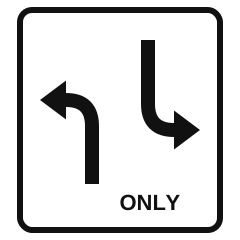
- By buses and taxis only
- By vehicles merging onto the road
- Only by vehicles turning left
- By vehicles passing in either direction
What does a small sign mounted below a railway crossbuck tell you?
- The distance to the next crossing
- There is more than one set of tracks
- The train speed limit
- The number of trains per day
Where is a single solid yellow edge line used on a divided highway?
- Along the left edge of your lanes
- Along the right edge of your lanes
- Between two lanes going the same way
- Across the road at intersections
Where must you stop for a red light?
- At the stop line or the near side of the crosswalk
- Anywhere inside the intersection, once fully stopped
- Just past the crosswalk
- Beside the traffic light pole
You see someone driving recklessly through a work zone. What does the handbook suggest?
- Follow them to get their plate
- Report it to the police
- Sound your horn until they slow down
- Tell the nearest road worker
What does this sign mean?

- Keep a safe following distance
- Do not pass
- Two-way traffic ahead
- Passing is permitted
You are approaching a bridge and see this sign. What does it mean?

- The road narrows ahead
- A divided highway begins
- Two lanes merge from the right
- The road widens to two lanes
Why must you never try to beat a train to a crossing?
- Trains always have a whistle
- Some trains need over a kilometre to stop
- Trains are required to slow down at crossings
- The gate will trap your car
What do continuity lines at highway ramps show?
- Where the through lane and the ramp separate
- Where you must stop
- Where the speed limit changes for the exit ramp
- Where passing is allowed
What does a flashing yellow light mean?
- The light is about to turn red
- Stop and then proceed
- Only turning traffic may go
- Slow down and proceed with caution
A flashing light unit shows a straight bar of lights. What does this caution mode mean?
- It is safe to pass the hazard on either side now
- Traffic must stop and wait
- The work zone has ended
- A hazard is ahead; judge whether passing is safe
You stop at a stop sign on a street with no stop line and no painted crosswalk. How far back should you stop?
- One full car length past the sign
- Far enough back for a pedestrian to cross safely
- Right at the edge of the cross street you are entering
- Wherever you can see both ways
You pass this sign after leaving a divided highway. What does it tell you?

- Normal two-way road rules now apply
- A one-way street is ahead
- Passing is not allowed here
- Two lanes go the same direction
Traffic ahead of you is backed up past the far side of a railway crossing. What should you do?
- Move onto the tracks and wait
- Wait until there is room to clear the tracks
- Cross and stop between the rails
- Drive onto the shoulder to get around the line
The centre lane is marked as a two-way-left-turn lane. A slow truck is ahead of you. May you use the centre lane to pass it?
- Only if you signal first
- No, the lane is only for left turns
- Yes, if no one is turning
- Yes, if you stay in it for under 100 metres
The light turns yellow just as you reach the intersection and you are too close to stop safely. What should you do?
- Speed up to beat the red light
- Drive through the intersection with caution
- Brake hard to stop in the crosswalk
- Stop in the middle of the intersection
A flashing light unit shows two arrowheads pointing in opposite directions. What does this mean?
- The road is closed ahead
- You may pass on either side
- You must stop before the unit
- You may pass on the left only
You pass this sign on a foggy night. How fast should you drive?

- Up to 60 km/h, since it is a guide
- Slower than 50 km/h, to suit conditions
- At least 50 km/h, to keep traffic moving
- Exactly 50 km/h, as posted
You see this sign before a long downhill stretch. What does the handbook suggest?

- Shift to neutral to save fuel
- You may need to use a lower gear
- Pull over and check your brakes
- Speed up to keep your momentum
You are already on the tracks when the warning lights start flashing. What should you do?
- Stop where you are and wait
- Stop and back up off the tracks
- Get out and leave the vehicle
- Keep moving and clear the crossing
On a multi-lane road, what do white lane lines separate?
- Lanes moving in the same direction
- Turning lanes from bus lanes
- The road from the shoulder only
- Lanes moving in opposite directions
On a commuter route, a red X is lit above the lane you are in. What must you do?
- Use the lane for turning only
- Leave that lane; never drive under a red X
- Slow down and stay in the lane
- Stay in the lane if no other cars are in it
Why are red or orange flags sometimes attached to human activity signs?
- The zone has a lower speed limit
- The sign is placed close to the ground
- The work zone is ending soon
- Workers are about to blast rock
What does this sign require you to do?

- Slow down and give way, stopping if needed
- Give way only to pedestrians
- Speed up to merge ahead of traffic
- Come to a full stop every time
This yellow sign appears before an intersection. What is ahead?

- A railway crossing
- A pedestrian crossing
- A four-way stop
- Traffic signal lights
You see this yellow sign on a country road. What does it tell you?
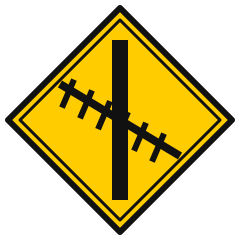
- A one-lane road crosses ahead
- A bridge with a steel grated deck is coming up ahead
- A railway crossing is ahead, at the angle shown
- A side road joins at an angle
The centre line has a solid yellow line next to a broken yellow line. The broken line is on your side. What may you do?
- Never pass on this stretch
- Pass only on the right
- Pass only if the other lane is empty for 1 km
- Pass with care when it is safe
The light turns green as you wait at an intersection. A pedestrian is still in the crosswalk. What do you do?
- Drive around the pedestrian carefully
- Go, since the green gives you the right of way
- Wait for the pedestrian to finish crossing
- Sound your horn so the pedestrian hurries
Why is a do not pass sign often posted before a work zone lane closure?
- To slow traffic to a full stop
- To reserve the lane for workers
- To set up an orderly merge
- To let trucks use both lanes
You are stopped at a red light where a sign shows no right turn on red. When may you turn right?
- Only if no pedestrians are waiting
- When the yellow light comes on
- After stopping, if the way is clear
- Only after the light turns green
What do green rectangular signs with white letters give you?
- Warnings of hazards ahead
- Construction zone instructions and detours
- Directions, route numbers and distances
- Laws you must obey
A long train has just cleared the crossing and the road looks open. What should you do before going?
- Check that no second train is coming
- Wait exactly one minute, then go
- Sound your horn and go
- Go right away while the gates rise
When do the rules for solid and broken lines not apply?
- When the lines are not clearly visible
- When traffic behind you is impatient
- When you are late for work
- When you are driving under the limit
A crossing guard near a school holds up a stop paddle facing you. What must you do?
- Stop only if a child is crossing
- Stop and obey the guard
- Slow down and drive around
- Sound your horn and proceed
A blasting zone sign is often posted with a sign asking you to do what?
- Turn on your high beams
- Roll down your windows
- Shut off your radio transmitter
- Sound your horn as you pass
You see a playground sign ahead. What does the handbook tell you to do?
- Stop and wait for children to cross
- Sound your horn as you pass
- Keep your speed but stay right
- Reduce speed and watch for children
What does this checkered sign with an arrow warn you about?
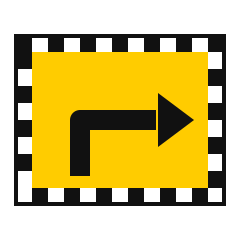
- A detour route for trucks
- A dead end; turn around ahead
- A railway crossing at a sharp angle to the road
- A sharp turn; slow down and follow the arrow
How close to the nearest rail of a railway crossing may you park?
- No closer than 30 metres
- No closer than 5 metres
- No closer than 10 metres
- No closer than 15 metres
A two-lane road has a broken yellow centre line. What does it allow?
- Passing for trucks only
- Passing for the right lane only
- No passing in either direction
- Passing with care in both directions
What must you do at a flashing red traffic light?
- Stop, then go when it is safe, as at a stop sign
- Go through, since a flashing light means it is broken
- Wait until the light turns green
- Slow down and go with caution
You see this sign in a work zone. What does it mean?
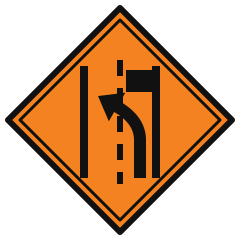
- Two lanes join from both sides
- A detour leaves the highway at the next exit
- Traffic must stop for workers
- A lane is closed; move into the open lane
Which sign is the only one in Nova Scotia that uses an eight-sided shape?
- The stop sign
- The yield sign
- The school zone sign
- The railway crossing sign
What should you do when you see this sign?

- Slow down for a bump or rough road
- Prepare to stop for a crossing
- Keep right of a centre island
- Watch for a hill with poor sight
What is the maximum speed when you are within 30 metres of a railway crossing?
- 70 km/h
- 50 km/h
- 60 km/h
- 30 km/h
You plan to use a two-way-left-turn lane. When should you move into it?
- Close to where you will turn
- As soon as the lane begins
- Only after stopping in your lane
- At least one block before the turn
You are stopped at a red light and want to turn right. No sign prohibits it. What may you do?
- Turn only if a green arrow appears
- Turn right after stopping, when it is safe
- Wait for the green light
- Turn right without stopping
What does this sign tell you?

- A railway crossing is ahead
- A parade route is ahead
- A school crossing is ahead
- A traffic control person is ahead
A peace officer directing traffic waves you through an intersection that has a stop sign. What do you do?
- Obey whichever you saw first
- Stop at the sign first, then go
- Wait until the officer leaves
- Follow the officer's direction
What shape and colours do most warning signs in Nova Scotia have?
- Rectangle, white on green
- Diamond, black on yellow
- Diamond, black on orange
- Triangle, red on white
Your car stalls on the tracks. What is the first thing to do?
- Push the car off the tracks before anyone gets out
- Try to restart the engine
- Get everyone out and well away from the tracks
- Call the railway company
On a divided highway you notice a solid yellow line on your right and a solid white line on your left. What does this mean?
- You are in a passing lane
- The lanes are about to merge
- You are driving the wrong way
- You are on an exit ramp
When is a left turn on a red light legal in Nova Scotia?
- Only when there is no oncoming traffic in either lane
- From a one-way street onto another one-way street
- Never, under any circumstances
- From any street after a full stop
An orange sign warns that tar has been sprayed on the road ahead. What risk does the handbook mention?
- The lanes may be shifted
- The road is closed to cars
- The road may be slippery
- Your tires may go flat
A rural school zone is on a road posted at 80 km/h. Children are in the schoolyard. What is the most you may drive through the zone?
- 60 km/h
- 70 km/h
- 50 km/h
- 30 km/h
What does a hidden intersection warning sign tell you?
- The intersection has no stop signs
- The intersection is closed to traffic
- You must come to a stop before the intersection
- Side-road drivers cannot clearly see you coming
FAQ
Nova Scotia road sign test: common questions
How many questions are on the Nova Scotia road sign test?
Twenty multiple-choice questions. You need at least 16 correct and have 30 minutes. The Rules of the Road Test is a separate 20-question part with the same pass mark, so a strong sign score cannot cover for weak rules.
Can I take the sign test online?
Yes. Nova Scotia offers the knowledge test online in English and French on a desktop or laptop with a webcam, or in person at a Registry of Motor Vehicles or Access Nova Scotia office.
What happens if I fail only the sign part?
You pay the fee again and retake only the sign part. Online you can retake it right away; in person you wait until the next day. Use the gap to review the sign topics where you lost marks.
Keep practising
- Nova Scotia practice test (printable PDF)100 Nova Scotia Class 7 practice questions from both parts of the test, with the answer key on separate pages. Print it or save it as a PDF. Free.
- Nova Scotia road signs chartAll the sign drawings from our Nova Scotia Class 7 questions on one page: regulatory, warning, guide, work zone and railway signs, each with its meaning.
- How to get a learner's licence in Nova Scotia
- Nova Scotia Class 7 study guide
- Nova Scotia Class 7 Mock Exam 1 – 40 QuestionsUntimed practice · answers explained
- Nova Scotia Class 7 Mock Exam 2 – 40 QuestionsUntimed practice · answers explained
- Nova Scotia Class 7 Practice Test 140 questions with explanations
- Nova Scotia Class 7 Practice Test 240 questions with explanations
- Nova Scotia Class 7 Practice Test 340 questions with explanations
Practice by topic
- Regulatory signsStop, yield and school zone signs, green-circle and red-slash signs, turn, passing, parking and stopping restrictions, one-way, keep-right, speed limit and accessible parking signs.
- Warning and guide signsYellow diamond warning signs for curves, narrowing roads, merges, lane endings, divided highways, bumps and hidden hazards, chevrons and checkerboards, lane-use arrows and green guide signs.
- Work zone signsOrange work zone signs, general, arrow, specific and human activity signs, traffic control persons, flashing arrow boards, lane closures and the main causes of work zone collisions.
- Railway crossingsThe crossbuck and advance railway warning sign, flashing lights and gates, vehicles that must stop at crossings, what to do if you are stuck on the tracks, and parking near a crossing.
- Traffic signals and crossing guardsGreen, yellow and red lights, right and left turns on red, arrow signals, flashing red, yellow and green signals, lane-control signals, dark signals, pedestrian Walk signals and crossing guards.
- Pavement markings and special lanesYellow and white lines, broken, solid and double solid centre lines, edge lines on divided highways, climbing lanes, continuity lines and two-way-left-turn lanes.
- Graduated licensing: Class 7, 5N and restricted stageApplying for a Class 7 learner's licence, the knowledge and vision tests, learner and newly licensed restrictions, curfew, waiting periods, driver training, the restricted individual stage, visitors and new residents, and licence classes.
- Demerit points and losing your licenceDemerit point values for common offences, warning, interview and suspension thresholds for learners, newly licensed and other drivers, probationary and conditional licences, revocation and suspension.
- Right of way, pedestrians and emergency vehiclesIntersection right-of-way rules, marked and unmarked crosswalks, pedestrians at signals, driveways, emergency vehicles, the slow down and move over rule and yielding to transit buses.
- Speed, stopping distance and followingDefault speed limits, 50 km/h situations, school zone limits, stopping distances, driving too slowly, keeping right, the two-second rule, safety scans, blind spots and curves.
- Signals, turning, lane changes and passingSignal lights, hand signals and the horn, right and left turns, turning lanes, lane changes, overtaking and passing, places where passing is unsafe, being passed and backing up.
- Parking, roundabouts and drivewaysWhere you may not stop or park and the distances involved, parallel and angle parking, parking on a hill, roundabouts and rotaries, and entering or leaving driveways.
- Highways, school buses and sharing the road100-series controlled-access highways and interchanges, large commercial vehicles and truck blind spots, school bus lights, motorcycles and bicycles.
- Your vehicle: inspection, equipment, registration and insuranceAnnual safety inspection, tires and studded tire dates, maintenance checks, lighting and horn rules, special flashing lights, loads and trailers, vehicle permits and plates, and mandatory liability insurance.
- Seat belts, child seats and safe driving habitsSeat belt law, child restraints and booster seats, airbags, carrying passengers, driving position, steering, braking and ABS, defensive driving and highway hypnosis.
- Night driving and bad weatherHeadlight timing and dimming distances, glare, rain, fog and snow, hydroplaning, wet brakes, ice and black ice stopping distances, gravel roads, four-wheel drive and winter driving.
- Emergencies and collisionsBreakdowns, brake failure, blowouts, power and headlight failure, a stuck gas pedal, fires, skids, wheels off the pavement, animals, water, downed wires, snow plows and collision reporting duties.
- Impaired driving and fitness to driveBlood alcohol limits, standard drinks, roadside screening results and suspensions, the administrative licence suspension, penalties by offence, drug impairment, emotions, vision standards and fatigue.