Nova Scotia Driving Test Practice – Printable PDF
100 Nova Scotia Class 7 practice questions from both parts of the test, with the answer key on separate pages. Print it or save it as a PDF. Free.
- No sign-up
- Every answer explained
- Independent · not a government site
- 100 questions
- Answer key included
- Free, no sign-up
This is the paper version of our Nova Scotia practice tests: 100 Class 7 questions mixing road signs and rules of the road from all 18 topics in our bank, ready to print or save as a PDF. The answer key sits on separate pages at the end, so you can work through the whole sheet first and mark it afterwards, the way you would check a real test.
The questions are original and follow the 2017 revision of the Nova Scotia Driver's Handbook, including the update pages at the front that add the restricted individual stage, extend the learner's licence to two years and add the slow down and move over rule. The key gives a short explanation and the handbook page for every answer. Once you are confident on paper, take an interactive mock exam that scores the sign and rules parts separately, as the real test does.
Nova Scotia Driving Test Practice – Printable PDF
1.At a stop sign there is a white stop line painted across your lane. Where do you stop?
- At the stop line
- Beside the stop sign post
- Past the line, where you can see
- At the edge of the cross street
2.What is the only thing that removes alcohol from your body?
- Exercise
- Time
- Black coffee
- A cold shower
3.How does four-wheel drive affect stopping on a slippery road?
- It does not help you stop any sooner
- It halves your stopping distance
- It prevents all skids
- It works like anti-lock brakes
4.What does this sign tell you about the road ahead?

- It has loose gravel only
- It is under construction
- It has sharp curves
- It is slippery when wet
5.How do you check that you are following at a safe distance using the two-second rule?
- Leave two car lengths for every 10 km/h
- Brake two seconds after the car ahead starts braking
- Look ahead two blocks at all times
- Count 2 seconds once the car ahead passes a landmark
6.Why are red or orange flags sometimes attached to human activity signs?
- The zone has a lower speed limit
- The sign is placed close to the ground
- The work zone is ending soon
- Workers are about to blast rock
7.While driving on your learner's licence with your supervising driver, may your friend ride in the back seat?
- Yes, one passenger is allowed
- No, no other passengers are allowed
- Only if they also hold a licence
- Yes, if they wear a seat belt
8.You are passing in the left lane of a climbing lane and reach the solid line where it ends. What should you do?
- Sound your horn and move right
- Stop trying to pass and stay behind
- Pass on the shoulder instead
- Finish the pass by speeding up
9.You lend your driver's licence to a friend. What can happen?
- Your licence can be suspended
- Nothing, if they drive safely
- Only your friend can be charged
- You get a warning letter only
10.How should the lap part of a seat belt be worn?
- Under the arm
- Loose, for comfort
- As low on the hips as possible
- Across the stomach, above the hip bones
11.The red lights at a railway crossing start flashing as you approach. What must you do?
- Speed up to cross before the train
- Stop only if you can see a train
- Stop and go only when it is safe
- Slow down and cross with care
12.You are on a highway posted at 100 km/h and see a police car stopped on the shoulder with lights flashing. How fast may you pass it?
- No more than 60 km/h
- No more than 80 km/h
- The posted limit, if you move over
- No more than 50 km/h
13.What does the handbook say about your seat belt when backing up?
- It must stay fastened at all times
- You may unbuckle to turn, then buckle up again
- You must remove it every time you back up
- Only passengers may unbuckle
14.Where must you stop for a red light?
- At the stop line or the near side of the crosswalk
- Anywhere inside the intersection, once fully stopped
- Just past the crosswalk
- Beside the traffic light pole
15.In daylight, a load sticks out more than 1 metre past the rear of your truck. What must you display?
- A red flag at least 300 mm square
- An orange cone on the bumper
- Your four-way flashers
- A white cloth on the load
16.Your car starts to have mechanical trouble on the highway. What should you do first?
- Keep driving to the next town
- Stop in your lane and check the engine
- Stop on the centre line
- Signal, use flashers and pull well off the road
17.You are driving toward a school bus that has stopped with its red lights flashing on the opposite side of an undivided road. What must you do?
- Stop before reaching the bus
- Slow to 30 km/h and pass
- Sound your horn and pass
- Keep going, since it is across the road
18.You park facing downhill next to a curb. Which way do you turn your front wheels?
- Straight ahead
- To the left, away from the curb
- To the right, toward the curb
- It does not matter with a curb
19.You stop at a stop sign on a street with no stop line and no painted crosswalk. How far back should you stop?
- One full car length past the sign
- Far enough back for a pedestrian to cross safely
- Right at the edge of the cross street you are entering
- Wherever you can see both ways
20.What minimum visual acuity is required for a Class 5 or Class 7 licence?
- 20/30 in each eye
- 20/50 in the better eye
- 20/20 in both eyes
- 20/40 in at least one eye
21.Why should you use low beams instead of high beams in fog or snow?
- High beams drain the battery
- High beams reflect off the precipitation
- Low beams reach farther ahead
- High beams are illegal from December to March
22.What does a hidden intersection warning sign tell you?
- The intersection has no stop signs
- The intersection is closed to traffic
- You must come to a stop before the intersection
- Side-road drivers cannot clearly see you coming
23.What is the speed limit in a public park within a city or town, if no other limit is posted?
- 20 km/h
- 50 km/h
- 30 km/h
- 40 km/h
24.You see someone driving recklessly through a work zone. What does the handbook suggest?
- Follow them to get their plate
- Report it to the police
- Sound your horn until they slow down
- Tell the nearest road worker
25.How long is a Nova Scotia learner's licence valid?
- Up to 2 years
- Up to 5 years
- 1 year
- 6 months
26.What do continuity lines at highway ramps show?
- Where the through lane and the ramp separate
- Where you must stop
- Where the speed limit changes for the exit ramp
- Where passing is allowed
27.When may you apply to have your licence restored after a suspension?
- 30 days before the suspension ends
- The day the suspension ends
- 60 days before the suspension ends
- One week after the suspension ends
28.What is the only item allowed at the lower driver's corner of the windshield?
- The official inspection sticker
- A parking pass
- A GPS mount
- A toll transponder for the highway
29.What is the maximum speed when you are within 30 metres of a railway crossing?
- 70 km/h
- 50 km/h
- 60 km/h
- 30 km/h
30.An ambulance with its siren and lights on is approaching from behind. What must you do?
- Pull to the right edge and stop
- Move to the left lane and slow down
- Stop where you are in your lane
- Speed up to get out of its way
31.Signal lights are required instead of hand signals when the vehicle or its load extends how far to the left of the centre of the steering wheel?
- More than 60 cm
- More than 1 metre
- More than 30 cm
- More than 2 metres
32.The light turns yellow just as you reach the intersection and you are too close to stop safely. What should you do?
- Speed up to beat the red light
- Drive through the intersection with caution
- Brake hard to stop in the crosswalk
- Stop in the middle of the intersection
33.Your car fails its safety inspection. How long do you have to fix it and be re-inspected without paying a second fee?
- 48 hours
- 30 days
- 7 days
- 10 days
34.You smell smoke and see flames from under the hood. After stopping and turning off the ignition, how far away should everyone move?
- At least 10 metres
- At least 5 metres
- At least 30 metres
- At least 100 metres
35.What is the usual reason a car and motorcycle collide, according to the handbook?
- The road was icy or wet
- The rider had no helmet
- The driver did not see the motorcyclist
- The motorcycle was going over the speed limit
36.You want to park on the approach to a stop sign at the side of the road. How far back from it must you be?
- At least 7.5 metres
- At least 20 metres
- At least 5 metres
- At least 10 metres
37.What does this sign tell you at an intersection?

- You may not turn to go back the way you came
- A sharp curve is ahead
- You may not turn left here
- Traffic flows in a circle around an island ahead
38.What is the minimum revocation for a third impaired driving conviction?
- 10 years
- 5 years
- Permanent
- 3 years
39.Which headlights should you use when driving at night in a city?
- High beams
- Fog lights only
- Low beams
- Parking lights
40.You pass this sign after leaving a divided highway. What does it tell you?

- Normal two-way road rules now apply
- A one-way street is ahead
- Passing is not allowed here
- Two lanes go the same direction
41.Which of these should you never do in a curve?
- Check your mirrors
- Use your turn signal
- Keep both hands on the wheel
- Make a U-turn
42.A flashing light unit shows two arrowheads pointing in opposite directions. What does this mean?
- The road is closed ahead
- You may pass on either side
- You must stop before the unit
- You may pass on the left only
43.You are visiting Nova Scotia with a valid licence from another province. How long may you drive on it?
- Up to 6 months
- Up to 90 days
- Up to 60 days
- Up to 30 days
44.On a hill with a climbing lane, a sign says to use four-way flashers below 70 km/h. Your vehicle is slowing to 60 km/h. What should you do?
- Move to the left lane
- Pull onto the shoulder and stop until traffic clears
- Sound your horn as you climb
- Turn on your four-way flashers and keep right
45.How many demerit points are given for speeding 10 km/h over the posted limit?
- 4
- 3
- 1
- 2
46.At speeds above 40 km/h, why is steering around an object usually better than braking?
- Steering keeps your speed legal
- Steering needs less distance than stopping
- Braking above 40 km/h is illegal
- Hard braking above 40 km/h can damage the ABS
47.What does a small sign mounted below a railway crossbuck tell you?
- The distance to the next crossing
- There is more than one set of tracks
- The train speed limit
- The number of trains per day
48.You reach an intersection just as another car is already partway through it. Who has the right of way?
- You, if the other car is on your left
- Whichever driver signals first
- The car already in the intersection
- You, if you are on the larger road
49.After passing a car, when should you move back into the right lane?
- When its headlights appear in your rear-view mirror
- As soon as your front bumper is past it
- When its driver flashes their headlights to signal you
- When you are one car length ahead
50.What must you do at a flashing red traffic light?
- Stop, then go when it is safe, as at a stop sign
- Go through, since a flashing light means it is broken
- Wait until the light turns green
- Slow down and go with caution
51.Which documents should you keep in your vehicle?
- The bill of sale, the owner's manual and repair receipts
- Permit, liability insurance card and inspection report
- Your birth certificate and passport
- Only your driver's licence
52.Your engine dies while driving and you lose power steering and power brakes. What happens?
- You can still steer and brake, with more effort
- The car stops on its own
- The steering wheel locks and can no longer be turned
- The brakes stop working entirely
53.You pass a cyclist and then turn right just in front of them. What is this common collision called?
- A left cross
- Getting doored
- A right hook
- A rear-end
54.Roundabouts are designed for what range of speeds?
- 50 to 70 km/h
- 10 to 20 km/h
- 30 to 50 km/h
- 60 to 80 km/h
55.You are stopped at a red light where a sign shows no right turn on red. When may you turn right?
- Only if no pedestrians are waiting
- When the yellow light comes on
- After stopping, if the way is clear
- Only after the light turns green
56.What does the handbook say about using cruise control when you are very tired?
- Use it only on highways
- Use it with the radio loud
- Never use it when overtired
- Use it to rest your legs
57.You are following another car at night. Within what distance must you switch to low beams?
- 200 metres
- 30 metres
- 60 metres
- 150 metres
58.What does this checkered sign with an arrow warn you about?
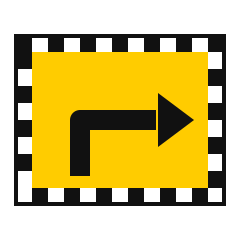
- A detour route for trucks
- A dead end; turn around ahead
- A railway crossing at a sharp angle to the road
- A sharp turn; slow down and follow the arrow
59.Why does stopping distance grow so much at higher speeds?
- Your reaction time doubles once you are above 60 km/h
- You cover more ground reacting and need more room to brake
- Tires only grip the road well at low speeds, under 50 km/h
- Brakes work less well when they are warm
60.What colour are the signs that usually mark a work zone in Nova Scotia?
- White with red letters
- Green with white letters
- Yellow with black letters
- Orange with black letters
61.A 16-year-old applicant's parents have both died and there is no legal guardian. Who may sign the consent form?
- The applicant's employer
- A school principal
- Any adult relative
- A licensed driving instructor
62.You plan to use a two-way-left-turn lane. When should you move into it?
- Close to where you will turn
- As soon as the lane begins
- Only after stopping in your lane
- At least one block before the turn
63.You are convicted of a driving offence in New Brunswick, which reports it to Nova Scotia. What happens?
- No points, since it was out of province
- Half the usual points are added
- Points are added as if it happened in Nova Scotia
- Points are added only if you were a learner
64.What steering method should you use for sharp turns and emergencies?
- Let the wheel slide through your hands
- Hand-over-hand
- Palm the wheel with one hand
- Shuffle your hands at the bottom
65.You are already on the tracks when the warning lights start flashing. What should you do?
- Stop where you are and wait
- Stop and back up off the tracks
- Get out and leave the vehicle
- Keep moving and clear the crossing
66.Two cars arrive at an uncontrolled intersection at the same time from different streets. Which car must yield?
- The car on the left
- The car on the right
- The car going faster
- The car that is turning
67.On a two-lane road, when may you pass another vehicle on the right?
- When the driver waves you by
- When that vehicle is making a left turn
- When the shoulder is paved
- When it is going below the limit
68.You face a green light and a green left-turn arrow. What controls your left turn?
- The oncoming traffic light
- The pedestrian signal
- The solid green light
- The green arrow
69.You have just moved to Nova Scotia with your car. Within how many days must you register it here?
- 30 days
- 60 days
- 90 days
- 6 months
70.Within what time must a reportable collision be reported to police or the Registry of Motor Vehicles?
- Within 24 hours
- Within 72 hours
- Within 1 hour
- Within 7 days
71.Your car breaks down on a highway. After moving well off the road, what does the handbook suggest?
- Stand behind the car and wave to flag down passing traffic
- Tie a white cloth to the aerial or left door handle
- Raise the hood and walk for help
- Leave your parking lights off
72.You are driving and a car ahead starts pulling out of a parallel parking space. What should you do?
- Change lanes without checking
- Slow down and be ready to stop
- Speed up to pass it first
- Sound your horn and keep going
73.A peace officer directing traffic waves you through an intersection that has a stop sign. What do you do?
- Obey whichever you saw first
- Stop at the sign first, then go
- Wait until the officer leaves
- Follow the officer's direction
74.For a first impaired driving conviction in Nova Scotia, how long is your licence revoked?
- 3 months from conviction
- 1 year from conviction
- 3 years from conviction
- 6 months from conviction
75.At about what speed can a standard car's tires ride completely on top of water?
- About 85 km/h
- About 120 km/h
- About 55 km/h
- About 40 km/h
76.You are in the right lane and see this sign. What is happening ahead?

- A right turn lane begins
- The left lane ends
- A side road joins from the right
- The right lane ends
77.Why is driving slowly especially dangerous just beyond the crest of a hill?
- Your brakes may overheat
- Your engine may stall on the hill
- Faster vehicles may not see you in time
- You will use more fuel going slowly
78.You see this sign in a work zone. What does it mean?
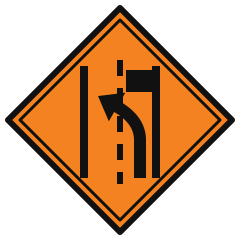
- Two lanes join from both sides
- A detour leaves the highway at the next exit
- Traffic must stop for workers
- A lane is closed; move into the open lane
79.At which GDL stage may you first upgrade to a higher licence class, such as a truck licence?
- The newly licensed driver stage
- The learner stage
- The restricted individual stage
- Only after leaving GDL
80.When do the rules for solid and broken lines not apply?
- When the lines are not clearly visible
- When traffic behind you is impatient
- When you are late for work
- When you are driving under the limit
81.A fully licensed driver outside GDL is suspended for 6 months at how many points?
- 6
- 10
- 12
- 8
82.Your car has anti-lock brakes and you must stop quickly. What should you do?
- Pump the brake pedal rapidly to avoid a skid
- Press firmly and steadily, without pumping
- Press lightly, then let go
- Shift to neutral and brake
83.How close to the nearest rail of a railway crossing may you park?
- No closer than 30 metres
- No closer than 5 metres
- No closer than 10 metres
- No closer than 15 metres
84.You and an oncoming car arrive at an intersection at the same time. You want to turn left; the other driver is going straight. What do you do?
- Wave the other driver to turn
- Go first, since you are turning
- Turn first, since you signalled
- Yield and turn when it is safe
85.You are changing lanes on a three-lane highway. Besides the lane you want, which lane should you check?
- Nothing else, once you signal
- Only the lane you are leaving
- The lane beyond it
- The shoulder on your right
86.The light changes to red while a pedestrian is still in the middle of the street. What must you do?
- Go as soon as your light turns green again
- Sound your horn to warn them
- Let the pedestrian finish crossing safely
- Drive slowly behind them
87.Which vehicles may use a flashing blue light?
- Snow plows, tow trucks and road maintenance vehicles
- Ambulances and fire trucks
- Any volunteer firefighter
- Police and conservation officer vehicles
88.Your gas pedal sticks down. Which action does the handbook advise?
- Reach down and pull the pedal up by hand
- Turn the key off while still moving fast
- Pump the gas pedal hard
- Shift to neutral and brake firmly
89.Under the Nova Scotia Motor Vehicle Act, what rights do cyclists have on the road?
- The same rights and duties as motorists
- Fewer rights than motorists
- More rights than pedestrians on sidewalks
- Rights only on bike paths
90.You are in the inside lane of a two-lane roundabout and your exit is next. What should you do?
- Exit directly from the inside lane
- Stop and wait for a gap to exit
- Move to the outside lane first, then exit
- Signal left and exit
91.What does this sign mean?

- Keep a safe following distance
- Do not pass
- Two-way traffic ahead
- Passing is permitted
92.You are taking an allergy medication. What does the handbook advise before driving?
- Nothing, since it is not a prescription
- Read its warnings and ask a pharmacist if unsure
- Drive only in daylight
- Take it with coffee to stay alert
93.You are driving at night with high beams on. Within what distance of an oncoming vehicle must you dim them?
- 300 metres
- 100 metres
- 60 metres
- 150 metres
94.What kind of road does a Highway 102 route marker indicate?
- A seasonal gravel road
- A local municipal street in a town or city
- A scenic tourist route
- A controlled-access 100-series highway
95.Where are your vehicle's blind spots usually located?
- To the back left and back right
- Directly in front of the hood
- Only on the passenger side
- Directly behind the rear bumper
96.A work zone sign warns of a difference in height between lanes. Why is this dangerous?
- Trucks may not fit under the edge
- Your vehicle may scrape its underside on a speed bump
- Water may pool and cause hydroplaning
- A tire catching the edge can cause loss of control
97.What is the minimum age to apply for a Class 7 learner's licence in Nova Scotia?
- 18
- 16
- 15
- 17
98.A two-lane road has a broken yellow centre line. What does it allow?
- Passing for trucks only
- Passing for the right lane only
- No passing in either direction
- Passing with care in both directions
99.After a demerit suspension you receive a probationary licence. What happens if you get 3 new points during it?
- Another 6-month suspension
- A required interview
- A 1-month suspension
- A warning letter
100.A child weighs 15 kg. What restraint does the handbook require?
- A rear-facing infant seat
- A booster seat used with the lap belt only
- A forward-facing seat with a tether strap
- An adult seat belt
Answer key with explanations
1. A — At the stop line
When a stop line is marked, the handbook says your stop must be made at that line.
Regulatory signs · Based on: Nova Scotia Driver's Handbook (2017 revision), Ch. 3 Signs, Pavement Markings and Work Zones, p. 80 — Stop sign
2. B — Time
Your liver breaks alcohol down slowly, and each standard drink takes more than an hour. Coffee, showers and exercise do not speed it up.
Impaired driving and fitness to drive · Based on: Nova Scotia Driver's Handbook (2017 revision), Ch. 6 Driving and Impairment, p. 154 — Drinking and driving
3. A — It does not help you stop any sooner
Four-wheel drive can improve traction for moving, but you cannot stop any quicker on a slippery surface, so it may give a false sense of security.
Night driving and bad weather · Based on: Nova Scotia Driver's Handbook (2017 revision), Ch. 5 Adverse Driving Conditions, p. 141 — About four-wheel drive
4. D — It is slippery when wet
The car with wavy tire marks means the surface can become slippery when wet, so slow down in rain.
Warning and guide signs · Based on: Nova Scotia Driver's Handbook (2017 revision), Ch. 3 Signs, Pavement Markings and Work Zones, p. 83 — Warning signs
5. D — Count 2 seconds once the car ahead passes a landmark
When the vehicle ahead passes a fixed point, count two seconds. If you reach the point first, you are too close.
Speed, stopping distance and following · Based on: Nova Scotia Driver's Handbook (2017 revision), Ch. 2 Rules of the Road, p. 49 — Two-second rule
6. B — The sign is placed close to the ground
Red or orange flags are added to human activity signs when they are displayed low, close to the ground, to make them easier to see.
Work zone signs · Based on: Nova Scotia Driver's Handbook (2017 revision), Ch. 3 Signs, Pavement Markings and Work Zones, p. 101 — Human activity signs
7. B — No, no other passengers are allowed
A learner may have the experienced driver in the front seat and no other passengers.
Graduated licensing: Class 7, 5N and restricted stage · Based on: Nova Scotia Driver's Handbook (2017 revision), Ch. 1 Your Driver's Licence, p. 10 — Restrictions
8. B — Stop trying to pass and stay behind
Do not try to pass at the solid line at the end of a climbing lane. The vehicle on the right has the right of way.
Pavement markings and special lanes · Based on: Nova Scotia Driver's Handbook (2017 revision), Ch. 3 Signs, Pavement Markings and Work Zones, p. 86 — Climbing lanes
9. A — Your licence can be suspended
Lending your licence, using another person's licence or breaking your licence restrictions are grounds for suspension.
Demerit points and losing your licence · Based on: Nova Scotia Driver's Handbook (2017 revision), Ch. 1 Your Driver's Licence, p. 26 — Suspension without conviction
10. C — As low on the hips as possible
Wear the lap belt as low on the hips as possible and keep the shoulder belt off your face and neck. During pregnancy the lap belt goes under the abdomen.
Seat belts, child seats and safe driving habits · Based on: Nova Scotia Driver's Handbook (2017 revision), Ch. 4 Safety, p. 119 — Correct use of seat belts
11. C — Stop and go only when it is safe
Flashing red lights at a crossbuck mean the same as any flashing red signal: you must stop, and proceed only when it is safe.
Railway crossings · Based on: Nova Scotia Driver's Handbook (2017 revision), Ch. 3 Signs, Pavement Markings and Work Zones, p. 81 — Railway crossings
12. A — No more than 60 km/h
The slow down rule requires 60 km/h, or the posted limit if it is lower, when passing an emergency vehicle pulled over with its lights flashing.
Right of way, pedestrians and emergency vehicles · Based on: Nova Scotia Driver's Handbook (2017 revision), Ch. 2 Rules of the Road, VII — Emergency vehicles (update page)
13. B — You may unbuckle to turn, then buckle up again
You may remove your seat belt to turn your body and see properly while backing, but fasten it again before moving forward.
Signals, turning, lane changes and passing · Based on: Nova Scotia Driver's Handbook (2017 revision), Ch. 2 Rules of the Road, p. 60 — Backing
14. A — At the stop line or the near side of the crosswalk
Traffic facing a red light must stop at the marked line or, if there is none, at the nearest side of the crosswalk.
Traffic signals and crossing guards · Based on: Nova Scotia Driver's Handbook (2017 revision), Ch. 2 Rules of the Road, p. 39 — Traffic signal lights
15. A — A red flag at least 300 mm square
A red flag at least 300 millimetres long and wide must be clearly visible on the end of the load. After dark an amber or red light visible for 60 metres is needed.
Your vehicle: inspection, equipment, registration and insurance · Based on: Nova Scotia Driver's Handbook (2017 revision), Ch. 4 Safety, p. 130 — Carrying loads
16. D — Signal, use flashers and pull well off the road
At the first sign of trouble signal, check mirrors, turn on four-way flashers, slow down and pull as far off the road as possible. Never stop in the driving lanes.
Emergencies and collisions · Based on: Nova Scotia Driver's Handbook (2017 revision), Ch. 5 Adverse Driving Conditions, p. 143 — General highway trouble
17. A — Stop before reaching the bus
Drivers approaching from in front must also stop. A bus with flashing red lights may not be passed from either direction.
Highways, school buses and sharing the road · Based on: Nova Scotia Driver's Handbook (2017 revision), Ch. 2 Rules of the Road, p. 68 — School buses
18. C — To the right, toward the curb
Facing downhill, with or without a curb, turn the wheels to the right so the car would roll into the curb or off the road.
Parking, roundabouts and driveways · Based on: Nova Scotia Driver's Handbook (2017 revision), Ch. 2 Rules of the Road, p. 64 — Parking on a hill
19. B — Far enough back for a pedestrian to cross safely
Without painted lines there is still an unmarked crosswalk. Leave enough room in front of your vehicle for a pedestrian to cross.
Regulatory signs · Based on: Nova Scotia Driver's Handbook (2017 revision), Ch. 3 Signs, Pavement Markings and Work Zones, p. 80 — Stop sign
20. D — 20/40 in at least one eye
Classes 3, 5, 6, 7 and 8 need acuity of at least 20/40 (6/12) in at least one eye and a 120-degree field of vision with both eyes open.
Impaired driving and fitness to drive · Based on: Nova Scotia Driver's Handbook (2017 revision), Ch. 6 Driving and Impairment, p. 162 — Vision
21. B — High beams reflect off the precipitation
Light from high beams bounces off rain, snow or fog and makes it harder to see. Use low beams only.
Night driving and bad weather · Based on: Nova Scotia Driver's Handbook (2017 revision), Ch. 5 Adverse Driving Conditions, p. 137 — Rain, snow, and fog
22. D — Side-road drivers cannot clearly see you coming
Drivers waiting on the side road ahead do not have a clear view of approaching traffic, so use caution and be ready to slow down.
Warning and guide signs · Based on: Nova Scotia Driver's Handbook (2017 revision), Ch. 3 Signs, Pavement Markings and Work Zones, p. 91 — Warning signs
23. B — 50 km/h
Public parks in cities and towns are on the list of places where the maximum is 50 km/h unless another speed is posted.
Speed, stopping distance and following · Based on: Nova Scotia Driver's Handbook (2017 revision), Ch. 2 Rules of the Road, p. 51 — Choosing a safe speed
24. B — Report it to the police
The handbook asks drivers to report irresponsible driving in a work zone to the police.
Work zone signs · Based on: Nova Scotia Driver's Handbook (2017 revision), Ch. 3 Signs, Pavement Markings and Work Zones, p. 97 — Work zone signs
25. A — Up to 2 years
The update pages say a learner's licence now lasts a maximum of 2 years. Pass the road test before it expires or you must rewrite the learner's test.
Graduated licensing: Class 7, 5N and restricted stage · Based on: Nova Scotia Driver's Handbook (2017 revision), Ch. 1 Your Driver's Licence, VI — Learner's licence expiry (update page)
26. A — Where the through lane and the ramp separate
Continuity lines are wider than normal lane lines and mark the separation between the through lane and an entry or exit ramp.
Pavement markings and special lanes · Based on: Nova Scotia Driver's Handbook (2017 revision), Ch. 3 Signs, Pavement Markings and Work Zones, p. 86 — Continuity lines
27. A — 30 days before the suspension ends
You submit a Notice of Application for Restoration and fees, and you may apply 30 days before the suspension expires.
Demerit points and losing your licence · Based on: Nova Scotia Driver's Handbook (2017 revision), Ch. 1 Your Driver's Licence, p. 32 — Restoring your licence
28. A — The official inspection sticker
Do not block your view through the windows; only the official inspection sticker is allowed at the lower driver's corner.
Seat belts, child seats and safe driving habits · Based on: Nova Scotia Driver's Handbook (2017 revision), Ch. 4 Safety, p. 124 — Safe driving tips
29. B — 50 km/h
The handbook lists approaching within 30 metres of a railway crossing among the situations where the maximum speed is 50 km/h.
Railway crossings · Based on: Nova Scotia Driver's Handbook (2017 revision), Ch. 3 Signs, Pavement Markings and Work Zones, p. 51 — Choosing a safe speed
30. A — Pull to the right edge and stop
When an emergency vehicle approaches from ahead or behind, move to the right edge or curb and stop completely until it passes.
Right of way, pedestrians and emergency vehicles · Based on: Nova Scotia Driver's Handbook (2017 revision), Ch. 2 Rules of the Road, p. 45 — Emergency vehicles
31. A — More than 60 cm
Signal lights are required if any part of the vehicle or its load extends more than 60 cm to the left of the centre of the steering wheel, since hand signals would be hidden.
Signals, turning, lane changes and passing · Based on: Nova Scotia Driver's Handbook (2017 revision), Ch. 2 Rules of the Road, p. 53 — Using your signal lights and horn
32. B — Drive through the intersection with caution
If you cannot stop safely, drive cautiously through. Never speed up to beat the red.
Traffic signals and crossing guards · Based on: Nova Scotia Driver's Handbook (2017 revision), Ch. 2 Rules of the Road, p. 40 — Tips
33. D — 10 days
A rejection sticker is put on the vehicle, and you have 10 days from the rejection date to correct the defects and be re-inspected without another fee.
Your vehicle: inspection, equipment, registration and insurance · Based on: Nova Scotia Driver's Handbook (2017 revision), Ch. 4 Safety, p. 173 — Ch. 7 Annual safety inspection
34. C — At least 30 metres
Get all passengers out and move at least 30 metres away. Gasoline fires can spread fast and may explode.
Emergencies and collisions · Based on: Nova Scotia Driver's Handbook (2017 revision), Ch. 5 Adverse Driving Conditions, p. 145 — Vehicle fires
35. C — The driver did not see the motorcyclist
Most fatal motorcycle crashes involve cars, usually because the driver did not see the rider, and more than half happen in good conditions.
Highways, school buses and sharing the road · Based on: Nova Scotia Driver's Handbook (2017 revision), Ch. 2 Rules of the Road, p. 69 — Drivers and motorcycles
36. D — At least 10 metres
No stopping or parking is allowed within 10 metres of the approach to a flashing beacon, stop sign, yield sign or traffic signal at the roadside.
Parking, roundabouts and driveways · Based on: Nova Scotia Driver's Handbook (2017 revision), Ch. 2 Rules of the Road, p. 61 — Parking and stopping
37. A — You may not turn to go back the way you came
A U-shaped arrow in a red circle and slash means no U-turn: do not turn to travel in the opposite direction.
Regulatory signs · Based on: Nova Scotia Driver's Handbook (2017 revision), Ch. 3 Signs, Pavement Markings and Work Zones, p. 89 — Regulatory signs
38. A — 10 years
A third offence brings an indefinite revocation with a minimum of ten years and at least 90 days in prison. A fourth offence means permanent revocation.
Impaired driving and fitness to drive · Based on: Nova Scotia Driver's Handbook (2017 revision), Ch. 6 Driving and Impairment, p. 158 — Penalties for impaired driving
39. C — Low beams
Use low beams in the city at night. High beams are for the open road when you are not approaching or following another vehicle.
Night driving and bad weather · Based on: Nova Scotia Driver's Handbook (2017 revision), Ch. 5 Adverse Driving Conditions, p. 136 — Nighttime driving
40. A — Normal two-way road rules now apply
The two-way traffic sign means the road you are on carries traffic in both directions, so the normal two-way rules apply.
Warning and guide signs · Based on: Nova Scotia Driver's Handbook (2017 revision), Ch. 3 Signs, Pavement Markings and Work Zones, p. 94 — Guide signs
41. D — Make a U-turn
Never stop, park or make a U-turn in a curve, and do not pass or back up there, because curves hide the road ahead.
Speed, stopping distance and following · Based on: Nova Scotia Driver's Handbook (2017 revision), Ch. 2 Rules of the Road, p. 52 — Curves
42. B — You may pass on either side
Two arrowheads mean a lane is closed or something is in the way, and it is safe to pass the unit on either side.
Work zone signs · Based on: Nova Scotia Driver's Handbook (2017 revision), Ch. 3 Signs, Pavement Markings and Work Zones, p. 102 — Flashing light units
43. B — Up to 90 days
Visitors and new residents aged 16 or older with a valid licence from elsewhere may drive for up to 90 days before needing a Nova Scotia licence.
Graduated licensing: Class 7, 5N and restricted stage · Based on: Nova Scotia Driver's Handbook (2017 revision), Ch. 1 Your Driver's Licence, p. 4 — Visitors
44. D — Turn on your four-way flashers and keep right
Vehicles travelling under 70 km/h must use four-way flashers where the posted sign says so, and slower traffic keeps to the right.
Pavement markings and special lanes · Based on: Nova Scotia Driver's Handbook (2017 revision), Ch. 3 Signs, Pavement Markings and Work Zones, p. 86 — Climbing lanes
45. D — 2
Speeding between 1 and 15 km/h over the posted limit carries two demerit points.
Demerit points and losing your licence · Based on: Nova Scotia Driver's Handbook (2017 revision), Ch. 1 Your Driver's Licence, p. 29 — Demerit points
46. B — Steering needs less distance than stopping
Above 40 km/h you need less distance to steer around an object than to stop. You can also combine threshold braking with steering.
Seat belts, child seats and safe driving habits · Based on: Nova Scotia Driver's Handbook (2017 revision), Ch. 4 Safety, p. 125 — Stopping and braking
47. B — There is more than one set of tracks
A smaller sign under the crossbuck tells you that you will cross more than one track, so another train could be coming on a second track.
Railway crossings · Based on: Nova Scotia Driver's Handbook (2017 revision), Ch. 3 Signs, Pavement Markings and Work Zones, p. 81 — Railway crossings
48. C — The car already in the intersection
A vehicle already in the intersection has the right of way over any vehicle that has not yet entered.
Right of way, pedestrians and emergency vehicles · Based on: Nova Scotia Driver's Handbook (2017 revision), Ch. 2 Rules of the Road, p. 44 — Right of way
49. A — When its headlights appear in your rear-view mirror
Move back right only when you can see the passed vehicle's headlights in your rear-view mirror, after a right shoulder check.
Signals, turning, lane changes and passing · Based on: Nova Scotia Driver's Handbook (2017 revision), Ch. 2 Rules of the Road, p. 58 — Overtaking and passing
50. A — Stop, then go when it is safe, as at a stop sign
A flashing red signal means the same as a stop sign: stop fully and go only when you will not interfere with approaching traffic.
Traffic signals and crossing guards · Based on: Nova Scotia Driver's Handbook (2017 revision), Ch. 2 Rules of the Road, p. 40 — Flashing signals
51. B — Permit, liability insurance card and inspection report
Keep the valid vehicle permit, the liability insurance card and the safety inspection report in the vehicle, and carry your licence.
Your vehicle: inspection, equipment, registration and insurance · Based on: Nova Scotia Driver's Handbook (2017 revision), Ch. 4 Safety, p. 176 — Ch. 7 Glove compartment
52. A — You can still steer and brake, with more effort
Power failure makes it harder, but not impossible, to steer and stop. Use more force on the wheel and brake pedal and get off the road.
Emergencies and collisions · Based on: Nova Scotia Driver's Handbook (2017 revision), Ch. 5 Adverse Driving Conditions, p. 144 — Power failure
53. C — A right hook
A right hook happens when a driver misjudges a cyclist's speed and turns right across them. If you cannot pass safely before the turn, slow down and turn behind the cyclist.
Highways, school buses and sharing the road · Based on: Nova Scotia Driver's Handbook (2017 revision), Ch. 2 Rules of the Road, p. 71 — Common car-bike collisions
54. C — 30 to 50 km/h
Roundabouts are designed for speeds of 30–50 km/h, so slow down as you approach.
Parking, roundabouts and driveways · Based on: Nova Scotia Driver's Handbook (2017 revision), Ch. 2 Rules of the Road, p. 64 — Roundabouts and rotaries
55. D — Only after the light turns green
A no right turn on red sign cancels the usual right turn on red, so you must wait for the green light.
Regulatory signs · Based on: Nova Scotia Driver's Handbook (2017 revision), Ch. 3 Signs, Pavement Markings and Work Zones, p. 89 — Regulatory signs
56. C — Never use it when overtired
Driving overtired can lead to highway hypnosis or falling asleep, so never use cruise control when you are overtired.
Impaired driving and fitness to drive · Based on: Nova Scotia Driver's Handbook (2017 revision), Ch. 6 Driving and Impairment, p. 163 — Driver fatigue
57. C — 60 metres
Headlights must be dimmed within 60 metres when following a vehicle, so you do not dazzle the driver through their mirrors.
Night driving and bad weather · Based on: Nova Scotia Driver's Handbook (2017 revision), Ch. 5 Adverse Driving Conditions, p. 136 — Nighttime driving
58. D — A sharp turn; slow down and follow the arrow
The checkerboard design warns you to slow down for a sharp turn or bend, and the arrow shows which way the road goes.
Warning and guide signs · Based on: Nova Scotia Driver's Handbook (2017 revision), Ch. 3 Signs, Pavement Markings and Work Zones, p. 92 — Warning signs
59. B — You cover more ground reacting and need more room to brake
At higher speed you cover more ground during your reaction time and also need more distance to brake to a stop.
Speed, stopping distance and following · Based on: Nova Scotia Driver's Handbook (2017 revision), Ch. 2 Rules of the Road, p. 47 — Stopping distances
60. D — Orange with black letters
Work zones are usually marked with orange warning signs carrying black messages. When you see orange, go on high alert.
Work zone signs · Based on: Nova Scotia Driver's Handbook (2017 revision), Ch. 3 Signs, Pavement Markings and Work Zones, p. 94 — Construction or work zones
61. A — The applicant's employer
The handbook allows an employer to sign when both parents are deceased and there is no legal guardian.
Graduated licensing: Class 7, 5N and restricted stage · Based on: Nova Scotia Driver's Handbook (2017 revision), Ch. 1 Your Driver's Licence, p. 7 — If you are 16 or 17
62. A — Close to where you will turn
Move in gradually as close to your exit point as possible and do not drive in the lane for a long distance; vehicles from the other direction use it too.
Pavement markings and special lanes · Based on: Nova Scotia Driver's Handbook (2017 revision), Ch. 3 Signs, Pavement Markings and Work Zones, p. 87 — Two-way-left-turn lanes
63. C — Points are added as if it happened in Nova Scotia
Out-of-province convictions reported to the Registrar go on your Nova Scotia record with points assigned as if the offence occurred here.
Demerit points and losing your licence · Based on: Nova Scotia Driver's Handbook (2017 revision), Ch. 1 Your Driver's Licence, p. 27 — Demerit points
64. B — Hand-over-hand
Use hand-over-hand steering for sharp turns and emergencies, and to bring the wheel back. Letting it slide gives you little control.
Seat belts, child seats and safe driving habits · Based on: Nova Scotia Driver's Handbook (2017 revision), Ch. 4 Safety, p. 123 — Steering
65. D — Keep moving and clear the crossing
Keep going. The signals allow enough time to finish crossing and the far gate will not block you; stopping to back up could stall your vehicle.
Railway crossings · Based on: Nova Scotia Driver's Handbook (2017 revision), Ch. 3 Signs, Pavement Markings and Work Zones, p. 82 — Railway crossings
66. A — The car on the left
When two or more vehicles reach an intersection together, the car to the left yields the right of way.
Right of way, pedestrians and emergency vehicles · Based on: Nova Scotia Driver's Handbook (2017 revision), Ch. 2 Rules of the Road, p. 44 — Right of way
67. B — When that vehicle is making a left turn
You may pass on the right if the vehicle ahead is turning left. Be careful: passing on the right puts you on that driver's blind side.
Signals, turning, lane changes and passing · Based on: Nova Scotia Driver's Handbook (2017 revision), Ch. 2 Rules of the Road, p. 59 — Passing on the right
68. D — The green arrow
When a green light and a green arrow show together, turning traffic follows the arrow and through traffic follows the green light.
Traffic signals and crossing guards · Based on: Nova Scotia Driver's Handbook (2017 revision), Ch. 2 Rules of the Road, p. 40 — Arrow signals
69. A — 30 days
New residents must register their vehicle within 30 days of taking up residence. Visitors may use out-of-province registration for 90 days.
Your vehicle: inspection, equipment, registration and insurance · Based on: Nova Scotia Driver's Handbook (2017 revision), Ch. 4 Safety, p. 169 — Ch. 7 Visitors and new residents
70. A — Within 24 hours
Collisions with injury, death or significant property damage must be reported within 24 hours to the local police, the RCMP or the Registry of Motor Vehicles.
Emergencies and collisions · Based on: Nova Scotia Driver's Handbook (2017 revision), Ch. 5 Adverse Driving Conditions, p. 149 — Collisions
71. B — Tie a white cloth to the aerial or left door handle
A white cloth on the radio aerial or left door handle signals that you need help. At night use your emergency flashers or parking lights.
Highways, school buses and sharing the road · Based on: Nova Scotia Driver's Handbook (2017 revision), Ch. 2 Rules of the Road, p. 67 — Using controlled-access highways
72. B — Slow down and be ready to stop
When you see a car leaving a parallel space ahead of you, slow down and be prepared to stop for it.
Parking, roundabouts and driveways · Based on: Nova Scotia Driver's Handbook (2017 revision), Ch. 2 Rules of the Road, p. 62 — Parallel parking
73. D — Follow the officer's direction
Regulatory signs must be obeyed unless a peace officer directs you otherwise, so the officer's direction takes priority.
Regulatory signs · Based on: Nova Scotia Driver's Handbook (2017 revision), Ch. 3 Signs, Pavement Markings and Work Zones, p. 80 — Regulatory signs
74. B — 1 year from conviction
A first offence brings fines, revocation for one year from the conviction date, reinstatement fees and an Alcohol Assessment Program.
Impaired driving and fitness to drive · Based on: Nova Scotia Driver's Handbook (2017 revision), Ch. 6 Driving and Impairment, p. 157 — Penalties for impaired driving
75. A — About 85 km/h
Partial hydroplaning starts around 55 km/h. By about 85 km/h tires may ride fully on the water, leaving no grip to brake or steer.
Night driving and bad weather · Based on: Nova Scotia Driver's Handbook (2017 revision), Ch. 5 Adverse Driving Conditions, p. 139 — Rain
76. D — The right lane ends
This sign warns that the right lane is ending, so plan to move left when it is safe.
Warning and guide signs · Based on: Nova Scotia Driver's Handbook (2017 revision), Ch. 3 Signs, Pavement Markings and Work Zones, p. 92 — Warning signs
77. C — Faster vehicles may not see you in time
A slow vehicle just past a hill crest or around a curve is hidden from view, so faster traffic may hit it before slowing down.
Speed, stopping distance and following · Based on: Nova Scotia Driver's Handbook (2017 revision), Ch. 2 Rules of the Road, p. 48 — Driving too slowly
78. D — A lane is closed; move into the open lane
Specific signs warn that a manoeuvre will be needed. Act promptly and change lanes before you reach the closure.
Work zone signs · Based on: Nova Scotia Driver's Handbook (2017 revision), Ch. 3 Signs, Pavement Markings and Work Zones, p. 99 — Specific signs
79. C — The restricted individual stage
Upgrades to Classes 1–4 are not allowed for learners or newly licensed drivers, but are allowed in the restricted individual stage.
Graduated licensing: Class 7, 5N and restricted stage · Based on: Nova Scotia Driver's Handbook (2017 revision), Ch. 1 Your Driver's Licence, V — No upgrade (update page)
80. A — When the lines are not clearly visible
The line rules do not apply when lines cannot be seen clearly, when completing a legal pass, when entering or leaving away from an intersection, or when conditions make it reasonable.
Pavement markings and special lanes · Based on: Nova Scotia Driver's Handbook (2017 revision), Ch. 3 Signs, Pavement Markings and Work Zones, p. 85 — Exceptions
81. B — 10
Drivers outside the learner and newly licensed stages get a warning at 4 points, an interview at 6 and a six-month suspension at 10.
Demerit points and losing your licence · Based on: Nova Scotia Driver's Handbook (2017 revision), Ch. 1 Your Driver's Licence, p. 30 — Demerit points
82. B — Press firmly and steadily, without pumping
With ABS, press the brake steadily and firmly and do not pump. A slight vibration and pulsing noise are normal.
Seat belts, child seats and safe driving habits · Based on: Nova Scotia Driver's Handbook (2017 revision), Ch. 4 Safety, p. 125 — Stopping and braking
83. D — No closer than 15 metres
You may not stop or park within 15 metres of the nearest rail of a railway crossing.
Railway crossings · Based on: Nova Scotia Driver's Handbook (2017 revision), Ch. 3 Signs, Pavement Markings and Work Zones, p. 61 — Parking and stopping
84. D — Yield and turn when it is safe
When facing vehicles arrive together, the driver turning left must yield to the one going straight and wait until the turn can be made safely.
Right of way, pedestrians and emergency vehicles · Based on: Nova Scotia Driver's Handbook (2017 revision), Ch. 2 Rules of the Road, p. 44 — Right of way
85. C — The lane beyond it
Check the lane you are moving into and the next lane over, in case another vehicle is planning to move into the same space.
Signals, turning, lane changes and passing · Based on: Nova Scotia Driver's Handbook (2017 revision), Ch. 2 Rules of the Road, p. 56 — Changing lanes
86. C — Let the pedestrian finish crossing safely
If the signal changes while a pedestrian is still crossing, you must allow them to complete the crossing safely.
Traffic signals and crossing guards · Based on: Nova Scotia Driver's Handbook (2017 revision), Ch. 2 Rules of the Road, p. 43 — Pedestrians
87. D — Police and conservation officer vehicles
A flashing blue light may be used only on a police vehicle or a vehicle used by a conservation officer.
Your vehicle: inspection, equipment, registration and insurance · Based on: Nova Scotia Driver's Handbook (2017 revision), Ch. 4 Safety, p. 114 — Special lights
88. D — Shift to neutral and brake firmly
Try tapping or lifting the pedal with your foot. Turn on flashers, shift to neutral, brake firmly without locking and pull off the road.
Emergencies and collisions · Based on: Nova Scotia Driver's Handbook (2017 revision), Ch. 5 Adverse Driving Conditions, p. 145 — Sticking gas pedal
89. A — The same rights and duties as motorists
Cyclists have the same rights and responsibilities as drivers, so respect their right to share the road.
Highways, school buses and sharing the road · Based on: Nova Scotia Driver's Handbook (2017 revision), Ch. 2 Rules of the Road, p. 70 — Sharing the road with bicycles
90. C — Move to the outside lane first, then exit
Move into the correct lane before reaching your exit. Never exit a roundabout or rotary from an inside lane.
Parking, roundabouts and driveways · Based on: Nova Scotia Driver's Handbook (2017 revision), Ch. 2 Rules of the Road, p. 65 — Roundabouts and rotaries
91. B — Do not pass
Two cars inside a red circle with a slash mean passing is not allowed. The same cars in a green circle would mean passing is permitted.
Regulatory signs · Based on: Nova Scotia Driver's Handbook (2017 revision), Ch. 3 Signs, Pavement Markings and Work Zones, p. 83 — Other regulatory signs
92. B — Read its warnings and ask a pharmacist if unsure
Antihistamines and many other medications can affect driving. Pay attention to their warnings, and ask your pharmacist when in doubt.
Impaired driving and fitness to drive · Based on: Nova Scotia Driver's Handbook (2017 revision), Ch. 6 Driving and Impairment, p. 155 — Drug impairment
93. D — 150 metres
By law you must switch to low beams within 150 metres of an approaching vehicle.
Night driving and bad weather · Based on: Nova Scotia Driver's Handbook (2017 revision), Ch. 5 Adverse Driving Conditions, p. 136 — Nighttime driving
94. D — A controlled-access 100-series highway
Highway 102 is a provincial highway with controlled access; these are known as the 100-series highways.
Warning and guide signs · Based on: Nova Scotia Driver's Handbook (2017 revision), Ch. 3 Signs, Pavement Markings and Work Zones, p. 94 — Guide signs
95. A — To the back left and back right
Mirrors cannot show the areas to the back left and back right. Turn your head to check them, especially before changing lanes or turning.
Speed, stopping distance and following · Based on: Nova Scotia Driver's Handbook (2017 revision), Ch. 2 Rules of the Road, p. 48 — Blind spots
96. D — A tire catching the edge can cause loss of control
When lanes are at different elevations, a tire can catch the edge, which may make the vehicle lose control.
Work zone signs · Based on: Nova Scotia Driver's Handbook (2017 revision), Ch. 3 Signs, Pavement Markings and Work Zones, p. 99 — Specific signs
97. B — 16
Any Nova Scotia resident who is at least 16 may apply. Applicants under 18 also need written consent.
Graduated licensing: Class 7, 5N and restricted stage · Based on: Nova Scotia Driver's Handbook (2017 revision), Ch. 1 Your Driver's Licence, p. 6 — Getting a learner's licence
98. D — Passing with care in both directions
A broken yellow centre line on a two-lane two-way road means passing with care is allowed in both directions.
Pavement markings and special lanes · Based on: Nova Scotia Driver's Handbook (2017 revision), Ch. 3 Signs, Pavement Markings and Work Zones, p. 84 — Rules about solid and broken lines
99. A — Another 6-month suspension
A probationary licence lasts one year, and three new demerit points during that time bring a further six-month suspension.
Demerit points and losing your licence · Based on: Nova Scotia Driver's Handbook (2017 revision), Ch. 1 Your Driver's Licence, p. 31 — Probationary licence
100. C — A forward-facing seat with a tether strap
Children from 10 to 18 kg ride in a forward-facing child seat held by the seat belt and a tether strap anchored to the vehicle frame.
Seat belts, child seats and safe driving habits · Based on: Nova Scotia Driver's Handbook (2017 revision), Ch. 4 Safety, p. 117 — Child restraints
Original practice questions by Canada Exam Prep, written from the official handbook. Not official test questions. Free to print for personal study.
FAQ
Nova Scotia practice test (printable PDF): common questions
Is there an official Nova Scotia driving test PDF?
The province does not publish its test questions. What it does publish for free is the Nova Scotia Driver's Handbook, as PDF chapters on novascotia.ca. Practice test PDFs, this one included, come from third parties.
How do I save this test as a PDF?
Press Print or save as PDF and pick Save as PDF as the printer on your computer or phone. The site header, buttons and ads are hidden in the printed version, so you get only the questions and the key.
Should I study the handbook or practice questions?
Both. Read the handbook's Introduction first, since its update pages change rules the older chapters still describe the old way, then use practice questions to find gaps. Every answer here cites the page to reread.
Keep practising
- Nova Scotia road sign test60 practice questions for the Road Sign Recognition part of the Nova Scotia Class 7 test: regulatory, warning, work zone, railway, signal and marking questions.
- Nova Scotia road signs chartAll the sign drawings from our Nova Scotia Class 7 questions on one page: regulatory, warning, guide, work zone and railway signs, each with its meaning.
- How to get a learner's licence in Nova Scotia
- Nova Scotia Class 7 study guide
- Nova Scotia Class 7 Mock Exam 1 – 40 QuestionsUntimed practice · answers explained
- Nova Scotia Class 7 Mock Exam 2 – 40 QuestionsUntimed practice · answers explained
- Nova Scotia Class 7 Practice Test 140 questions with explanations
- Nova Scotia Class 7 Practice Test 240 questions with explanations
- Nova Scotia Class 7 Practice Test 340 questions with explanations
Practice by topic
- Regulatory signsStop, yield and school zone signs, green-circle and red-slash signs, turn, passing, parking and stopping restrictions, one-way, keep-right, speed limit and accessible parking signs.
- Warning and guide signsYellow diamond warning signs for curves, narrowing roads, merges, lane endings, divided highways, bumps and hidden hazards, chevrons and checkerboards, lane-use arrows and green guide signs.
- Work zone signsOrange work zone signs, general, arrow, specific and human activity signs, traffic control persons, flashing arrow boards, lane closures and the main causes of work zone collisions.
- Railway crossingsThe crossbuck and advance railway warning sign, flashing lights and gates, vehicles that must stop at crossings, what to do if you are stuck on the tracks, and parking near a crossing.
- Traffic signals and crossing guardsGreen, yellow and red lights, right and left turns on red, arrow signals, flashing red, yellow and green signals, lane-control signals, dark signals, pedestrian Walk signals and crossing guards.
- Pavement markings and special lanesYellow and white lines, broken, solid and double solid centre lines, edge lines on divided highways, climbing lanes, continuity lines and two-way-left-turn lanes.
- Graduated licensing: Class 7, 5N and restricted stageApplying for a Class 7 learner's licence, the knowledge and vision tests, learner and newly licensed restrictions, curfew, waiting periods, driver training, the restricted individual stage, visitors and new residents, and licence classes.
- Demerit points and losing your licenceDemerit point values for common offences, warning, interview and suspension thresholds for learners, newly licensed and other drivers, probationary and conditional licences, revocation and suspension.
- Right of way, pedestrians and emergency vehiclesIntersection right-of-way rules, marked and unmarked crosswalks, pedestrians at signals, driveways, emergency vehicles, the slow down and move over rule and yielding to transit buses.
- Speed, stopping distance and followingDefault speed limits, 50 km/h situations, school zone limits, stopping distances, driving too slowly, keeping right, the two-second rule, safety scans, blind spots and curves.
- Signals, turning, lane changes and passingSignal lights, hand signals and the horn, right and left turns, turning lanes, lane changes, overtaking and passing, places where passing is unsafe, being passed and backing up.
- Parking, roundabouts and drivewaysWhere you may not stop or park and the distances involved, parallel and angle parking, parking on a hill, roundabouts and rotaries, and entering or leaving driveways.
- Highways, school buses and sharing the road100-series controlled-access highways and interchanges, large commercial vehicles and truck blind spots, school bus lights, motorcycles and bicycles.
- Your vehicle: inspection, equipment, registration and insuranceAnnual safety inspection, tires and studded tire dates, maintenance checks, lighting and horn rules, special flashing lights, loads and trailers, vehicle permits and plates, and mandatory liability insurance.
- Seat belts, child seats and safe driving habitsSeat belt law, child restraints and booster seats, airbags, carrying passengers, driving position, steering, braking and ABS, defensive driving and highway hypnosis.
- Night driving and bad weatherHeadlight timing and dimming distances, glare, rain, fog and snow, hydroplaning, wet brakes, ice and black ice stopping distances, gravel roads, four-wheel drive and winter driving.
- Emergencies and collisionsBreakdowns, brake failure, blowouts, power and headlight failure, a stuck gas pedal, fires, skids, wheels off the pavement, animals, water, downed wires, snow plows and collision reporting duties.
- Impaired driving and fitness to driveBlood alcohol limits, standard drinks, roadside screening results and suspensions, the administrative licence suspension, penalties by offence, drug impairment, emotions, vision standards and fatigue.