Manitoba Driving Test Questions and Answers – Printable PDF
100 MPI Class 5 practice questions with a separate answer key and handbook references. Print them or save them as a PDF from your browser. Free, no sign-up.
- No sign-up
- Every answer explained
- Independent · not a government site
- 100 questions
- Answer key included
- Free, no sign-up
MPI's knowledge test is taken on a computer, but plenty of people like to learn on paper first. This page sets out 100 Manitoba Class 5 practice questions, signs and rules of the road mixed across all 16 topics in our bank, followed by an answer key on separate pages. Print it, or choose Save as PDF to keep a copy on your phone for studying without a connection.
All of the questions are original, written from the MPI Driver's Handbook (online edition), and every answer in the key cites the handbook page it is based on. Manitoba-specific numbers get plenty of attention: the four-second following distance, five metres from a school bus, the 40 and 60 km/h rules for passing stopped emergency and tow vehicles, and the Tiered Administrative Licence Suspensions that start at a blood alcohol level of .05. When you have marked yourself, take a timed mock exam to get used to the 30-minute limit.
Manitoba Driving Test Questions and Answers – Printable PDF
1.How close to a crosswalk may you park or stop?
- No closer than 15 metres
- No closer than 1 metre
- No closer than 3 metres
- No closer than 9 metres
2.On a sign that uses the 24-hour clock, what does 0:00 mean?
- Midnight
- Any time of day
- 1 a.m.
- Noon
3.A transit bus is loading at a stop in the curb lane. May you make a right turn from the second lane in front of it?
- Yes, if you signal first
- No; it is illegal, so wait behind the bus
- Yes, if no pedestrians are present
- Yes, while the bus is loading
4.What does a diamond-shaped sign warn you about?
- A rule you must obey
- The start of a school area
- Services such as gas, food or lodging nearby
- Possible danger on or near the road ahead
5.Using a roadside marker, you reach it three seconds after the car ahead passes it. What does this tell you?
- You are following too closely
- You are too far back
- It is correct only on gravel
- Your distance is correct
6.Besides turning the wheels, what should you always do when parking on a hill?
- Set the parking brake firmly
- Leave the engine running
- Leave the car in neutral
- Turn on the hazard lights
7.A solid white line separates two lanes going your way. What does it mean?
- The lane is for buses only
- Lane changing is permitted
- Lane changing is not permitted
- A stop line is just ahead
8.On Manitoba's winter (ice) roads, what is the recommended speed for vehicles of seven tonnes or more?
- 70 km/h
- 15 km/h
- 50 km/h
- 30 km/h
9.You are in the GDL program and fail the knowledge test. How long must you wait to try again?
- 14 days
- 30 days
- 1 day
- 7 days
10.A funeral procession with headlights on is going through a red light at your intersection. What must you do?
- Honk to warn them
- Yield to the procession
- Go ahead if your light is green
- Join the end of the procession
11.You face a red light and there is a marked crosswalk. Where do you stop?
- At the edge of the intersection
- Wherever you can see cross traffic
- Past the crosswalk, at the corner
- Before the marked crosswalk
12.A driver ahead holds their left arm out and bent upward. What are they signalling?
- A stop
- That you may pass
- A left turn
- A right turn
13.A driver is convicted of auto theft. What licence consequence follows?
- A suspension of one year up to life
- A warning letter
- A 30-day suspension, then a new road test
- A fine only
14.Do Manitoba's impaired driving laws apply to snowmobiles and boats?
- Only to vehicles driven on public highways
- No, only to cars and trucks
- Only to commercial vehicles
- Yes, to all motor vehicles and vessels
15.How should you install a car seat in the vehicle?
- With the seatbelt or UAS, but not both
- With both the seatbelt and UAS
- With UAS, in the front seat only
- With a lap belt and tether only
16.Your right wheels drop onto the shoulder. What should you do first?
- Steer back onto the road at once, before you slow
- Brake hard to stop quickly
- Speed up and swerve back on
- Stay on the shoulder and slow down gently
17.How can you recognize a pedestrian corridor?
- Only a red stop line
- Green flashing lights mounted on poles at each corner
- Only a yellow diamond sign
- Overhead lit signs with flashing amber lights
18.While you check for traffic at a yield sign, what crash does the handbook warn you to avoid?
- Rolling backward into the car behind
- Running into the car ahead of you
- Being passed on the right
- Clipping a cyclist on your left
19.A train has just passed, and there is more than one set of tracks. What should you do?
- Go once the first gate lifts
- Sound your horn and go
- Cross right away, close behind the last car
- Check that no other train is coming
20.A warning sign shows the reserved lane is the curb lane of the cross-street. You are turning right onto that street. Which lane do you enter?
- The curb lane
- The lane next to the median
- The second lane from the curb
- Whichever lane is empty
21.A driver is following you too closely. What should you do?
- Slow down gradually
- Brake sharply to warn them
- Pull onto the shoulder
- Speed up to get away
22.Before backing up, what does the handbook tell you to check for especially carefully?
- The radio volume
- The fuel gauge and the dashboard warning lights
- Small children who may be out of sight
- The tire pressure on all four wheels
23.What do white lane lines separate?
- Reserved bus lanes only
- Traffic moving in the same direction
- Road edges from ditches
- Traffic moving in opposite directions
24.Under normal conditions, how far ahead can you see on low beams?
- 110 metres
- 30 metres
- 60 metres
- 150 metres
25.A learner's supervising driver must have held a Class 5F licence for at least how long?
- 2 years
- 5 years
- 3 years
- 1 year
26.You have the right-of-way at an uncontrolled intersection. What does the handbook still expect of you?
- Nothing more; others must stop
- Take care to avoid a collision
- Speed up to claim your turn
- Sound your horn as you enter
27.You are already in the intersection when the light turns amber. What should you do?
- Turn right to get out of the way
- Back up behind the stop line
- Stop where you are
- Continue through the intersection
28.Which check lets you see all the areas beside and behind your car?
- Both mirrors without a shoulder check
- The side mirror alone
- The inside mirror alone
- Both mirrors plus a shoulder check
29.On conviction for using a hand-held device while driving, what is the fine?
- $203
- $1,000
- $450
- $672
30.Police suspect a driver is under the influence of a drug. What roadside suspension can the driver receive immediately?
- 72 hours
- 7 days
- 24 hours
- 3 months
31.Where should the chest clip of a car seat harness be placed?
- At armpit level
- At the neck
- At the belly button
- Below the hips
32.You hit an unattended parked car and cannot find its owner. What must you do?
- Leave your name and address on it
- Wait one hour, then leave
- Drive away and call MPI later
- Report it only if the damage is serious
33.What are the three R's that apply to drivers and cyclists?
- Same roads, same rights, same rules
- Ride, relax, return
- Read, record, report
- Respect, react and retreat from danger
34.What does this sign mean?
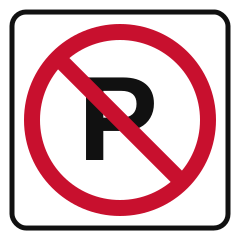
- Parking permitted as indicated
- Parking for disabled persons only
- Parking is prohibited
- Pay parking ahead
35.Which of these actions is illegal at a railway crossing?
- Shifting gears while crossing the tracks
- Slowing down to look both ways
- Stopping before the tracks
- Crossing when no train is near and the lights are off
36.What does this sign warn you of?

- A wildlife park ahead
- A farm ahead
- Hunting allowed near the road
- A deer crossing area ahead
37.You are behind a large truck and cannot see its mirrors. What does that mean?
- The mirrors are folded in
- The truck is about to turn
- The driver cannot see you
- You are at a safe distance
38.Unless posted otherwise, how close to a fire station's driveway entrance may you park?
- No closer than 9 metres
- No closer than 15 metres
- No closer than 3 metres
- No closer than 6 metres
39.Where must you stop when a white stop line is painted across your lane?
- On top of the line
- Just past the line
- Before the line
- At the crosswalk beyond it
40.You are driving at a greatly reduced speed in fog. What should you turn on?
- Your left turn signal
- Your high beams
- Your hazard lights
- Your interior lights
41.What is the minimum time you must spend in the Learner Stage?
- 9 months
- 15 months
- 12 months
- 6 months
42.You are passing a stopped tow truck with its warning lights on, on a road posted at 70 km/h. What is your maximum speed?
- 30 km/h
- 60 km/h
- 50 km/h
- 40 km/h
43.What does a flashing red light mean?
- Stop only if traffic is coming
- Slow down and proceed with caution
- The light is about to turn green
- Stop completely, then go when safe
44.When entering a left-hand curve, where should you steer?
- Toward, but not over, the centre of the road
- Toward the right shoulder
- Over the centre line to straighten it
- Toward the left shoulder
45.A driver does not complete a course required by the DI&C Program. What happens?
- Nothing happens
- Their insurance is waived
- They pay a small fine
- Their licence is cancelled
46.Above what THC blood level does the three-month suspension apply?
- 1 ng
- 10 ng
- 2 ng
- 5 ng
47.How must a shoulder belt be worn?
- Behind the back
- Loose across the neck
- Under the arm for comfort on long drives
- Over the shoulder, not under the arm
48.Are more people killed or injured in skids on dry or on wet surfaces?
- Dry-surface skids
- Wet-surface skids
- Icy-surface skids
- Gravel-surface skids
49.Pedestrians see this sign at a corner. What does it tell them?
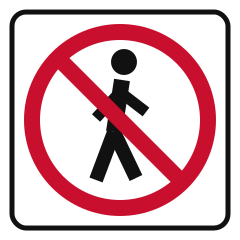
- A crosswalk is just ahead
- A crossing guard is on duty
- Cross only with the walking signal
- Do not cross here
50.Which sign shape is used only for stop signs?
- Diamond
- Octagon (eight sides)
- Pentagon (five sides)
- Triangle pointing down
51.At a railway crossing, who always has the right-of-way?
- Vehicles on the main road
- The first vehicle to arrive
- Emergency vehicles only
- The train
52.What does this sign warn you of?

- A steep hill ahead
- A bump ahead
- The pavement ends
- Trucks entering ahead
53.According to the handbook, about how wide are most trailers?
- 2.5 metres
- 1.5 metres
- 3.5 metres
- 4 metres
54.How close to a stop sign at an intersection may you park?
- No closer than 3 metres
- No closer than 6 metres
- No closer than 15 metres
- No closer than 9 metres
55.A cyclist is riding in a bike lane bounded by solid lines. May the cyclist leave the lane?
- Only when the light is red
- No, the solid lines keep them in
- Yes, for example to turn or change lanes
- Only at marked intersections
56.On an open road at night with your high beams on, roughly what distance is lit ahead of you?
- 60 metres
- 200 metres
- 110 metres
- 30 metres
57.You are 17 and applying for your first learner licence. What do you need besides passing the tests?
- Consent from a parent or legal guardian
- A driving school certificate
- A letter from your school
- A co-signed insurance policy in your name
58.An emergency vehicle with its siren and flashing lights is approaching. What must you do?
- Stop right where you are in the lane
- Pull to the right edge and stop
- Pull to the left and keep going
- Speed up to clear the way
59.You enter the intersection on a green light to turn left, but oncoming traffic keeps coming. When might you finish the turn?
- Only while the light is still green
- Never; back out of the intersection
- Only after the next green light
- During the amber or red light, when safe
60.From a two-way street, you turn left onto a one-way street. Which lane do you turn into?
- The middle lane
- The lane nearest the right curb
- Any lane that is clear
- The lane nearest the left curb
61.Which of these can lead to a Driver Improvement and Control intervention?
- An at-fault collision
- The type of car you drive
- Your age
- Your gender
62.At what blood alcohol concentration do you get an immediate three-month Administrative Licence Suspension?
- .08 or over
- .05 or over
- .12 or over
- .10 or over
63.On a cold winter morning, about how long do most engines need to warm up?
- About 2 minutes
- About 30 seconds
- About 5 minutes
- About 10 minutes
64.A live power line has fallen on your car. What should you do?
- Touch the door frame to test it
- Get out and run
- Stay inside and try to drive away from it
- Step out slowly onto the ground
65.A person who is blind raises their cane near the curb. What does this mean?
- They are waving you through
- They want you to honk
- They are hailing a taxi
- Stop and give them the right-of-way
66.What does this sign mean?

- Two-way traffic
- No left turn
- Winding road ahead
- No U-turn allowed
67.How can you recognize members of a school safety patrol?
- By red stop paddles only
- By their high-visibility vests and flags
- By police-style uniforms with peaked caps
- By orange hard hats
68.What does this sign warn you of?

- A school crossing guard ahead
- Road work ahead
- A detour ahead
- A flagperson ahead
69.A vehicle ahead on a two-lane road is stopped to turn left. May you pass it on the right?
- Yes, by driving on the shoulder
- No, never pass on the right
- Only if it waves you on
- Yes, if you can do so safely on the road
70.Is it legal to park on the roadway beside another vehicle that is already parked?
- No, double parking is illegal
- Yes, for deliveries only
- Yes, for up to five minutes
- Yes, with hazard lights on
71.You turn right onto a street whose curb lane is a diamond lane. What should you do?
- Stay in the diamond lane for at least one full block
- Turn directly into the second lane
- Stop and wait for a bus to pass
- Turn into the first lane, then move out when safe
72.When are deer most active and dangerous to drivers?
- In the spring, from noon to early afternoon
- In the summer, during the middle of the day
- In the fall, from sunset to midnight and after sunrise
- In the winter, only in the hours before dawn
73.After reaching the Full Stage, how long does the no-drugs-or-alcohol rule continue?
- For the first 24 months
- For the first 12 months
- It ends at the Full Stage
- For the first 36 months
74.What else can happen if you speed past a stopped emergency vehicle, besides a fine?
- You can move down the Driver Safety Rating scale
- You must retake the road test
- Your vehicle registration is cancelled
- Nothing more; only a fine applies
75.A flashing green left arrow is showing. What may you do?
- Make a U-turn only
- Turn right only
- Make a left turn
- Go straight only
76.Near the crest of a hill, how much clear view of oncoming traffic is needed for a U-turn to be legal?
- At least 150 metres
- At least 50 metres
- At least 300 metres
- At least 100 metres
77.You begin to feel sleepy on a long highway drive. What should you do?
- Stop and rest
- Open a window and keep going
- Turn up the radio
- Drive faster to arrive sooner
78.A fully licensed driver registers a blood alcohol level of .06. What is the first-time consequence?
- A 24-hour suspension
- A 15-day suspension
- A 72-hour licence suspension
- No penalty under .08
79.Is it legal to raise or lower the original suspension of a passenger car?
- Yes, by up to 5 cm
- Only for winter driving
- Yes, at any time
- No, it is illegal
80.After slowing on the shoulder, what must you be careful of as you ease back onto the pavement?
- Not looking in your mirror
- Not using your signal
- Not slowing down too much
- Not overshooting the centre line
81.You are passing a cyclist going your way. What is the minimum space you must leave?
- 1 metre
- 3 metres
- 0.5 metres
- 2 metres
82.You see this emblem on the back of a vehicle ahead. What does it tell you?

- The vehicle is carrying fuel
- The vehicle is about to turn
- The vehicle is an oversize load
- The vehicle is slow-moving
83.Why should you avoid cutting suddenly in front of a transit bus?
- Buses cannot brake at all
- It voids your insurance
- Standing passengers could fall if it brakes
- The bus will fall behind its timed route schedule
84.What does this sign warn you of?

- A narrow bridge ahead
- The road narrows on the left
- A divided highway ends
- A railway crossing ahead
85.You miss your exit on an expressway. What should you do?
- Make a U-turn across the median
- Stop on the shoulder and wait
- Stop and back up carefully
- Continue to the next exit
86.You park facing uphill next to a curb. Which way do you turn your front wheels?
- Left, then right again
- Away from the curb
- Straight ahead
- Toward the curb
87.A solid and a broken yellow line run side by side, with the solid line on your side. Can you pass?
- Yes, but only in daylight
- Yes, if the road ahead is clear
- Only to pass a cyclist
- No, passing is not permitted
88.An animal suddenly crosses your path. What should you do?
- Keep your speed and use high beams
- Brake firmly and avoid swerving
- Speed up to get past it
- Swerve hard to miss it
89.Within how many days must you tell MPI or an Autopac agent about a change of name or address?
- 15 days
- 7 days
- 60 days
- 30 days
90.What kind of light may the lead car of a funeral procession display?
- A flashing blue light
- A flashing green light
- A flashing amber light
- A flashing purple light
91.The light is green. Who must you still yield to?
- No one, since a green light gives you the right-of-way
- Pedestrians and vehicles already in the intersection
- Only vehicles approaching from your right
- Only emergency vehicles with sirens
92.What is the correct order of actions before changing lanes?
- Shoulder check, move, then signal
- Move, signal, then check mirrors
- Mirror, signal, shoulder check, then move
- Signal, move, then check mirrors
93.A driver is caught using a hand-held device while driving for the second time. How long is the suspension?
- 30 days
- 7 days
- 15 days
- 3 days
94.You drive while impaired by a prescribed sleeping pill. What can happen?
- You receive a warning only
- You get a parking ticket
- You can be charged with impaired driving
- Nothing, since it was prescribed
95.Once a car seat is installed, how much should it move at the belt path?
- No more than three inches in any direction
- No more than one inch in any direction
- No more than half a metre
- It should slide freely
96.A head-on crash seems likely and you can't avoid hitting something. What should you aim for?
- The side of the other vehicle
- A large tree trunk, since it stops you quickly
- Something that gives, like a bush or snowbank
- A solid concrete wall or pillar
97.How close to a pedestrian corridor may you park or stop?
- No closer than 9 metres
- No closer than 3 metres
- No closer than 15 metres
- No closer than 30 metres
98.What does this sign mean?
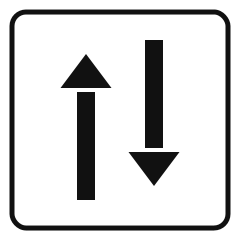
- Keep right except to pass
- Divided highway begins
- One-way street ahead
- Two-way traffic
99.You are getting out of a car parked on a busy street. What should you do before opening your door?
- Signal to the right first
- Shoulder check for buses and other traffic
- Sound your horn to warn any traffic coming up behind
- Turn on your headlights first
100.What does this sign warn you of?

- The road narrows ahead
- A divided highway begins
- The right lane ends ahead
- Merging roadways ahead
Answer key with explanations
1. C — No closer than 3 metres
Parking or stopping within three metres of a crosswalk is not allowed, because it blocks drivers' view of pedestrians.
Pedestrians and cyclists · Based on: MPI Driver's Handbook (online edition, 2026), Ch. 7 Sharing the Road, Crosswalks
2. A — Midnight
On the 24-hour clock the day starts at 0:00, which is midnight; noon is 12:00.
Sign shapes and regulatory signs · Based on: MPI Driver's Handbook (online edition, 2026), Ch. 4 Signs and Signals, Sign Shapes and Colours — 24-hour clock
3. B — No; it is illegal, so wait behind the bus
Right turns must be made from the extreme right lane; pull in behind the bus and wait until it leaves.
School buses, transit buses, railways and school zones · Based on: MPI Driver's Handbook (online edition, 2026), Ch. 6 Driving Responsibly, Transit Buses — Transit bus situation #1
4. D — Possible danger on or near the road ahead
Diamond signs warn of conditions such as sharp curves, side roads, intersections or narrow bridges ahead.
Warning, construction and guide signs · Based on: MPI Driver's Handbook (online edition, 2026), Ch. 4 Signs and Signals, Sign Shapes and Colours — Diamond
5. A — You are following too closely
If it takes less than four seconds to reach the marker, you are too close; more than four adds to your safety margin.
Speed, following distance, passing and expressways · Based on: MPI Driver's Handbook (online edition, 2026), Ch. 6 Driving Responsibly, Following Safely — Calculating safe following distance
6. A — Set the parking brake firmly
Put an automatic in Park (a manual in reverse or low gear) and always set the parking brake firmly.
Backing up and parking · Based on: MPI Driver's Handbook (online edition, 2026), Ch. 8 Backing and Parking, Parking on a Hill or Incline
7. C — Lane changing is not permitted
A solid white lane line tells you to stay in your lane; a broken white line is where changing lanes is allowed.
Pavement markings and reserved lanes · Based on: MPI Driver's Handbook (online edition, 2026), Ch. 4 Signs and Signals, Pavement Markings — White lines
8. B — 15 km/h
Winter roads have no posted limits, but heavy vehicles of seven tonnes or more are advised to travel at 15 km/h on ice.
Night, winter and poor driving conditions · Based on: MPI Driver's Handbook (online edition, 2026), Ch. 10 Poor Driving Conditions, Winter Road Driving
9. D — 7 days
GDL applicants who are not successful on the knowledge test must wait seven days before retaking it.
Graduated licensing and getting your licence · Based on: MPI Driver's Handbook (online edition, 2026), Ch. 1 The Class Licence System and Graduated Driver Licensing; Ch. 2 Application and Testing; Ch. 3 Manitoba's One-Piece Driver's Licence, Key Points About Your Tests — General testing information
10. B — Yield to the procession
Vehicles in a funeral procession may go through red lights or stop signs with caution, and other drivers must yield to them.
Right-of-way, emergency vehicles and work zones · Based on: MPI Driver's Handbook (online edition, 2026), Ch. 6 Driving Responsibly, Right-of-Way — Funeral processions
11. D — Before the marked crosswalk
On a red light you must stop in front of a marked crosswalk so pedestrians have a clear path.
Traffic signals and pedestrian signals · Based on: MPI Driver's Handbook (online edition, 2026), Ch. 4 Signs and Signals, Traffic Control Signals — Red
12. D — A right turn
A left arm bent up at the elbow is the hand signal for a right turn.
Starting, lane changes, turns and roundabouts · Based on: MPI Driver's Handbook (online edition, 2026), Ch. 5 Starting, Lane Changing, Curves and Turning, Hand Signals
13. A — A suspension of one year up to life
Certain Criminal Code convictions, such as auto theft or dangerous driving, bring an automatic suspension from one year to life.
Distraction, fatigue, suspensions and your driving record · Based on: MPI Driver's Handbook (online edition, 2026), Ch. 12 Unsafe Driving and Consequences, Licence Suspension for other Criminal Code Convictions
14. D — Yes, to all motor vehicles and vessels
The laws cover all motor vehicles, including off-road vehicles, as well as vessels, aircraft and railway equipment.
Alcohol, drugs and impaired driving penalties · Based on: MPI Driver's Handbook (online edition, 2026), Ch. 12 Unsafe Driving and Consequences, Impaired Driving is A Crime in All Motor Vehicles
15. A — With the seatbelt or UAS, but not both
Use either the vehicle seatbelt or the Universal Anchorage System, never both at once.
Vehicle equipment, seatbelts and child seats · Based on: MPI Driver's Handbook (online edition, 2026), Ch. 9 Vehicle Equipment and Fuel Efficiency, Infant and Child Car Seats
16. D — Stay on the shoulder and slow down gently
Keep going straight on the shoulder and slow down gently; return to the pavement only when slowed and traffic permits.
Driving emergencies and collisions · Based on: MPI Driver's Handbook (online edition, 2026), Ch. 11 Driving Emergencies and Collisions, Running off the Pavement
17. D — Overhead lit signs with flashing amber lights
Pedestrian corridors have large illuminated overhead signs with alternating flashing amber lights and wide bars painted on the crossing.
Pedestrians and cyclists · Based on: MPI Driver's Handbook (online edition, 2026), Ch. 7 Sharing the Road, Pedestrian Corridors
18. B — Running into the car ahead of you
Drivers looking over their shoulder at a merge can rear-end the car in front, which may have stopped to yield.
Sign shapes and regulatory signs · Based on: MPI Driver's Handbook (online edition, 2026), Ch. 4 Signs and Signals, Yield Right-of-Way Signs
19. D — Check that no other train is coming
A second train may be approaching on another track, hidden by the first one, so check again before you start across.
School buses, transit buses, railways and school zones · Based on: MPI Driver's Handbook (online edition, 2026), Ch. 6 Driving Responsibly, Railway Crossings
20. C — The second lane from the curb
When the cross-street's curb lane is reserved, right-turning drivers go into the second lane from the curb instead.
Warning, construction and guide signs · Based on: MPI Driver's Handbook (online edition, 2026), Ch. 4 Signs and Signals, Warning Signs
21. A — Slow down gradually
Slowing gradually gives the tailgater more time to react, which lowers your chance of being hit from behind.
Speed, following distance, passing and expressways · Based on: MPI Driver's Handbook (online edition, 2026), Ch. 6 Driving Responsibly, Following Safely
22. C — Small children who may be out of sight
Children can be too small to see from the driver's seat, so check behind the vehicle with mirrors and over your shoulder.
Backing up and parking · Based on: MPI Driver's Handbook (online edition, 2026), Ch. 8 Backing and Parking, Backing Up
23. B — Traffic moving in the same direction
White lines divide lanes of traffic going the same way; solid white means stay in lane, broken white means you may change.
Pavement markings and reserved lanes · Based on: MPI Driver's Handbook (online edition, 2026), Ch. 4 Signs and Signals, Pavement Markings — White lines
24. B — 30 metres
Low beams reveal only about 30 metres, so drive slowly enough to stop within that distance.
Night, winter and poor driving conditions · Based on: MPI Driver's Handbook (online edition, 2026), Ch. 10 Poor Driving Conditions, Night Driving
25. C — 3 years
The supervisor needs a valid licence and at least three years (36 months) in the Full Stage of Class 5.
Graduated licensing and getting your licence · Based on: MPI Driver's Handbook (online edition, 2026), Ch. 1 The Class Licence System and Graduated Driver Licensing; Ch. 2 Application and Testing; Ch. 3 Manitoba's One-Piece Driver's Licence, Graduated Driver Licensing — Class 5L Licence
26. B — Take care to avoid a collision
Having the right-of-way does not remove your duty to pay attention and avoid a crash.
Right-of-way, emergency vehicles and work zones · Based on: MPI Driver's Handbook (online edition, 2026), Ch. 6 Driving Responsibly, Right-of-Way — Uncontrolled intersections
27. D — Continue through the intersection
Once you are in the intersection, the safe move is to keep going and clear it rather than stop in the middle.
Traffic signals and pedestrian signals · Based on: MPI Driver's Handbook (online edition, 2026), Ch. 4 Signs and Signals, Traffic Control Signals — Amber
28. D — Both mirrors plus a shoulder check
Each mirror leaves areas you cannot see; only combining both mirrors with a shoulder check covers all of them.
Starting, lane changes, turns and roundabouts · Based on: MPI Driver's Handbook (online edition, 2026), Ch. 5 Starting, Lane Changing, Curves and Turning, Blind Spots
29. D — $672
A conviction brings a $672 fine on top of the roadside suspension.
Distraction, fatigue, suspensions and your driving record · Based on: MPI Driver's Handbook (online edition, 2026), Ch. 12 Unsafe Driving and Consequences, Distractions
30. C — 24 hours
A driver suspected of drug impairment can get an immediate 24-hour roadside licence suspension.
Alcohol, drugs and impaired driving penalties · Based on: MPI Driver's Handbook (online edition, 2026), Ch. 12 Unsafe Driving and Consequences, What are the Consequences? — Drug impairment
31. A — At armpit level
For rear-facing and forward-facing seats, the chest clip belongs at armpit level.
Vehicle equipment, seatbelts and child seats · Based on: MPI Driver's Handbook (online edition, 2026), Ch. 9 Vehicle Equipment and Fuel Efficiency, Infant and Child Car Seats
32. A — Leave your name and address on it
You must take reasonable steps to find the owner, and if you can't, leave your name and address on the vehicle.
Driving emergencies and collisions · Based on: MPI Driver's Handbook (online edition, 2026), Ch. 11 Driving Emergencies and Collisions, If You're Involved in a Collision
33. A — Same roads, same rights, same rules
Cyclists share the same roads, have the same rights and duties, and follow the same rules as drivers.
Pedestrians and cyclists · Based on: MPI Driver's Handbook (online edition, 2026), Ch. 7 Sharing the Road, Motorist and Cyclists
34. C — Parking is prohibited
The red circle and slash over the letter P means you may not park in the area the sign covers.
Sign shapes and regulatory signs · Based on: MPI Driver's Handbook (online edition, 2026), Ch. 4 Signs and Signals, Regulatory Signs
35. A — Shifting gears while crossing the tracks
It is illegal to shift gears on the tracks, go around a closed gate, or drive on without room on the other side.
School buses, transit buses, railways and school zones · Based on: MPI Driver's Handbook (online edition, 2026), Ch. 6 Driving Responsibly, Railway Crossings
36. D — A deer crossing area ahead
Deer often cross in this area; slow down, scan the road from side to side and be ready to brake.
Warning, construction and guide signs · Based on: MPI Driver's Handbook (online edition, 2026), Ch. 4 Signs and Signals, Warning Signs
37. C — The driver cannot see you
If you cannot see the truck's mirrors you are in its rear No-Zone; drop back so the driver can see you.
Speed, following distance, passing and expressways · Based on: MPI Driver's Handbook (online edition, 2026), Ch. 6 Driving Responsibly, No-Zone Around Large Vehicles — Rear
38. D — No closer than 6 metres
Parking within six metres of a fire station driveway entrance is illegal, so fire trucks can get out quickly.
Backing up and parking · Based on: MPI Driver's Handbook (online edition, 2026), Ch. 8 Backing and Parking, Illegal Parking
39. C — Before the line
A stop line marks the point you must stop behind, so the front of your vehicle should not cross it.
Pavement markings and reserved lanes · Based on: MPI Driver's Handbook (online edition, 2026), Ch. 4 Signs and Signals, Pavement Markings — Stop line
40. C — Your hazard lights
Hazard lights make you more visible and warn others that you are travelling much slower than normal.
Night, winter and poor driving conditions · Based on: MPI Driver's Handbook (online edition, 2026), Ch. 10 Poor Driving Conditions, Reduced Visibility
41. A — 9 months
The Class 5 Learner Stage lasts at least nine months, not counting any time your licence is not valid.
Graduated licensing and getting your licence · Based on: MPI Driver's Handbook (online edition, 2026), Ch. 1 The Class Licence System and Graduated Driver Licensing; Ch. 2 Application and Testing; Ch. 3 Manitoba's One-Piece Driver's Licence, Graduated Driver Licensing — Class 5L Licence
42. D — 40 km/h
Where the posted limit is under 80 km/h, you must slow to no more than 40 km/h when passing stopped emergency or designated vehicles.
Right-of-way, emergency vehicles and work zones · Based on: MPI Driver's Handbook (online edition, 2026), Ch. 6 Driving Responsibly, Emergency Vehicles
43. D — Stop completely, then go when safe
Treat a flashing red light like a stop sign: come to a complete stop and proceed only when it is safe.
Traffic signals and pedestrian signals · Based on: MPI Driver's Handbook (online edition, 2026), Ch. 4 Signs and Signals, Traffic Control Signals — Flashing red
44. A — Toward, but not over, the centre of the road
In a left curve steer toward the centre without crossing it; in a right curve steer toward the right side of the road.
Starting, lane changes, turns and roundabouts · Based on: MPI Driver's Handbook (online edition, 2026), Ch. 5 Starting, Lane Changing, Curves and Turning, Curves
45. D — Their licence is cancelled
Drivers who don't complete a required course or exam have their licence cancelled and their licence charges refunded.
Distraction, fatigue, suspensions and your driving record · Based on: MPI Driver's Handbook (online edition, 2026), Ch. 12 Unsafe Driving and Consequences, Driver Improvement and Control Program
46. D — 5 ng
A blood drug concentration over 5 nanograms of THC triggers the three-month Administrative Licence Suspension.
Alcohol, drugs and impaired driving penalties · Based on: MPI Driver's Handbook (online edition, 2026), Ch. 12 Unsafe Driving and Consequences, What are the Consequences? — Three-month Administrative Licence Suspension
47. D — Over the shoulder, not under the arm
A belt under the arm can cause serious injury in a crash; it must be snug over the shoulder, flat and across the hips.
Vehicle equipment, seatbelts and child seats · Based on: MPI Driver's Handbook (online edition, 2026), Ch. 9 Vehicle Equipment and Fuel Efficiency, Seatbelts
48. A — Dry-surface skids
Speed is the main cause of skids, and the handbook says dry-surface skids hurt more people than wet ones.
Driving emergencies and collisions · Based on: MPI Driver's Handbook (online edition, 2026), Ch. 11 Driving Emergencies and Collisions, Skid Control
49. D — Do not cross here
This is the Pedestrian Prohibited sign; pedestrians should not cross where it is posted.
Pedestrians and cyclists · Based on: MPI Driver's Handbook (online edition, 2026), Ch. 7 Sharing the Road, Crosswalks
50. B — Octagon (eight sides)
Manitoba reserves the eight-sided octagon for stop signs, so you can recognise one even when you cannot read it.
Sign shapes and regulatory signs · Based on: MPI Driver's Handbook (online edition, 2026), Ch. 4 Signs and Signals, Sign Shapes and Colours — Octagon
51. D — The train
Trains automatically have the right-of-way at every crossing, and most crossings have no electronic signals, so your safety depends on you.
School buses, transit buses, railways and school zones · Based on: MPI Driver's Handbook (online edition, 2026), Ch. 6 Driving Responsibly, Railway Crossings
52. A — A steep hill ahead
The truck on a slope warns of a steep grade, so control your speed and use a lower gear going down.
Warning, construction and guide signs · Based on: MPI Driver's Handbook (online edition, 2026), Ch. 4 Signs and Signals, Warning Signs
53. A — 2.5 metres
A trailer about 2½ metres wide can completely hide what is behind it, so never pass close behind a backing truck.
Speed, following distance, passing and expressways · Based on: MPI Driver's Handbook (online edition, 2026), Ch. 6 Driving Responsibly, No-Zone Around Large Vehicles — Backing
54. D — No closer than 9 metres
Parking within nine metres of a stop sign or other traffic sign or signal at an intersection is illegal.
Backing up and parking · Based on: MPI Driver's Handbook (online edition, 2026), Ch. 8 Backing and Parking, Illegal Parking
55. C — Yes, for example to turn or change lanes
Cyclists are not limited to the bike lane; the solid lines do not stop them from leaving it to turn or move around obstacles.
Pavement markings and reserved lanes · Based on: MPI Driver's Handbook (online edition, 2026), Ch. 4 Signs and Signals, Cycling Pavement Markings — Bicycle lanes
56. C — 110 metres
High beams light about 110 metres ahead, which is why they are useful on open roads with no other traffic near.
Night, winter and poor driving conditions · Based on: MPI Driver's Handbook (online edition, 2026), Ch. 10 Poor Driving Conditions, Night Driving
57. A — Consent from a parent or legal guardian
Anyone under 18 needs the approval of a parent or legal guardian to apply for a licence and take the knowledge test.
Graduated licensing and getting your licence · Based on: MPI Driver's Handbook (online edition, 2026), Ch. 1 The Class Licence System and Graduated Driver Licensing; Ch. 2 Application and Testing; Ch. 3 Manitoba's One-Piece Driver's Licence, Basic Class 5 Licensing Requirements — Application and test requirements
58. B — Pull to the right edge and stop
Yield by driving as close as you can to the right curb or edge, and stay stopped until the emergency vehicles pass.
Right-of-way, emergency vehicles and work zones · Based on: MPI Driver's Handbook (online edition, 2026), Ch. 6 Driving Responsibly, Emergency Vehicles
59. D — During the amber or red light, when safe
If you are established in the intersection, you may have to complete your left turn after the light changes, once oncoming traffic stops.
Traffic signals and pedestrian signals · Based on: MPI Driver's Handbook (online edition, 2026), Ch. 4 Signs and Signals, Traffic Control Signals — Green
60. D — The lane nearest the left curb
Start next to the centre line and finish in the lane nearest the left curb, unless it is blocked within 30 metres.
Starting, lane changes, turns and roundabouts · Based on: MPI Driver's Handbook (online edition, 2026), Ch. 5 Starting, Lane Changing, Curves and Turning, Left Turns — Making left turns from two-way onto one-way street
61. A — An at-fault collision
Interventions are based only on driving behaviour, such as at-fault collisions, convictions and roadside suspensions.
Distraction, fatigue, suspensions and your driving record · Based on: MPI Driver's Handbook (online edition, 2026), Ch. 12 Unsafe Driving and Consequences, Driver Improvement and Control Program
62. A — .08 or over
A BAC of .08 or more brings an immediate three-month suspension, plus possible Criminal Code charges and impoundment.
Alcohol, drugs and impaired driving penalties · Based on: MPI Driver's Handbook (online edition, 2026), Ch. 12 Unsafe Driving and Consequences, What are the Consequences? — Three-month Administrative Licence Suspension
63. B — About 30 seconds
Most engines need only about 30 seconds of warm-up; longer idling wastes fuel and adds emissions.
Vehicle equipment, seatbelts and child seats · Based on: MPI Driver's Handbook (online edition, 2026), Ch. 9 Vehicle Equipment and Fuel Efficiency, Fuel Efficient Driving Techniques
64. C — Stay inside and try to drive away from it
Stepping out can kill you even in rubber boots; stay inside, and if you can't drive clear, warn others to stay away.
Driving emergencies and collisions · Based on: MPI Driver's Handbook (online edition, 2026), Ch. 11 Driving Emergencies and Collisions, Vehicle in Contact with Electrical Wires
65. D — Stop and give them the right-of-way
A raised cane signals uncertainty about crossing safely; it is your cue to stop and let them cross.
Pedestrians and cyclists · Based on: MPI Driver's Handbook (online edition, 2026), Ch. 7 Sharing the Road, People Who are Blind
66. D — No U-turn allowed
A U-shaped arrow crossed by a red circle and slash tells you that turning around here is prohibited.
Sign shapes and regulatory signs · Based on: MPI Driver's Handbook (online edition, 2026), Ch. 4 Signs and Signals, Regulatory Signs
67. B — By their high-visibility vests and flags
School patrols wear high-visibility vests and carry flags; seeing them means children are near the road.
School buses, transit buses, railways and school zones · Based on: MPI Driver's Handbook (online edition, 2026), Ch. 6 Driving Responsibly, Ch. 7 Sharing the Road — School and Playground Areas
68. D — A flagperson ahead
A flagperson will be directing traffic ahead, and you must follow their instructions to slow down or stop.
Warning, construction and guide signs · Based on: MPI Driver's Handbook (online edition, 2026), Ch. 4 Signs and Signals, Construction and Maintenance Signs
69. D — Yes, if you can do so safely on the road
Overtaking a left-turning vehicle is one of the cases where passing on the right is allowed, but never by driving off the road.
Speed, following distance, passing and expressways · Based on: MPI Driver's Handbook (online edition, 2026), Ch. 6 Driving Responsibly, Passing — Passing on the right
70. A — No, double parking is illegal
Parking on the roadway alongside a parked vehicle is listed as illegal because it blocks traffic.
Backing up and parking · Based on: MPI Driver's Handbook (online edition, 2026), Ch. 8 Backing and Parking, Illegal Parking
71. D — Turn into the first lane, then move out when safe
Turn as close to the curb as practicable into the first lane, then signal, check and move out of the diamond lane as soon as it is safe.
Pavement markings and reserved lanes · Based on: MPI Driver's Handbook (online edition, 2026), Ch. 4 Signs and Signals, Reserved Lanes
72. C — In the fall, from sunset to midnight and after sunrise
Deer cause many animal collisions, with peak danger in the fall from sunset to midnight and just after sunrise.
Night, winter and poor driving conditions · Based on: MPI Driver's Handbook (online edition, 2026), Ch. 10 Poor Driving Conditions, Animals on the Road
73. D — For the first 36 months
New Full Stage drivers must keep a zero drugs and alcohol level for their first 36 months in that stage.
Graduated licensing and getting your licence · Based on: MPI Driver's Handbook (online edition, 2026), Ch. 1 The Class Licence System and Graduated Driver Licensing; Ch. 2 Application and Testing; Ch. 3 Manitoba's One-Piece Driver's Licence, Graduated Driver Licensing — Class 5F Licence
74. A — You can move down the Driver Safety Rating scale
Speeding past emergency or designated vehicles can bring a significant fine and a drop on the Driver Safety Rating scale.
Right-of-way, emergency vehicles and work zones · Based on: MPI Driver's Handbook (online edition, 2026), Ch. 6 Driving Responsibly, Emergency Vehicles
75. C — Make a left turn
A flashing green left arrow lets you turn left, unless another signal you face allows other movements as well.
Traffic signals and pedestrian signals · Based on: MPI Driver's Handbook (online edition, 2026), Ch. 4 Signs and Signals, Traffic Control Signals — Flashing green left-arrow
76. A — At least 150 metres
A U-turn is prohibited on approaches to or near a hill crest unless you have at least 150 metres of clear view.
Starting, lane changes, turns and roundabouts · Based on: MPI Driver's Handbook (online edition, 2026), Ch. 5 Starting, Lane Changing, Curves and Turning, U-turns
77. A — Stop and rest
Drowsy driving is like driving drugged; stop at a rest area, motel or safe spot before continuing.
Distraction, fatigue, suspensions and your driving record · Based on: MPI Driver's Handbook (online edition, 2026), Ch. 12 Unsafe Driving and Consequences, Drowsiness or Fatigue
78. C — A 72-hour licence suspension
A level between .05 and .079 brings a Tiered Administrative Licence Suspension, starting at 72 hours for a first occurrence.
Alcohol, drugs and impaired driving penalties · Based on: MPI Driver's Handbook (online edition, 2026), Ch. 12 Unsafe Driving and Consequences, What are the Consequences? — Tiered Administrative Licence Suspension
79. D — No, it is illegal
Manitoba law makes it illegal to raise or lower a passenger car's original suspension.
Vehicle equipment, seatbelts and child seats · Based on: MPI Driver's Handbook (online edition, 2026), Ch. 9 Vehicle Equipment and Fuel Efficiency, Required Equipment — Suspension
80. D — Not overshooting the centre line
Easing back too sharply can carry you across the centre line into oncoming traffic.
Driving emergencies and collisions · Based on: MPI Driver's Handbook (online edition, 2026), Ch. 11 Driving Emergencies and Collisions, Running off the Pavement
81. A — 1 metre
Drivers must keep at least one metre between their vehicle and a cyclist or power-assisted bicycle when overtaking.
Pedestrians and cyclists · Based on: MPI Driver's Handbook (online edition, 2026), Ch. 7 Sharing the Road, Motorist and Cyclists
82. D — The vehicle is slow-moving
This triangular emblem identifies a slow-moving vehicle, so expect to close on it quickly and be ready to slow down.
Sign shapes and regulatory signs · Based on: MPI Driver's Handbook (online edition, 2026), Ch. 4 Signs and Signals, Sign Shapes and Colours — Triangle with tips cut off
83. C — Standing passengers could fall if it brakes
Buses often carry standing passengers, who can be thrown and injured if the driver must stop or brake suddenly.
School buses, transit buses, railways and school zones · Based on: MPI Driver's Handbook (online edition, 2026), Ch. 6 Driving Responsibly, Transit Buses — Transit bus situation #3
84. A — A narrow bridge ahead
The lines pinching in show a bridge narrower than the road; slow down and watch for oncoming vehicles.
Warning, construction and guide signs · Based on: MPI Driver's Handbook (online edition, 2026), Ch. 4 Signs and Signals, Warning Signs
85. D — Continue to the next exit
Never stop or back up on an expressway; simply take the next exit and find your way back.
Speed, following distance, passing and expressways · Based on: MPI Driver's Handbook (online edition, 2026), Ch. 6 Driving Responsibly, Entering and Leaving an Expressway — Leaving
86. B — Away from the curb
Uphill with a curb, turn the wheels away from it so the tire rests against the curb if the car rolls back.
Backing up and parking · Based on: MPI Driver's Handbook (online edition, 2026), Ch. 8 Backing and Parking, Parking on a Hill or Incline
87. D — No, passing is not permitted
When the solid line of the pair is on your side of the road, you are not allowed to pass.
Pavement markings and reserved lanes · Based on: MPI Driver's Handbook (online edition, 2026), Ch. 4 Signs and Signals, Pavement Markings — Yellow lines
88. B — Brake firmly and avoid swerving
Swerving can cause a worse crash; brake firmly, dim your lights and give one long blast of the horn.
Night, winter and poor driving conditions · Based on: MPI Driver's Handbook (online edition, 2026), Ch. 10 Poor Driving Conditions, Animals on the Road
89. A — 15 days
Manitoba requires you to report a change of name or address within 15 days.
Graduated licensing and getting your licence · Based on: MPI Driver's Handbook (online edition, 2026), Ch. 1 The Class Licence System and Graduated Driver Licensing; Ch. 2 Application and Testing; Ch. 3 Manitoba's One-Piece Driver's Licence, Basic Class 5 Licensing Requirements — Change of name or address
90. D — A flashing purple light
The lead car in a funeral procession may be equipped with a flashing purple light.
Right-of-way, emergency vehicles and work zones · Based on: MPI Driver's Handbook (online edition, 2026), Ch. 6 Driving Responsibly, Right-of-Way — Funeral processions
91. B — Pedestrians and vehicles already in the intersection
A green light lets you proceed, but you must still give way to people crossing and to vehicles already in the intersection.
Traffic signals and pedestrian signals · Based on: MPI Driver's Handbook (online edition, 2026), Ch. 4 Signs and Signals, Traffic Control Signals — Green
92. C — Mirror, signal, shoulder check, then move
Check your mirror, signal your intention, shoulder check your blind spot, and move only when it is safe.
Starting, lane changes, turns and roundabouts · Based on: MPI Driver's Handbook (online edition, 2026), Ch. 5 Starting, Lane Changing, Curves and Turning, Lane Changing
93. B — 7 days
Each subsequent offence for using a hand-held device brings a seven-day licence suspension.
Distraction, fatigue, suspensions and your driving record · Based on: MPI Driver's Handbook (online edition, 2026), Ch. 12 Unsafe Driving and Consequences, Distractions
94. C — You can be charged with impaired driving
Driving while impaired by medication brings the same consequences as alcohol impairment; ask your doctor or pharmacist about side effects.
Alcohol, drugs and impaired driving penalties · Based on: MPI Driver's Handbook (online edition, 2026), Ch. 12 Unsafe Driving and Consequences, Drugs — Prescription drugs
95. B — No more than one inch in any direction
Check the tension where the seatbelt or UAS goes through the seat; it should not move more than one inch.
Vehicle equipment, seatbelts and child seats · Based on: MPI Driver's Handbook (online edition, 2026), Ch. 9 Vehicle Equipment and Fuel Efficiency, Infant and Child Car Seats
96. C — Something that gives, like a bush or snowbank
Hitting something that gives, or striking a glancing blow, reduces the force of the impact compared with a head-on crash.
Driving emergencies and collisions · Based on: MPI Driver's Handbook (online edition, 2026), Ch. 11 Driving Emergencies and Collisions, Direct Collision Course
97. C — No closer than 15 metres
The no-parking distance is longer at a pedestrian corridor than at a crosswalk: at least 15 metres.
Pedestrians and cyclists · Based on: MPI Driver's Handbook (online edition, 2026), Ch. 7 Sharing the Road, Pedestrian Corridors
98. D — Two-way traffic
The arrows pointing in opposite directions tell you that traffic on this road moves both ways.
Sign shapes and regulatory signs · Based on: MPI Driver's Handbook (online edition, 2026), Ch. 4 Signs and Signals, Regulatory Signs
99. B — Shoulder check for buses and other traffic
A shoulder check before opening the door helps you avoid striking a passing bus or other large vehicle.
School buses, transit buses, railways and school zones · Based on: MPI Driver's Handbook (online edition, 2026), Ch. 6 Driving Responsibly, Transit Buses
100. D — Merging roadways ahead
Two roadways come together ahead; adjust your speed and watch for traffic joining your road.
Warning, construction and guide signs · Based on: MPI Driver's Handbook (online edition, 2026), Ch. 4 Signs and Signals, Warning Signs
Original practice questions by Canada Exam Prep, written from the official handbook. Not official test questions. Free to print for personal study.
FAQ
Manitoba questions and answers (printable PDF): common questions
Is there an official MPI knowledge test PDF?
MPI does not publish its test questions. Its free study material is the MPI Driver's Handbook, online in English and French, plus the official Driving Quizzes on its website. PDFs of test questions, this one included, are made by third parties.
Can I bring this sheet into the MPI test?
No. The knowledge test is not open book, and phones and other electronic devices are not allowed in the test area. Study the sheet beforehand and leave it, and your phone, outside.
Are the answers included?
Yes. The answer key begins on a new page after question 100 and gives the correct letter, the answer, a short explanation and the handbook page for each question.
Keep practising
- MPI road signs test60 Manitoba road sign, signal and pavement marking questions for the MPI Class 5 knowledge test, each with the handbook rule explained. Free, no sign-up.
- Manitoba road signs chartEvery sign drawing from our MPI Class 5 practice questions on one page: sign shapes, regulatory, warning, construction and cycling signs with their meanings.
- How to get a learner's licence in Manitoba
- Manitoba Class 5 study guide
- Manitoba Class 5 Mock Exam 1 – 30 QuestionsTimed practice · 30 minutes · answers explained
- Manitoba Class 5 Mock Exam 2 – 30 QuestionsTimed practice · 30 minutes · answers explained
- Manitoba Class 5 Practice Test 130 questions with explanations
- Manitoba Class 5 Practice Test 230 questions with explanations
- Manitoba Class 5 Practice Test 330 questions with explanations
Practice by topic
- Sign shapes and regulatory signsWhat each sign shape and colour means, stop, yield and four-way stop rules, the 24-hour clock on signs, turn and lane-use signs, speed and school-zone signs, parking and snow-route signs.
- Warning, construction and guide signsYellow diamond warning signs for curves, lanes, hills, crossings and hazards, orange construction and maintenance signs, doubled speeding fines, and green guide and information signs.
- Traffic signals and pedestrian signalsRed, amber and green lights, where to stop on red, turns on red, flashing lights, green and amber arrows, the green left-arrow shown with a red light, and the transit priority signal.
- Pavement markings and reserved lanesYellow and white lines, solid and broken lines, stop lines, painted left-turn islands, diamond reserved lanes, contra-flow lanes, bicycle lanes and sharrows.
- Graduated licensing and getting your licenceLearner, Intermediate and Full stages, supervising driver rules, passenger limits, zero alcohol and drugs, knowledge and road test rules, new residents and keeping your licence valid.
- Starting, lane changes, turns and roundaboutsHand position, starting from the curb, lane changes and blind spots, hand signals, curves, signalling distances, right and left turns, U-turns and roundabouts.
- Speed, following distance, passing and expresswaysDefault speed limits, the four-second following rule, safe passing and when passing is banned, the No-Zone around trucks, and entering and leaving an expressway.
- Right-of-way, emergency vehicles and work zonesUncontrolled intersections, private driveways, funeral processions, yielding to emergency vehicles, the slow-down-and-move-over speeds, construction zones and the zipper merge.
- School buses, transit buses, railways and school zonesStopping for school buses, sharing the road with transit buses, railway crossing distances and rules, and reduced-speed school and playground zones.
- Pedestrians and cyclistsMarked and unmarked crosswalks, pedestrian signals and push buttons, pedestrian corridors, people who are blind, sharing the road with cyclists and the one-metre passing rule.
- Backing up and parkingBacking safely, three-point turns, parallel and angle parking, the backing skill test, parking on hills, leaving a vehicle running and where parking is illegal.
- Vehicle equipment, seatbelts and child seatsRequired brakes, lights, tires, mirrors, horn and windows, dashboard gauges, seatbelt rules, rear-facing, forward-facing and booster seats, and fuel-efficient driving.
- Night, winter and poor driving conditionsIce and snow, headlight laws, fog and reduced visibility, night driving distances, gravel and winter roads, hills, farm equipment, animals on the road and pilot vehicles.
- Driving emergencies and collisionsRunning off the pavement, blowouts, skids, emergency braking, wet brakes, breakdowns, a car in water or touching power lines, and what to do and report after a collision.
- Alcohol, drugs and impaired driving penaltiesHow alcohol and drugs affect driving, cannabis rules, the novice zero-tolerance restriction, tiered roadside suspensions for .05 to .079, and the three-month suspension at .08 or refusal.
- Distraction, fatigue, suspensions and your driving recordHand-held device penalties, drowsy driving, driving while suspended, Criminal Code suspensions, the Driver Improvement and Control Program and the Driver Safety Rating scale.