ICBC Motorcycle Practice Test – Printable PDF
100 ICBC motorcycle knowledge test practice questions with an answer key citing Learn to Ride Smart. Print it or save it as a PDF. Free.
- No sign-up
- Every answer explained
- Independent · not a government site
- 100 questions
- Answer key included
- Free, no sign-up
The real ICBC motorcycle knowledge test is taken on a screen, either online or at a driver licensing office, but many riders like to work through Learn to Ride Smart with a pencil first. This page lays out 100 of our B.C. motorcycle questions as a printable test, spread across all 18 topics: signs, signals and road markings, riding gear and controls, intersections, lane position, braking and countersteering, group riding, passengers, emergencies and the learner licence rules. The answer key follows on separate pages.
Every question is original, and each answer in the key names the chapter and page of Learn to Ride Smart (2026) it comes from. The real test is 40 questions with 80% needed to pass, so this paper is two and a half tests' worth. If you score 85 or more out of 100, switch to our 40-question mock exams to practise at the real length and pass mark. Watch the numbers riders mix up: 60 km/h for learners, supervisors of 25 or 19, two seconds of following distance, and 70 or 40 km/h past stopped vehicles with flashing lights.
ICBC Motorcycle Practice Test – Printable PDF
1.What three parts make up total stopping distance?
- Perception, gear choice and braking distance
- Perception, reaction and braking distance
- Speed, weight and tire pressure
- Reaction, braking and skid distance
2.What does a red oil pressure light warn you about?
- Low oil pressure
- An overheated tire
- A low oil level in the tank
- A full oil filter
3.What are the three main causes of a skid?
- Riding upright, braking gently, low speed
- Riding in the left position, slowing early, scanning
- Braking too hard, accelerating suddenly or turning too sharply
- Using both brakes, shifting down, signalling
4.About how much of your stopping power comes from the front brake?
- About 30 per cent
- About 70 per cent
- About 90 per cent
- About 50 per cent
5.There is a crosswalk but no stop line. Where do you stop?
- Beside the stop sign post
- Just before the nearest crosswalk
- Just before entering the intersection
- In the middle of the crosswalk
6.After passing a truck, when should you move back into its lane?
- When you can see its headlights in your mirror
- After one second
- When the driver flashes the lights
- As soon as your rear wheel clears the truck's front bumper
7.How does a passenger usually change the way a motorcycle handles?
- Faster acceleration and shorter braking
- No change if the passenger is light
- Slower acceleration and longer braking
- Lighter steering at low speed
8.A sign shows that slow traffic holding up five vehicles must use a pullout. What does that mean for a slow rider?
- Speed up so the line behind can keep pace
- Stay in your lane until the next passing lane
- Pull into the pullout to let the line pass
- Move onto the shoulder and keep riding
9.Who must wear an approved motorcycle helmet in B.C.?
- Riders only, not their passengers
- Every rider and every passenger
- Riders on highways only
- Riders under 19 only
10.How far over the limit counts as excessive speeding that can lead to impoundment?
- 20 km/h or more
- 40 km/h or more
- 10 km/h or more
- 60 km/h or more
11.Why is the centre lane of a three-lane road a little riskier than the right lane?
- It has a slippery grease strip down the middle of it
- Traffic can move into it from both sides
- It has more potholes
- It is closer to oncoming traffic
12.Your group has nine riders. What does the guide suggest?
- Ride two abreast in each lane
- Split into two smaller groups
- Keep one group but ride faster
- Ride single file the whole way
13.Your licence requires corrective lenses and you forgot your glasses. What could happen if you ride?
- You could be fined
- Only a warning is possible
- Nothing if the trip is short
- Your licence becomes Class 8
14.In city riding, how far ahead does 12 seconds of scanning usually mean?
- About 50 metres
- About half a block
- About five blocks
- About one to two blocks
15.What is a clue that black ice may be on the road?
- The lane markings look brighter than usual
- Steam rises from the road
- The road looks grey-white
- The asphalt looks shiny and black
16.The speed limit is 90 km/h. You approach a stopped tow truck with flashing lights. What is your maximum speed?
- 60 km/h
- 80 km/h
- 70 km/h
- 40 km/h
17.What shape and colour are most warning signs?
- A green rectangle
- A yellow diamond
- A white rectangle
- A red octagon
18.The centre line is a double solid yellow line. What does it mean?
- No passing
- Pass only on motorcycles
- The lane is reversible
- Pass with extra caution
19.If you double your speed, how does your braking distance change?
- It stays about the same
- About three times longer
- About twice as long
- About four times longer
20.Most motorcycle mirrors are convex. What does that mean for you?
- Vehicles look closer and larger than they really are
- You see only one lane behind you
- Vehicles look farther away than they are
- There are no blind spots
21.On a motorcycle with ABS, how should you brake in an emergency?
- Use only the front brake, squeezing as hard as you can
- Release and reapply the brakes every second
- Pump the brakes rapidly to help the ABS
- Firm, continuous, hard pressure on both brakes
22.Which road surface gives the least traction?
- Ice
- Gravel
- Wet pavement
- Snow
23.What is a 'stale' green light?
- One that is stuck and won't change
- One that is flashing for pedestrians
- One that has been green a long time
- One that has only just turned green
24.A school bus ahead has alternately flashing red lights. What must you do?
- Pass slowly on the left side
- Stop, from either direction
- Stop only if you are behind it
- Slow to 30 km/h and continue
25.How much riding experience do experts suggest before carrying a passenger?
- About 500 km
- One full season
- About 10,000 km
- About 2,500 km
26.How is a reserved lane marked on the road surface?
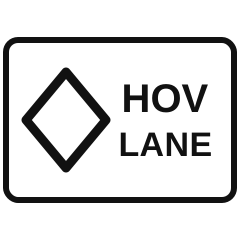
- With a solid yellow centre line
- With a painted red X in the lane
- With orange cones along the edge
- With a white diamond symbol
27.When choosing a first motorcycle, which is a good sign it fits you?
- Your feet reach the ground when you straddle it
- Its seat is high enough to see over cars
- It is the most powerful model that you can afford to buy
- It matches the bike your friends ride
28.What does it cost to reinstate your licence after a prohibition?
- $50
- $500
- $100
- $250
29.Where is a U-turn illegal?
- At an intersection controlled by traffic lights
- At an uncontrolled intersection outside business areas
- On a quiet residential street
- In a cul-de-sac
30.In a staggered formation, the leader is in the left lane position. Where is the second rider?
- In the next lane over
- Slightly behind, in the right lane position
- Directly beside the leader
- Directly behind in the left position
31.Your more experienced friends take curves faster than you want. What should you do?
- Ride at your own safe speed and meet them later
- Ask them to ride side by side with you
- Take a shortcut so you can catch up later
- Keep up with them so you don't fall behind
32.How far back should you look when doing a shoulder check?
- Just at your mirror
- All the way behind you for several seconds
- At least 45 degrees behind your shoulder
- Straight to the side
33.How should you cross an uneven pavement edge a few centimetres high?
- At a shallow angle to ease onto it
- As close to 90 degrees as possible
- At full throttle to jump the edge
- Parallel to the edge until it ends
34.How close to the nearest rail may you stop at a railway crossing?
- No closer than 5 metres
- No closer than 20 metres
- Right at the rail
- No closer than 1 metre
35.You pass a sign warning of a soft shoulder ahead. What should you do?
- Use the shoulder if the lane is busy
- Move to the shoulder to let trucks pass
- Stay off the shoulder
- Ride on the shoulder only at low speed
36.An overhead lane control signal shows a red X. What does it mean?
- The lane ends in 1 km
- The lane is for buses only
- You may use the lane to pass
- Do not ride in that lane
37.How much clear space should you keep on each side of your motorcycle?
- At least three metres
- At least 30 centimetres
- At least one metre
- Half a lane
38.How often should you do a pre-trip check?
- Only after rain
- Only before long trips
- Every time before you ride
- Once a month
39.What is threshold braking?
- Using only the rear brake, very hard
- Pumping both brakes on and off quickly
- Braking gently over a long distance
- Braking both wheels hard just short of locking
40.Why should you slow down before entering a curve?
- So the engine can rev higher
- To keep traction in reserve with a moderate lean
- Because braking in the middle of a curve is more effective
- So you can use the rear brake only
41.At a four-way stop, you and an oncoming driver arrive together. You turn left; they go straight. Who goes first?
- Whoever is on the right
- You, because you signalled first
- The oncoming driver going straight
- You, because motorcycles are smaller
42.Why might a cyclist move toward the middle of the lane?
- Because bike lanes are illegal
- Cyclists must always ride in the centre
- To turn left or avoid glass or potholes
- To block motorcycles from passing
43.How should a passenger behave on a moving motorcycle?
- Sit still, feet on the pegs, lean with the bike
- Stand up on the pegs over bumps
- Lean the opposite way in every curve
- Turn around to watch traffic behind
44.When does the 30 km/h limit in a B.C. playground zone apply?
- Only when children can be seen
- 8 a.m. to 5 p.m. on school days only
- Weekdays from 7 a.m. to 7 p.m.
- Every day from dawn to dusk
45.When is a tinted face shield unsafe?
- In tunnels with lights
- At night or in rain
- On sunny highways
- When riding with a passenger
46.For how long can police impound a motorcycle for excessive speeding on a first offence?
- 24 hours
- 30 days
- 60 days
- 7 days
47.You must park on a slope. What should you do?
- Face uphill and leave it in gear
- Park across the slope on the stand
- Face downhill in neutral
- Leave the engine idling
48.How should a staggered group pass a slower vehicle?
- All riders together, side by side
- The last rider first, then the others
- One rider at a time, starting with the leader
- Two riders at a time in the same lane
49.Who may not use hand-held electronic devices while riding in B.C.?
- Only riders in the GLP program
- All riders, including GLP riders
- Only riders on numbered highways
- Only riders under 19 years old
50.Which road surface is a hazard for motorcycles but barely matters to cars?
- A wide, dry shoulder
- A freshly swept dry road
- A storm drain or metal surface
- A smooth concrete lane
51.You are about to ride onto gravel. What should you do with the brakes?
- Brake hard once you are on the gravel
- Release them just before reaching the gravel
- Lock the rear wheel to scrub off speed
- Use only the front brake on the gravel
52.Is it legal to ride over a fire hose?
- No, it is illegal
- Yes, if no firefighters are near
- Yes, at low speed
- Only if it is not charged with water
53.What colour are construction zone signs?
- Yellow-green
- Orange
- Brown
- Blue
54.A lane control signal over your lane shows a flashing yellow X. What should you do?
- Continue in the lane but slow to 40 km/h
- Move out of the lane into one with a green arrow
- Use the lane only if you are turning left
- Stop under the signal and wait for green
55.Which lane position is usually the default, dominant position?
- The right position
- The left position
- On the lane line
- The centre position
56.Why ride carefully on a brand-new tire?
- It needs to cool after fitting
- It has no tread pattern yet
- It is overinflated when it leaves the factory
- Its shiny finish gives less grip at first
57.A large animal is in your path and you can't stop. What does the guide advise?
- Lay the motorcycle down on its side
- Swerve sharply into the oncoming traffic lane
- Lock the brakes and hit it head-on
- Brake firmly and strike it at an angle
58.Why do you need more distance to stop going downhill?
- Gravity pulls the motorcycle forward
- The engine speeds up on its own
- Brakes only work on flat roads
- Tires grip less on slopes
59.An emergency vehicle with lights and siren approaches as you near a roundabout. What should you do?
- Stop before entering, or exit and then stop
- Enter quickly and stop inside
- Stop inside the roundabout so it can't get through
- Speed up to clear the roundabout
60.On which roads must you let a signalling transit bus with a yield-to-bus sign pull out?
- All roads in B.C.
- Only roads with bus lanes
- Highways with a limit over 80 km/h only
- Roads with a limit of 60 km/h or less
61.When should you adjust the mirrors for a ride with a passenger?
- After you and the passenger are seated
- Only when you ride at night
- Only if the passenger is taller than you
- Before the passenger arrives at the bike
62.What does a winter tire sign require while it is posted?
- Headlights on high beam at all times
- A speed below 50 km/h on that road
- Winter tires or chains on your vehicle
- An extra two seconds of following distance
63.Why wear a jacket even on a very hot day?
- Because shorts are allowed only with a jacket
- To keep insurance coverage valid
- Because helmets require it
- To protect you and prevent dehydration
64.How long is a Class 8L learner's licence valid?
- One year
- Six months
- Two years
- Five years
65.When may you turn left across a solid double yellow line in the middle of a block?
- Only at night when traffic is very light
- When safe, not impeding traffic, and not signed
- Only to make a U-turn in the middle of a long block
- Never, whatever the traffic conditions are
66.Friends in your group push you to ride faster than you are comfortable with. What should you do?
- Ride side by side with them
- Take the lead to set the pace
- Leave the group as soon as you safely can
- Keep up with them so you don't hold the group back
67.You are stopped at a red light. May you check a text on a hand-held phone?
- Yes, while fully stopped
- Yes, if the engine is off
- Only for under 10 seconds
- No; you are still driving
68.An oncoming driver turns left across your path. What type of hazard is this?
- A space conflict
- A vision block
- A poor road surface
- A mechanical problem
69.Within what distance of another vehicle must you dim your high beam?
- 150 metres
- 500 metres
- 300 metres
- 50 metres
70.What happens to traffic fines in construction zones?
- They stay the same
- They are replaced by warnings
- They are reduced
- They are doubled
71.A railway crossing has a gate. When may you cross?

- After the gate is fully raised and it is safe
- When the train's last car has passed
- When the gate starts to rise
- When the bell stops ringing
72.What does a yellow line on your left tell you?
- Traffic beyond it is coming toward you
- The road is a one-way street
- Traffic beyond it is going the same way you are
- The lane is for turning only
73.Before the crest of a hill, which lane position should you move to?
- The shoulder
- The centre or right position
- On the centre line
- The left position
74.On a motorcycle with linked brakes, what happens when you use either brake control?
- The engine is cut off right away
- The anti-lock braking system switches itself off
- Only the front brake is applied
- Both front and rear brakes are applied
75.Your motorcycle starts a speed wobble. What should you do?
- Grip firmly, ease off gradually and don't brake
- Brake hard right away to stop the wobble
- Accelerate hard to ride out of the wobble
- Fight the handlebars to hold them straight
76.When is the best time to brake?
- While shifting into a higher gear
- Just after you start a swerve
- While leaning in the middle of a curve
- When upright, moving straight and looking ahead
77.There is no stop line, no crosswalk and no sidewalk. Where do you stop?
- Wherever you can see best
- Just before you enter the intersection
- One full car length back from the corner
- At the nearest driveway
78.When may you go again after stopping for a school bus?
- When the bus driver waves you past
- When the bus moves or its lights go off
- When the children reach the sidewalk on either side
- After waiting about 30 seconds
79.You take your road test on a motorcycle of 200 cc or less. What restriction goes on your licence?
- Scooters only
- No passengers
- Maximum 60 km/h
- Daylight riding only
80.What does this sign require you to do?

- Stop only if other vehicles are present
- Slow down and go if no one is coming
- Give way only to pedestrians, then continue without stopping
- Come to a complete stop, then go when it is safe
81.Which footwear does the guide recommend for riding?
- Sandals with secure ankle straps
- Boots covering the ankles with low heels
- Running shoes with thick, soft soles
- Dress shoes with smooth leather soles
82.You fail a motorcycle road test for the first time. How long must you wait to retake it?
- 24 hours
- 7 days
- 14 days
- 30 days
83.When may you cross a bicycle lane?
- Never, even to reach a driveway
- Where the line is broken, or for a driveway
- Only when your light is showing green
- Wherever the bicycle lane looks empty
84.How should you pass another motorcyclist?
- Share their lane and ride past beside them
- As you would pass a car, changing lanes legally
- Pass them on the shoulder on the right side
- Flash your lights at them until they move over for you
85.According to the guide, about how long does it take to get from a BAC of .08 back to zero?
- About one hour
- About 12 hours
- About three hours
- About six hours
86.A large truck in the next lane hides the road ahead. What kind of hazard is this?
- A vision block
- A road-design hazard
- A space conflict
- A surprise
87.When is a road especially slippery in rain?
- Only when the temperature is below zero
- After several hours of steady rain
- Only on gravel roads
- In the first half hour after a long dry spell
88.You approach a horse and rider on the road. What should you do?
- Slow down, pass wide and avoid revving or honking
- Honk so the rider knows you're there
- Rev the engine to signal your approach
- Pass quickly to reduce the time beside it
89.What does this sign warn of?

- A school crosswalk ahead
- A stop sign at the next corner
- Traffic lights ahead
- A railway crossing ahead
90.What does a yellow left-turn arrow mean?
- Oncoming traffic must now stop and let you go first
- Turn left only after a full stop
- You may still turn left freely
- The arrow is about to end; stop if you can
91.What following distance should you keep in bad weather or on slippery roads?
- At least one second
- At least two seconds
- At least four seconds
- At least eight seconds
92.When does the guide suggest turning off your engine to save fuel?
- When stopped more than 60 seconds
- Whenever you coast down a long hill
- Only when parked overnight outdoors
- At every red light, however short
93.When should you accelerate to avoid a collision?
- Only when you are riding in first gear
- Whenever a car approaches from either side of you
- Always first, before trying to brake
- Only when you can't brake or steer around
94.On a rural highway with no speed sign posted, what limit applies?
- 80 km/h
- 90 km/h
- 100 km/h
- 70 km/h
95.At a four-way stop, two vehicles stop at about the same time. Who goes first?
- The vehicle on the right
- The vehicle turning left
- The vehicle on the left
- The vehicle going faster
96.A vehicle ahead has stopped at a crosswalk. May you pass it?
- Yes, on the left if no one is coming
- Yes, on the right at low speed
- Only if you sound your horn
- No, it is illegal and unsafe
97.Where should a passenger hold on?
- The rear fender or tail light
- The rider's waist or the grab rail
- The rider's shoulders or the back of the helmet
- The ends of the handlebars
98.What does this sign mean?

- U-turns are not allowed
- The road ahead curves sharply back
- A turnaround area is coming up
- Traffic must turn around at the barrier
99.Which helmet type gives the best crash protection?
- A full-face helmet
- A half helmet
- A shorty helmet with goggles
- An open-face helmet
100.How long must you hold a Class 8L before the Class 8 road test?
- At least 30 days
- At least 12 months
- At least 24 months
- At least 6 months
Answer key with explanations
1. B — Perception, reaction and braking distance
Total stopping distance is the distance travelled while you see and think, react, and then brake to a stop.
Space margins, lane position and communication · Based on: Learn to Ride Smart (ICBC, March 2026 edition), Ch. 6 See-think-do, p. 81
2. A — Low oil pressure
The oil pressure light warns of low pressure. It doesn't show the oil level; check that with the dipstick or sight window.
Controls, riding posture and pre-trip check · Based on: Learn to Ride Smart (ICBC, March 2026 edition), Ch. 3 Knowing your motorcycle, p. 26
3. C — Braking too hard, accelerating suddenly or turning too sharply
Skids happen when you exceed traction. It's much easier to avoid a skid than to get out of one.
Emergency braking, swerving and breakdowns · Based on: Learn to Ride Smart (ICBC, March 2026 edition), Ch. 10 Emergency strategies, p. 145
4. B — About 70 per cent
The front brake is the most powerful, providing about 70% of stopping power. Use both brakes smoothly.
Speed, gears, braking and steering · Based on: Learn to Ride Smart (ICBC, March 2026 edition), Ch. 6 See-think-do, p. 77
5. B — Just before the nearest crosswalk
Where there is a crosswalk but no stop line, stop just before the nearest crosswalk, marked or unmarked.
Intersections and right-of-way · Based on: Learn to Ride Smart (ICBC, March 2026 edition), Ch. 5 Rules of the road, p. 48
6. A — When you can see its headlights in your mirror
Big vehicles need a long distance to slow down. Wait until you see the truck's headlights in your mirror, then keep your speed.
Pedestrians, cyclists, trucks and buses · Based on: Learn to Ride Smart (ICBC, March 2026 edition), Ch. 7 Sharing the road, p. 98
7. C — Slower acceleration and longer braking
Extra weight slows acceleration, lengthens braking and can upset balance, especially at low speed.
Carrying a passenger · Based on: Learn to Ride Smart (ICBC, March 2026 edition), Ch. 8 Personal strategies, p. 123
8. C — Pull into the pullout to let the line pass
Slow vehicle pullout signs tell slow traffic to use the pullout so the vehicles behind can get past. Riding on the shoulder is not allowed.
Regulatory, school and lane signs · Based on: Learn to Ride Smart (ICBC, March 2026 edition), Ch. 4 Signs, signals and road markings, p. 36
9. B — Every rider and every passenger
B.C. law requires every rider and every passenger to wear an approved motorcycle safety helmet. The only exemption is for Sikh riders with unshorn hair who wear a full turban.
Choosing a motorcycle and riding gear · Based on: Learn to Ride Smart (ICBC, March 2026 edition), Ch. 2 You and your motorcycle, p. 17
10. B — 40 km/h or more
Excessive speeding is 40 km/h or more over the posted limit and can lead to immediate impoundment.
Learner licence, tests and penalties · Based on: Learn to Ride Smart (ICBC, March 2026 edition), Ch. 11 Your licence, p. 181
11. B — Traffic can move into it from both sides
In the centre lane, vehicles can change into your lane from both the left and the right.
Lanes, turns, passing and parking · Based on: Learn to Ride Smart (ICBC, March 2026 edition), Ch. 5 Rules of the road, p. 55
12. B — Split into two smaller groups
If a group is larger than six, divide it into two or more smaller groups.
Riding with other motorcycles · Based on: Learn to Ride Smart (ICBC, March 2026 edition), Ch. 7 Sharing the road, p. 105
13. A — You could be fined
Riding without required corrective lenses is an offence and can bring a fine.
Fitness, distraction and impairment · Based on: Learn to Ride Smart (ICBC, March 2026 edition), Ch. 8 Personal strategies, p. 111
14. D — About one to two blocks
Scan at least 12 seconds ahead: about one to two blocks in the city and about half a kilometre on the highway.
Observation and hazard perception · Based on: Learn to Ride Smart (ICBC, March 2026 edition), Ch. 6 See-think-do, p. 68
15. D — The asphalt looks shiny and black
Black ice is usually invisible, but shiny black asphalt instead of grey-white is a warning.
Night, weather, road surfaces and cargo · Based on: Learn to Ride Smart (ICBC, March 2026 edition), Ch. 9 Challenging riding conditions, p. 136
16. C — 70 km/h
Where the limit is 80 km/h or more, slow to no more than 70 km/h when passing a stopped vehicle with flashing lights.
Emergency vehicles, work zones, trains and horses · Based on: Learn to Ride Smart (ICBC, March 2026 edition), Ch. 7 Sharing the road, p. 102
17. B — A yellow diamond
Most warning signs are yellow diamonds. They warn of a possible hazard ahead rather than stating a law.
Warning, construction and railway signs · Based on: Learn to Ride Smart (ICBC, March 2026 edition), Ch. 4 Signs, signals and road markings, p. 39
18. A — No passing
Double solid yellow lines mean passing is not allowed.
Traffic lights, lane signals and road markings · Based on: Learn to Ride Smart (ICBC, March 2026 edition), Ch. 4 Signs, signals and road markings, p. 44
19. D — About four times longer
Braking distance grows with the square of speed: double the speed means four times the braking distance, and triple means nine times.
Space margins, lane position and communication · Based on: Learn to Ride Smart (ICBC, March 2026 edition), Ch. 6 See-think-do, p. 82
20. C — Vehicles look farther away than they are
Convex mirrors show a wider area but make things look smaller and farther away. Shoulder check before moving.
Controls, riding posture and pre-trip check · Based on: Learn to Ride Smart (ICBC, March 2026 edition), Ch. 3 Knowing your motorcycle, p. 27
21. D — Firm, continuous, hard pressure on both brakes
Apply continuous firm pressure to both controls. Releasing and reapplying turns the ABS off.
Emergency braking, swerving and breakdowns · Based on: Learn to Ride Smart (ICBC, March 2026 edition), Ch. 10 Emergency strategies, p. 145
22. A — Ice
From most grip to least: dry pavement, wet pavement, gravel, snow, ice.
Speed, gears, braking and steering · Based on: Learn to Ride Smart (ICBC, March 2026 edition), Ch. 6 See-think-do, p. 77
23. C — One that has been green a long time
A stale green has been on a while and will soon turn yellow. Clues include a long line waiting on the cross street or a countdown signal.
Intersections and right-of-way · Based on: Learn to Ride Smart (ICBC, March 2026 edition), Ch. 5 Rules of the road, p. 49
24. B — Stop, from either direction
Vehicles in all lanes, from front or rear, must stop for a school bus with flashing red lights.
Pedestrians, cyclists, trucks and buses · Based on: Learn to Ride Smart (ICBC, March 2026 edition), Ch. 7 Sharing the road, p. 100
25. D — About 2,500 km
The guide says experts suggest about 2,500 km of experience before carrying a passenger.
Carrying a passenger · Based on: Learn to Ride Smart (ICBC, March 2026 edition), Ch. 8 Personal strategies, p. 123
26. D — With a white diamond symbol
A white diamond on the pavement marks a reserved lane, such as an HOV or bus lane. Signs over or beside the lane say who may use it.
Regulatory, school and lane signs · Based on: Learn to Ride Smart (ICBC, March 2026 edition), Ch. 4 Signs, signals and road markings, p. 38
27. A — Your feet reach the ground when you straddle it
Pick a motorcycle you can control: your feet should reach the ground, and you should be able to push it and keep it balanced.
Choosing a motorcycle and riding gear · Based on: Learn to Ride Smart (ICBC, March 2026 edition), Ch. 2 You and your motorcycle, p. 15
28. D — $250
There is a $250 fee to have your licence reinstated after a prohibition.
Learner licence, tests and penalties · Based on: Learn to Ride Smart (ICBC, March 2026 edition), Ch. 11 Your licence, p. 178
29. A — At an intersection controlled by traffic lights
U-turns are illegal at signalized intersections, on curves, near hill crests where you can't be seen within 150 m, where signed, and in business districts except at unsignalized intersections.
Lanes, turns, passing and parking · Based on: Learn to Ride Smart (ICBC, March 2026 edition), Ch. 5 Rules of the road, p. 58
30. B — Slightly behind, in the right lane position
The second rider stays slightly behind in the right position, and the pattern repeats down the group.
Riding with other motorcycles · Based on: Learn to Ride Smart (ICBC, March 2026 edition), Ch. 7 Sharing the road, p. 105
31. A — Ride at your own safe speed and meet them later
Put safety first: identify the problem, think of consequences and alternatives, then follow through.
Fitness, distraction and impairment · Based on: Learn to Ride Smart (ICBC, March 2026 edition), Ch. 8 Personal strategies, p. 122
32. C — At least 45 degrees behind your shoulder
Look at least 45 degrees behind your shoulder in the direction you plan to move. Repeat if needed.
Observation and hazard perception · Based on: Learn to Ride Smart (ICBC, March 2026 edition), Ch. 6 See-think-do, p. 70
33. B — As close to 90 degrees as possible
Crossing close to 90 degrees prevents the wheels from catching on the lip.
Night, weather, road surfaces and cargo · Based on: Learn to Ride Smart (ICBC, March 2026 edition), Ch. 9 Challenging riding conditions, p. 135
34. A — No closer than 5 metres
Stop no closer than 5 m and no farther than 15 m from the nearest rail.
Emergency vehicles, work zones, trains and horses · Based on: Learn to Ride Smart (ICBC, March 2026 edition), Ch. 7 Sharing the road, p. 108
35. C — Stay off the shoulder
A soft shoulder may not support you. Stay on the paved lane.
Warning, construction and railway signs · Based on: Learn to Ride Smart (ICBC, March 2026 edition), Ch. 4 Signs, signals and road markings, p. 41
36. D — Do not ride in that lane
Lane control signals show which lanes are open. A green arrow means you may use the lane; a red X means you must not.
Traffic lights, lane signals and road markings · Based on: Learn to Ride Smart (ICBC, March 2026 edition), Ch. 4 Signs, signals and road markings, p. 42
37. C — At least one metre
Keep at least 1 m of clear space on either side, and don't ride close to curbs, medians or other road users.
Space margins, lane position and communication · Based on: Learn to Ride Smart (ICBC, March 2026 edition), Ch. 6 See-think-do, p. 83
38. C — Every time before you ride
Check the motorcycle every time before you ride, even when you're in a hurry.
Controls, riding posture and pre-trip check · Based on: Learn to Ride Smart (ICBC, March 2026 edition), Ch. 3 Knowing your motorcycle, p. 30
39. D — Braking both wheels hard just short of locking
Apply both brakes smoothly and quickly build pressure to the point where the wheels are almost locked.
Emergency braking, swerving and breakdowns · Based on: Learn to Ride Smart (ICBC, March 2026 edition), Ch. 10 Emergency strategies, p. 144
40. B — To keep traction in reserve with a moderate lean
A safe entry speed lets you lean moderately and keep traction in reserve for wet patches or a tighter curve.
Speed, gears, braking and steering · Based on: Learn to Ride Smart (ICBC, March 2026 edition), Ch. 6 See-think-do, p. 80
41. C — The oncoming driver going straight
When vehicles facing each other arrive together, the one turning left yields to the one going straight.
Intersections and right-of-way · Based on: Learn to Ride Smart (ICBC, March 2026 edition), Ch. 5 Rules of the road, p. 52
42. C — To turn left or avoid glass or potholes
Cyclists may move out to turn left or for safety when the right edge is narrow or hazardous.
Pedestrians, cyclists, trucks and buses · Based on: Learn to Ride Smart (ICBC, March 2026 edition), Ch. 7 Sharing the road, p. 95
43. A — Sit still, feet on the pegs, lean with the bike
A safe passenger sits facing forward, keeps feet on the pegs, holds on, sits still and goes with the lean.
Carrying a passenger · Based on: Learn to Ride Smart (ICBC, March 2026 edition), Ch. 8 Personal strategies, p. 124
44. D — Every day from dawn to dusk
Playground zones are 30 km/h every day of the week from dawn to dusk. The school-day hours apply to school zones, not playground zones.
Regulatory, school and lane signs · Based on: Learn to Ride Smart (ICBC, March 2026 edition), Ch. 4 Signs, signals and road markings, p. 37
45. B — At night or in rain
Tinted shields cut the light you need to see at night or in rain.
Choosing a motorcycle and riding gear · Based on: Learn to Ride Smart (ICBC, March 2026 edition), Ch. 2 You and your motorcycle, p. 18
46. D — 7 days
Police can impound for 7 days for offences like excessive speeding (40 km/h or more over), with 30 or 60 days for repeat offenders.
Learner licence, tests and penalties · Based on: Learn to Ride Smart (ICBC, March 2026 edition), Ch. 11 Your licence, p. 181
47. A — Face uphill and leave it in gear
Choose firm, level ground when you can. On a slope, face uphill and leave the motorcycle in gear.
Lanes, turns, passing and parking · Based on: Learn to Ride Smart (ICBC, March 2026 edition), Ch. 5 Rules of the road, p. 65
48. C — One rider at a time, starting with the leader
The leader passes first and keeps the left position, then the second rider moves left and passes, and so on.
Riding with other motorcycles · Based on: Learn to Ride Smart (ICBC, March 2026 edition), Ch. 7 Sharing the road, p. 106
49. B — All riders, including GLP riders
All B.C. riders and drivers are prohibited from using hand-held electronic devices while driving or riding.
Fitness, distraction and impairment · Based on: Learn to Ride Smart (ICBC, March 2026 edition), Ch. 8 Personal strategies, p. 114
50. C — A storm drain or metal surface
On two wheels you can lose traction on gravel, wet leaves, tracks, markings, oil, storm drains and metal surfaces.
Observation and hazard perception · Based on: Learn to Ride Smart (ICBC, March 2026 edition), Ch. 6 See-think-do, p. 73
51. B — Release them just before reaching the gravel
Slow down smoothly before the gravel, then release the brakes just before riding onto it to prevent a lock-up.
Night, weather, road surfaces and cargo · Based on: Learn to Ride Smart (ICBC, March 2026 edition), Ch. 9 Challenging riding conditions, p. 134
52. A — No, it is illegal
Riding over a fire hose is illegal; it can damage the hose and endanger firefighters.
Emergency vehicles, work zones, trains and horses · Based on: Learn to Ride Smart (ICBC, March 2026 edition), Ch. 7 Sharing the road, p. 101
53. B — Orange
Construction signs are orange. They warn of road work and maintenance, and you must obey them.
Warning, construction and railway signs · Based on: Learn to Ride Smart (ICBC, March 2026 edition), Ch. 4 Signs, signals and road markings, p. 41
54. B — Move out of the lane into one with a green arrow
A flashing yellow X means leave that lane and move into a lane showing a green arrow.
Traffic lights, lane signals and road markings · Based on: Learn to Ride Smart (ICBC, March 2026 edition), Ch. 4 Signs, signals and road markings, p. 42
55. B — The left position
The left position usually keeps you away from parked cars and debris and discourages others from sharing your lane.
Space margins, lane position and communication · Based on: Learn to Ride Smart (ICBC, March 2026 edition), Ch. 6 See-think-do, p. 84
56. D — Its shiny finish gives less grip at first
A new tire's shiny finish reduces grip. Ride cautiously for up to about 200 km while it wears off.
Controls, riding posture and pre-trip check · Based on: Learn to Ride Smart (ICBC, March 2026 edition), Ch. 3 Knowing your motorcycle, p. 33
57. D — Brake firmly and strike it at an angle
If you can't avoid a large animal, brake firmly and steer to hit it at an angle, letting up on the brakes just before impact.
Emergency braking, swerving and breakdowns · Based on: Learn to Ride Smart (ICBC, March 2026 edition), Ch. 10 Emergency strategies, p. 153
58. A — Gravity pulls the motorcycle forward
Gravity speeds you up going downhill, so stopping takes longer.
Speed, gears, braking and steering · Based on: Learn to Ride Smart (ICBC, March 2026 edition), Ch. 6 See-think-do, p. 78
59. A — Stop before entering, or exit and then stop
Don't block a roundabout or traffic circle. Stop before entering, or exit first and then pull over.
Intersections and right-of-way · Based on: Learn to Ride Smart (ICBC, March 2026 edition), Ch. 5 Rules of the road, p. 53
60. D — Roads with a limit of 60 km/h or less
You must yield to a transit bus that is signalling and showing a yield-to-bus sign on roads where the limit is 60 km/h or lower.
Pedestrians, cyclists, trucks and buses · Based on: Learn to Ride Smart (ICBC, March 2026 edition), Ch. 7 Sharing the road, p. 100
61. A — After you and the passenger are seated
A passenger's weight changes how the motorcycle sits. Adjust mirrors once you are both on.
Carrying a passenger · Based on: Learn to Ride Smart (ICBC, March 2026 edition), Ch. 8 Personal strategies, p. 123
62. C — Winter tires or chains on your vehicle
Where the winter tire sign is displayed, vehicles must have winter tires or chains. It is a regulatory sign, so ignoring it is an offence.
Regulatory, school and lane signs · Based on: Learn to Ride Smart (ICBC, March 2026 edition), Ch. 4 Signs, signals and road markings, p. 36
63. D — To protect you and prevent dehydration
Wind on exposed skin can dehydrate you on hot days, and a jacket protects you if you fall.
Choosing a motorcycle and riding gear · Based on: Learn to Ride Smart (ICBC, March 2026 edition), Ch. 2 You and your motorcycle, p. 19
64. C — Two years
A Class 8L is valid for two years. A Class 6L is valid for one year.
Learner licence, tests and penalties · Based on: Learn to Ride Smart (ICBC, March 2026 edition), Ch. 11 Your licence, p. 159
65. B — When safe, not impeding traffic, and not signed
You may turn left mid-block, even across a double solid yellow line, if done safely, without impeding traffic and where no sign prohibits it.
Lanes, turns, passing and parking · Based on: Learn to Ride Smart (ICBC, March 2026 edition), Ch. 5 Rules of the road, p. 58
66. C — Leave the group as soon as you safely can
Don't ride with people who push you to ride unsafely. Leave the group when you can.
Riding with other motorcycles · Based on: Learn to Ride Smart (ICBC, March 2026 edition), Ch. 7 Sharing the road, p. 104
67. D — No; you are still driving
The law applies whenever you are in control of the motorcycle, including stopped at a light or in traffic.
Fitness, distraction and impairment · Based on: Learn to Ride Smart (ICBC, March 2026 edition), Ch. 8 Personal strategies, p. 114
68. A — A space conflict
A space conflict happens when two road users try to use the same space at the same time.
Observation and hazard perception · Based on: Learn to Ride Smart (ICBC, March 2026 edition), Ch. 6 See-think-do, p. 72
69. A — 150 metres
Dim your high beam within 150 m of another vehicle, whether you are meeting or following it.
Night, weather, road surfaces and cargo · Based on: Learn to Ride Smart (ICBC, March 2026 edition), Ch. 9 Challenging riding conditions, p. 132
70. D — They are doubled
Traffic fines are double in construction zones.
Emergency vehicles, work zones, trains and horses · Based on: Learn to Ride Smart (ICBC, March 2026 edition), Ch. 7 Sharing the road, p. 103
71. A — After the gate is fully raised and it is safe
At a crossing with a gate, stay stopped until the gate is fully raised. Then cross only when it is safe; another train may be coming.
Warning, construction and railway signs · Based on: Learn to Ride Smart (ICBC, March 2026 edition), Ch. 4 Signs, signals and road markings, p. 42
72. A — Traffic beyond it is coming toward you
Yellow lines separate traffic moving in opposite directions.
Traffic lights, lane signals and road markings · Based on: Learn to Ride Smart (ICBC, March 2026 edition), Ch. 4 Signs, signals and road markings, p. 44
73. B — The centre or right position
Something could come over the hill into your space, so move toward the centre or right part of the lane.
Space margins, lane position and communication · Based on: Learn to Ride Smart (ICBC, March 2026 edition), Ch. 6 See-think-do, p. 85
74. D — Both front and rear brakes are applied
With linked brakes, using either brake control applies both the front and rear brakes.
Controls, riding posture and pre-trip check · Based on: Learn to Ride Smart (ICBC, March 2026 edition), Ch. 3 Knowing your motorcycle, p. 25
75. A — Grip firmly, ease off gradually and don't brake
Grip firmly and let the wobble run while slowing gradually. Braking can make it worse. Shift your weight forward and pull over to check the bike.
Emergency braking, swerving and breakdowns · Based on: Learn to Ride Smart (ICBC, March 2026 edition), Ch. 10 Emergency strategies, p. 151
76. D — When upright, moving straight and looking ahead
Brake when the motorcycle is upright and travelling straight. Plan to avoid braking in curves.
Speed, gears, braking and steering · Based on: Learn to Ride Smart (ICBC, March 2026 edition), Ch. 6 See-think-do, p. 77
77. B — Just before you enter the intersection
With no line, crosswalk or sidewalk, stop just before entering the intersection.
Intersections and right-of-way · Based on: Learn to Ride Smart (ICBC, March 2026 edition), Ch. 5 Rules of the road, p. 48
78. B — When the bus moves or its lights go off
Wait until the bus moves on or the driver turns off the flashing lights and pulls in the stop sign.
Pedestrians, cyclists, trucks and buses · Based on: Learn to Ride Smart (ICBC, March 2026 edition), Ch. 7 Sharing the road, p. 100
79. B — No passengers
A road test on a motorcycle of 200 cc or less brings a licence restriction against carrying passengers.
Carrying a passenger · Based on: Learn to Ride Smart (ICBC, March 2026 edition), Ch. 8 Personal strategies, p. 168
80. D — Come to a complete stop, then go when it is safe
A stop sign always requires a full stop. You then go only when it is safe. Slowing or rolling through is not a stop.
Regulatory, school and lane signs · Based on: Learn to Ride Smart (ICBC, March 2026 edition), Ch. 4 Signs, signals and road markings, p. 36
81. B — Boots covering the ankles with low heels
Boots should cover the ankles, have slip-resistant flexible soles and low heels that won't catch. Tuck laces in so they can't tangle.
Choosing a motorcycle and riding gear · Based on: Learn to Ride Smart (ICBC, March 2026 edition), Ch. 2 You and your motorcycle, p. 21
82. C — 14 days
The road test re-test wait is 14 days after a first attempt, 30 days after a second, and 60 days after further attempts.
Learner licence, tests and penalties · Based on: Learn to Ride Smart (ICBC, March 2026 edition), Ch. 11 Your licence, p. 165
83. B — Where the line is broken, or for a driveway
Cross a bicycle lane only where its line is broken or to turn into or out of a driveway. Signal early and yield to cyclists.
Lanes, turns, passing and parking · Based on: Learn to Ride Smart (ICBC, March 2026 edition), Ch. 5 Rules of the road, p. 59
84. B — As you would pass a car, changing lanes legally
Pass a motorcycle the same way you pass any vehicle. Don't share its lane.
Riding with other motorcycles · Based on: Learn to Ride Smart (ICBC, March 2026 edition), Ch. 7 Sharing the road, p. 106
85. D — About six hours
The guide cites a Transport Canada figure of about six hours to fully process alcohol from a BAC of .08.
Fitness, distraction and impairment · Based on: Learn to Ride Smart (ICBC, March 2026 edition), Ch. 8 Personal strategies, p. 118
86. A — A vision block
Anything that blocks your view, such as a truck, a parked van, a hill crest or fog, is a vision block.
Observation and hazard perception · Based on: Learn to Ride Smart (ICBC, March 2026 edition), Ch. 6 See-think-do, p. 72
87. D — In the first half hour after a long dry spell
Early rain mixes with oil and dust to form a slippery film that later washes away.
Night, weather, road surfaces and cargo · Based on: Learn to Ride Smart (ICBC, March 2026 edition), Ch. 9 Challenging riding conditions, p. 136
88. A — Slow down, pass wide and avoid revving or honking
Horses startle easily. Slow down, leave plenty of room and pass slowly and quietly; stop if the rider is struggling.
Emergency vehicles, work zones, trains and horses · Based on: Learn to Ride Smart (ICBC, March 2026 edition), Ch. 7 Sharing the road, p. 109
89. C — Traffic lights ahead
The traffic light symbol warns that signal lights are ahead. A version with flashing lights means prepare to stop when they flash.
Warning, construction and railway signs · Based on: Learn to Ride Smart (ICBC, March 2026 edition), Ch. 4 Signs, signals and road markings, p. 39
90. D — The arrow is about to end; stop if you can
A yellow arrow means the advance left-turn signal is about to change. Slow down and stop unless you can't stop safely.
Traffic lights, lane signals and road markings · Based on: Learn to Ride Smart (ICBC, March 2026 edition), Ch. 4 Signs, signals and road markings, p. 43
91. C — At least four seconds
Increase to at least three seconds on high-speed roads and four seconds in bad weather or on uneven or slippery roads.
Space margins, lane position and communication · Based on: Learn to Ride Smart (ICBC, March 2026 edition), Ch. 6 See-think-do, p. 80
92. A — When stopped more than 60 seconds
Turning off the engine for stops longer than 60 seconds saves fuel. Never coast downhill in neutral, which is illegal.
Controls, riding posture and pre-trip check · Based on: Learn to Ride Smart (ICBC, March 2026 edition), Ch. 3 Knowing your motorcycle, p. 34
93. D — Only when you can't brake or steer around
Accelerating is a last resort when braking or steering won't work; being in the right gear gives instant power.
Emergency braking, swerving and breakdowns · Based on: Learn to Ride Smart (ICBC, March 2026 edition), Ch. 10 Emergency strategies, p. 146
94. A — 80 km/h
Outside cities and towns the default limit is 80 km/h.
Speed, gears, braking and steering · Based on: Learn to Ride Smart (ICBC, March 2026 edition), Ch. 6 See-think-do, p. 76
95. A — The vehicle on the right
At a four-way stop, the first to stop goes first. If two arrive at about the same time, the one on the right goes first.
Intersections and right-of-way · Based on: Learn to Ride Smart (ICBC, March 2026 edition), Ch. 5 Rules of the road, p. 52
96. D — No, it is illegal and unsafe
The driver may have stopped to let pedestrians cross. Passing a vehicle stopped at a crosswalk is illegal.
Pedestrians, cyclists, trucks and buses · Based on: Learn to Ride Smart (ICBC, March 2026 edition), Ch. 7 Sharing the road, p. 91
97. B — The rider's waist or the grab rail
Hold the rider's waist or the grab rail, tightening the hold when starting, stopping or making sudden moves.
Carrying a passenger · Based on: Learn to Ride Smart (ICBC, March 2026 edition), Ch. 8 Personal strategies, p. 124
98. A — U-turns are not allowed
A U-shaped arrow inside a red circle with a slash prohibits U-turns.
Regulatory, school and lane signs · Based on: Learn to Ride Smart (ICBC, March 2026 edition), Ch. 4 Signs, signals and road markings, p. 38
99. A — A full-face helmet
A full-face helmet gives the best protection and is the only type that protects the face.
Choosing a motorcycle and riding gear · Based on: Learn to Ride Smart (ICBC, March 2026 edition), Ch. 2 You and your motorcycle, p. 17
100. B — At least 12 months
You can take the Class 8 road test after at least 12 months with the 8L and after passing the skills test.
Learner licence, tests and penalties · Based on: Learn to Ride Smart (ICBC, March 2026 edition), Ch. 11 Your licence, p. 160
Original practice questions by Canada Exam Prep, written from the official handbook. Not official test questions. Free to print for personal study.
FAQ
ICBC motorcycle practice test (printable PDF): common questions
Is there an official ICBC motorcycle test PDF?
No. ICBC does not publish its test questions. The official free study material is the Learn to Ride Smart guide, a PDF on icbc.com. Practice question PDFs, including this one, are written by third parties.
Does the printable test include road signs?
Yes. ICBC's motorcycle test covers signs and signals as well as riding, so the paper mixes sign, traffic light and road marking questions with the riding chapters.
How do I print it or save it as a PDF?
Press the print button on this page and choose Save as PDF as the printer on your phone or computer. Menus and ads are hidden in the printed version, and the answer key starts on a new page.
Keep practising
- How to get a motorcycle licence in BC
- BC Class 6 / 8 Motorcycle study guide
- BC Class 6 / 8 Motorcycle Mock Exam 1 – 40 QuestionsTimed practice · 45 minutes · answers explained
- BC Class 6 / 8 Motorcycle Mock Exam 2 – 40 QuestionsTimed practice · 45 minutes · answers explained
- BC Class 6 / 8 Motorcycle Practice Test 140 questions with explanations
- BC Class 6 / 8 Motorcycle Practice Test 240 questions with explanations
- BC Class 6 / 8 Motorcycle Practice Test 340 questions with explanations
Practice by topic
- Regulatory, school and lane signsStop, yield and speed signs, do-not-enter and one-way signs, school, playground and crosswalk signs, lane use and turn control signs, parking signs and reserved lane signs.
- Warning, construction and railway signsYellow diamond warning signs, object markers, orange construction signs, information and destination signs, and the signs that warn of a railway crossing.
- Traffic lights, lane signals and road markingsSteady, flashing and arrow traffic lights, the transit priority signal, lane control signals, and yellow, white, reserved lane and other pavement markings.
- Choosing a motorcycle and riding gearPicking a motorcycle that fits you, the types of motorcycles, approved helmets, eye and face protection, riding clothing, high-visibility gear, gloves and boots.
- Controls, riding posture and pre-trip checkHandlebar and foot controls, the instrument panel, mirrors, ignition and fuel valve positions, stands, riding posture, the pre-trip check, tire care and periodic inspection.
- Intersections and right-of-wayWhen to signal, uncontrolled and controlled intersections, where to stop, stale and fresh green lights, left turns, two-way and four-way stops, yield signs, traffic circles and roundabouts.
- Lanes, turns, passing and parkingChoosing a lane, lane tracking for right and left turns, turning lanes, U-turns, HOV, bus and bicycle lanes, passing and merging, freeway entrances and exits, and parking rules.
- Observation and hazard perceptionThe see-think-do strategy, scanning 12 seconds ahead, mirrors, blind spots and shoulder checks, observing at intersections, the four kinds of hazards, and assessing risk.
- Speed, gears, braking and steeringChoosing a safe speed, default speed limits, using the gears and both brakes, inertia, traction and gravity, low-speed steering, countersteering and handling curves.
- Space margins, lane position and communicationFollowing distance and stopping distance, tailgaters, side space, the three lane positions, lane splitting, choosing a safe gap, and communicating with signals, brake light, horn and eye contact.
- Pedestrians, cyclists, trucks and busesYielding to pedestrians, school and playground zones, people with disabilities, cyclists and bicycle hand signals, large vehicles and their blind spots and turbulence, school buses and transit buses.
- Emergency vehicles, work zones, trains and horsesPulling over for emergency vehicles, slowing past stopped vehicles with flashing lights, construction zone rules, railway crossings and trains, and passing horses safely.
- Riding with other motorcyclesGroup size, staggered formation, where to put less experienced riders, passing as a group, intersections, group signals and passing another motorcyclist.
- Fitness, distraction and impairmentVision and hearing, illness and medication, fatigue, staying focused, B.C.'s electronic device law, dangerous emotions, alcohol and drugs, risk taking, peer pressure and aggression on the road.
- Carrying a passengerWhen you may carry a passenger, how a passenger changes handling, adjusting the motorcycle, keeping a passenger safe, and how to be a safe passenger.
- Night, weather, road surfaces and cargoFog, rain, glare and night riding, headlight rules, gravel, uneven pavement, railway tracks, slippery surfaces, ice, hydroplaning, crowned and banked roads, crosswinds and carrying cargo.
- Emergency braking, swerving and breakdownsThreshold braking, ABS, avoiding skids, swerving and accelerating to avoid a crash, flat tires, engine and headlight failure, wobbles, animals, riding over obstacles and what to do at a crash scene.
- Learner licence, tests and penaltiesClass 6L and 8L learner restrictions, supervisors, the motorcycle skills test, novice restrictions, GLP penalties, licence restrictions from the road test motorcycle, fines, points and impoundment.