A yield sign requires you to give the right-of-way to:
Alberta Class 7 overview
Alberta Class 7: Road signs
Sign shapes and colours, regulatory, permissive and prohibitive signs, warning, guide and construction signs.
- No sign-up
- Every answer explained
- Independent · not a government site
- 67 questions
- Topic drill
0/67
Study reference: Driver's Guide (Spring 2026), Ch. 2 Traffic Control — Sign shapes and colours to Construction zones, pp. 25–37
All 67 questions in this test
Every question and its answer choices. The correct answers and explanations appear when you take the test above.
A yield sign requires you to give the right-of-way to:
- Traffic not facing the sign, and pedestrians
- Only vehicles approaching from your left side
- Nobody, as long as you are going straight
- Only pedestrians, never other vehicles
What does this sign mean?

- Strong crosswinds are expected on the road
- A race or rally is being held on this road
- A parade route is closed to through traffic
- A flag person ahead will direct traffic
What does this sign warn of?

- A steep hill ahead
- Runaway lane
- Truck route
- Falling rock
A five-sided (pentagon) sign with a fluorescent yellow-green background indicates:
- A hospital zone
- A school zone or school area
- A playground zone
- A pedestrian-only street
A white rectangular sign with black lettering, such as a speed limit sign, is a:
- Construction zone advisory sign
- Guide sign
- Regulatory sign you must obey
- Warning sign
What does this sign warn of?

- Stop for school buses
- A stop sign ahead
- Railway crossing ahead
- Four-way stop here
What does this sign warn of?

- Speed humps for parking lots only
- Railway tracks
- Hill ahead
- A bump in the road
What does this sign warn of?
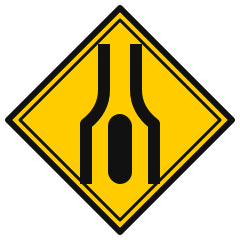
- Divided highway begins
- Lanes reverse direction
- A divided highway ends
- Merge right
A curve warning sign has a small speed sign beneath it. That speed is:
- The legal speed limit that applies for the next 10 kilometres of highway
- The recommended maximum speed through the curve in ideal conditions
- The speed limit for trucks only
- The minimum speed for the curve
A red, eight-sided sign means:
- A railway crossing is a short distance ahead
- Stop completely and go only when it is safe
- Do not enter this road from this direction
- Slow down and yield to traffic on your right
A sign with a green circle around a symbol on a white square means:
- A rest area is ahead
- The action shown is permitted
- The action shown is prohibited
- The action shown is required only at night
What does this sign warn of?
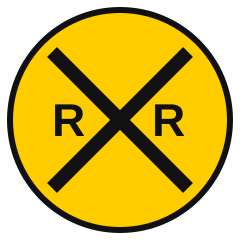
- Road closed ahead
- Rest area ahead
- Intersection with a railway station
- A railway crossing ahead
A yellow warning sign shows a T shape. It warns of:
- A railway crossing just ahead of the intersection
- A two-way road begins ahead
- A designated truck route
- A T intersection where your road ends
What does this sign warn of?
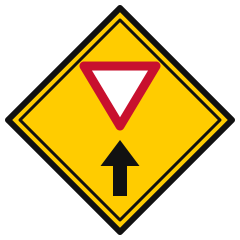
- Pedestrian crossing
- A yield sign ahead
- Road narrows
- Merge immediately
What does this sign warn of?
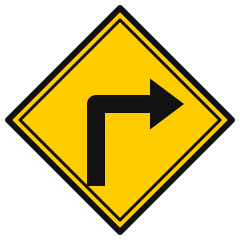
- Side road on the right
- Right turn on red allowed
- Right lane must turn
- A sharp turn to the right
What does this sign warn of?

- Railway signals ahead
- Traffic control signals ahead
- Pedestrian-activated light only
- Flashing light at a school
You see this sign on the back of a farm tractor. What does it tell you?

- The vehicle travels under 40 km/h; be ready to slow down
- The vehicle is a school bus
- Passing is never allowed
- The vehicle carries dangerous goods and must not be passed
What must you do at this sign?

- Slow down and go if no one is coming
- Stop only if other traffic is present
- Yield to traffic on your left only
- Stop completely, then go when it is safe
What does this sign tell you to do?

- Merge without slowing
- Slow down and give the right-of-way
- Stop completely every time before entering
- Watch for falling rocks
What does this sign warn of?
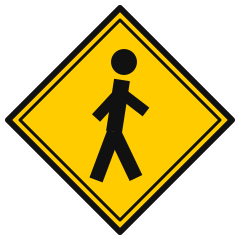
- Pedestrians only, no cars
- Hiking trail ahead
- A pedestrian crossing ahead
- School zone begins
What does this sign mean?

- Pedestrian crossing
- People are working on the road ahead
- The road ahead is closed to pedestrians
- Gravel road ahead
What does this sign mean?

- Two-way traffic ahead
- U-turns are not allowed
- Turn around at the next exit
- Winding road ahead
Orange diamond-shaped signs give information about:
- A hospital
- A school zone
- A scenic route
- A construction area
At an intersection marked for dual left turns, what must you do during the turn?
- Turn wide to give the other car room
- Stay in your lane during and after the turn
- Move to the right lane as soon as possible
- Turn into any open lane
What do yellow diamond-shaped signs do?
- Mark construction zones
- Give rules you must obey
- Warn of a hazard or change in the road ahead
- Show directions and distances to destinations
When does the speed limit in a construction zone apply?
- Only during daylight
- At all times, even when no one is working
- Only when a flag person is present
- Only when workers are present
What does this sign warn of?

- Road narrows
- Lane for turning only
- A divided highway begins ahead
- Traffic merging from the side
What does this sign mean?
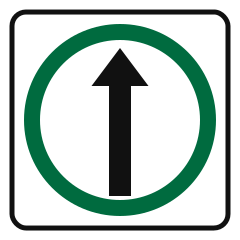
- Passing allowed
- Do not stop here
- Straight through only
- One-way road ahead
What does this sign warn of?

- Winding road
- Gravel road ahead
- Car wash ahead
- Road is slippery when wet
A warning sign says 'Bridge ices'. What should you expect?
- Heavy trucks are not allowed on the bridge during winter months
- The bridge is closed in winter
- Snow tires are required
- The bridge surface may be icy before the rest of the road
What does this sign mean?

- Turn right only
- Keep to the right of the divider ahead
- Merge to the right lane before the bridge
- Right lane ends ahead
In a construction zone, whose signals must you obey?
- The driver in front of you
- The flag person's
- Only the posted signs
- Only traffic lights
A slow-moving vehicle sign is placed on vehicles that travel slower than:
- 80 km/h
- 40 km/h
- 20 km/h
- 60 km/h
What does this sign warn of?

- The road narrows ahead
- Bridge ahead
- Divided highway ends
- Lane for buses ahead
You see this sign on a provincial highway. What does it mean?
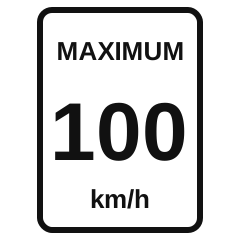
- 100 km/h applies only to trucks
- 100 km/h is the highest speed allowed in ideal conditions
- 100 km/h is recommended at night
- You should drive at least 100 km/h unless traffic is heavy
What does this sign mean?

- Follow a temporary route around a closed road
- The speed limit is reduced for the next 1 km
- The road ahead is closed with no way through
- Construction work on this road has finished
What does this sign warn of?
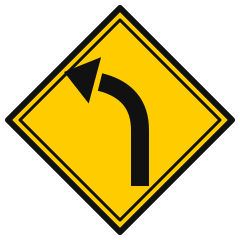
- Left lane ends
- Detour to the left
- A curve to the left ahead
- Left turn only
This sign, with a maximum speed tab below it, marks a:

- Hospital zone
- School zone
- Playground area
- Pedestrian mall
What does this sign mean?
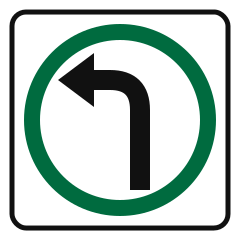
- Left turn only
- Curve to the left
- Left lane ends
- No left turn
What does this sign mean?
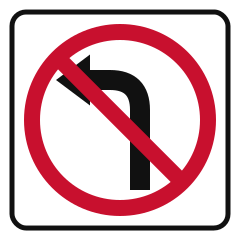
- Sharp curve to the left
- Left lane ends ahead
- Left turn only
- Left turns are not allowed
In a construction zone, speeding fines are doubled when:
- It is after dark
- It is raining
- Workers are present
- Always, at all times
Signs that reserve a lane for buses, taxis or bicycles may show hours and days. What does that mean?
- The lane is reserved only during the times shown
- Only buses may use it at other times
- You may never use the lane
- The lane is closed to all vehicles outside those times
A 'free flow' or added-lane warning sign means:
- Traffic from the right must merge ahead
- The speed limit ends at the next sign
- The highway ahead is a toll-free route
- Roads ahead run side by side but do not join
What does this sign warn of?
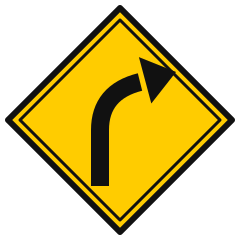
- Right turn only
- Keep to the right of the island
- A curve to the right ahead
- Right lane ends
What does this sign mean?

- 50 km/h is the minimum speed
- You must drive exactly 50 km/h
- The recommended speed for trucks and buses on this road
- 50 km/h is the maximum allowed in ideal conditions
Green rectangular signs with white lettering provide:
- Information such as distance to a destination
- Construction information
- Regulations you must obey, such as speed limits
- Warnings about hazards
What does this sign warn of?

- Divided highway ends
- A divided highway begins
- Road narrows
- Two-way traffic ahead
What does this sign mean?
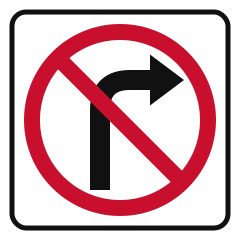
- Curve to the right ahead
- Right turns are not allowed
- Right lane must turn right
- Right turn on red allowed
What does a speed limit sign tell you?
- The maximum speed allowed in ideal conditions
- The minimum speed allowed
- The average speed of traffic
- The speed you should always drive at on that road
What does this sign warn of?
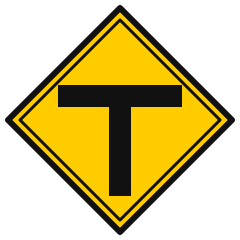
- A side road joins from the right ahead
- Railway crossing
- Your road ends at a T intersection
- Truck route ahead
What must you do at this sign?

- Yield to trains
- Nothing; it is only information
- Stop every time
- Speed up to cross quickly
A square sign with a white message on a black background indicates:
- A detour
- A school area
- Lane control
- A wrong-way warning
What does this sign mean?
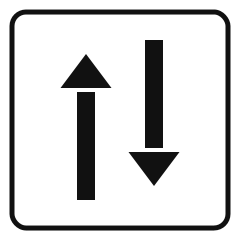
- Divided highway ends
- Passing lane ahead
- Two-way traffic
- Lanes may change direction
What does this sign warn of?

- A winding road ahead
- Detour ahead
- Lane changes allowed
- Slippery road
What does this sign mean?

- No parking at any time
- Do not enter
- Road closed for winter
- Emergency vehicles only
A yellow warning sign shows a school bus. It means:
- A school zone starts here
- Do not pass school buses on this road
- A school bus stop is ahead
- School buses only
Who may park in a stall reserved for persons with disabilities?
- Anyone stopping for less than 5 minutes
- Any driver with a passenger who has a disability, even without a placard
- Only a vehicle displaying the proper placard or licence plate
- Delivery vehicles
What does this sign warn of?
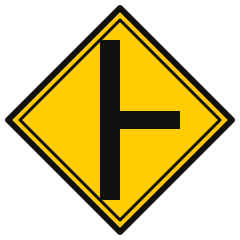
- Right turn only
- Detour right
- A side road joins from the right
- The right lane ends just past the sign
What does this sign mean?

- Passing lane ahead
- Keep a safe following distance
- Do not pass
- Two lanes merge ahead
A chevron sign (a series of arrow shapes) on the side of the road indicates:
- A passing lane ahead
- A sharp bend in the road
- A detour
- A one-way street
A sign with a red circle and a red diagonal slash over a symbol means:
- The action shown is permitted
- The road ahead is closed
- The action shown is not permitted
- The action shown is recommended
What does this sign warn of?

- Right turn only
- Divided highway begins
- Merge from the left
- The right lane ends ahead
What does this sign mean?

- Traffic flows only in the direction of the arrow
- Right lane ends ahead
- Turn right at the next intersection to stay on route
- Detour to the right
What does a 'single file' shared-use warning sign tell drivers?
- Cars must drive single file in the lane for 1 km
- Cyclists may use the full lane; it is too narrow to share
- Cyclists must ride on the sidewalk from this point on
- Bicycles are not allowed on this road at any time
What does this sign tell you?
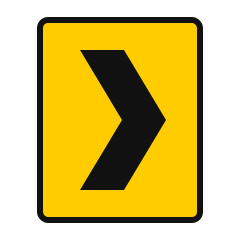
- A sharp bend in the road
- Passing lane begins
- One-way street
- Turn right at the next road
Blue square signs with white symbols indicate:
- A lane reserved for buses and taxis
- A school area where children may cross
- Services such as fuel, food or lodging
- A detour around a construction zone
What does this sign mean?
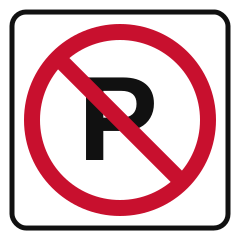
- Parking is not allowed
- Parking for buses only
- Pay parking ahead
- Parking for one hour
Road signs: key rules to remember
Our summary of what the official handbook says on this topic, in our own words. Read it before or after the practice questions above, then check the original chapter. Read the official chapter ↗
Driver's Guide (Spring 2026), Ch. 2 Traffic Control, pp. 25–37
- Red circle with slash on white square: action not permitted (prohibitive).
- Green circle on white square: action permitted (permissive).
- White rectangle with black message: regulatory (e.g. speed limit).
- Pentagon, fluorescent yellow-green: school zone/area.
- White message on black square: lane control.
- Orange diamond: construction information.
- Yellow diamond: warning of a hazard.
- Green rectangle with white message: guide info (destination, distance).
- Blue square with white message: services (fuel, food, lodging, assistance).
- Green square with pictures: transportation services (airport, ferry).
- Octagon red STOP: full stop, proceed when safe.
- Yield triangle: yield to traffic not facing the sign and to pedestrians waiting or in crosswalk.
- Wrong way and Do not enter signs; railway crossing (crossbuck); do not stop on tracks.
- Speed limit signs are in km/h and are maximums for ideal conditions; any unsafe speed is illegal.
- Direction signs: proceed in direction of arrow only; two-way traffic; divider ahead keep right.
- Designated lane signs show directions a lane must travel; reserved lane signs (buses, taxis, bicycles) may show hours/days.
- Dual left/right turn signs allow more than one lane to turn; keep your lane during/after the turn.
- Permissive examples: turn left only, turn right only, straight only, passing permitted, trucks, bicycles, dangerous goods, snow vehicles.
- Prohibitive examples: no left turn, no right turn, no U-turn, do not pass, do not pass bicycles, no pedestrians, no trucks, no bicycles, no dangerous goods.
- Parking/stopping signs: arrow shows where the restriction applies; may show days and times.
- Parking for persons with disabilities: only vehicles with placard or plate may park or stop there.
- Stop ahead, yield ahead, school bus stop ahead, traffic signals ahead.
- Curve/turn signs, winding road; a tab under a curve sign shows recommended maximum speed in ideal conditions.
- Crossings ahead: pedestrian, animal, moose, bicycle, school crosswalk, snow vehicles.
- Intersections ahead: hidden road, Y, T, railway crossing, trucks entering, dead end, roundabout.
- Merging traffic; free flow (added lane) = roads side by side that do not join.
- Narrow road, lane ends, divided highway begins/ends.
- Hill, bump, pavement ends, slippery when wet, rumble strips, falling rock, bridge ices, hazard markers, chevrons for sharp bend.
- Shared-use signs: give cyclists space; single file lane too narrow for side-by-side.
- Slow-moving vehicle sign on the back of vehicles that travel under 40 km/h such as farm tractors.
- Oversized load sign: use caution when passing.
- Construction zones: speed limit applies at all times even when no one is working; fines doubled when workers present; obey flag person.
- Off-road services signs (hospital, fuel, EV charging, camping, police); route markers (Trans-Canada, Yellowhead, bicycle routes); destination signs.
Other topics
- Licensing and the GDL programClass 7 learner rules, the knowledge test, Class 5-GDL probation, licence classes, new residents and documents you must carry.
- Traffic lights and signalsSolid, flashing and arrow lights, right and left turns on red, pedestrian signals and lane reversal signals.
- Speed limits, school and playground zonesDefault speed limits, school zone and playground zone times and speeds, and when you may not pass.
- Pavement markings and lanesYellow and white lines, passing zones, arrows, diamonds, painted islands, bicycle lanes and stop lines.
- Driving basics and parkingPre-drive checks, seat and mirrors, steering, signalling, stopping distance, reversing, parallel and hill parking, where not to park.
- Right-of-way and intersectionsStop and yield signs, four-way stops, uncontrolled and T intersections, keeping intersections clear, roundabouts.
- Turning, turn lanes and U-turnsRight and left turns, turning onto one-way streets, dual turn lanes, two-way left turn lanes and where U-turns are illegal.
- Highways, passing and mergingLane position, blind spots, lane changes, passing rules, emergency stopping lanes, merging, weave zones, curves and hills.
- Emergencies and difficult conditionsEmergency braking with and without ABS, skids, breakdowns, night driving, fog, black ice, collisions and emergency vehicles.
- Responsible and proactive drivingScanning, following distance, space cushion, distracted driving, seat belts and child seats, fuel efficiency and general traffic laws.
- Sharing the roadPedestrians, cyclists, motorcycles, large trucks, school buses, snowplows, railway crossings, LRT and funeral processions.
- Demerits, suspensions and impaired drivingDemerit point thresholds and offences, suspensions, fatigue and medication, and Alberta's Immediate Roadside Sanctions.