PEI Driving Test Practice – Printable PDF
100 original PEI Class 7 practice questions on one printable sheet, signs and rules mixed, with an answer key on separate pages. Print or save as PDF.
- No sign-up
- Every answer explained
- Independent · not a government site
- 100 questions
- Answer key included
- Free, no sign-up
This page turns our Prince Edward Island question bank into a paper test. It lays out 100 Class 7 practice questions, spread across all 18 topics, so you get both halves of what the knowledge test checks: road sign recognition and the rules of the road. That covers Stage 1 supervision and passenger limits, the 1 a.m. to 5 a.m. rule, school buses and the 6-metre stop, funeral processions, roundabouts, winter driving, demerit points and impaired driving. The answer key starts on a fresh page after question 100, so you can work through the sheet before you look.
Every question is original and written from the Prince Edward Island Driver's Handbook and the 2023 Graduated Driver Licensing booklet; each answer in the key has a short explanation and the handbook page it comes from. Highway Safety does not release its test questions, and the handbook gives neither the number of questions nor a pass mark, so no PDF online is the real test. Mark yourself against 80%, the same practice target our 30-question mock exams use. Then go back to the topic tests for anything you missed and finish with a timed mock exam on screen.
PEI Driving Test Practice – Printable PDF
1.You are on a one-way street when a fire truck with its siren approaches. Which way may you pull over?
- Only to the left
- To the right or the left
- Only to the right
- Do not pull over; stop in place
2.You call 911 from a cell phone to report a crash. What should you give first?
- Your name and cell number
- The number of injured
- The weather conditions
- The licence plates involved
3.A school bus stop ahead sign has its amber lights activated. What should you do?
- Stop and wait for the lights to go off
- Speed up to pass before the bus stops
- Change lanes and keep your speed
- Slow down and be prepared to stop
4.You are in an acceleration lane joining a highway. What should you do?
- Speed up to match highway traffic and merge
- Drive slowly until a driver waves you in
- Merge at 50 km/h, then speed up
- Stop at the end and wait for a gap
5.During which hours does the PEI school zone speed limit apply?
- 8 a.m. to 4 p.m., Monday to Friday
- Only when children are visible
- 8 a.m. to 6 p.m., Monday to Friday
- 7 a.m. to 5 p.m., every day
6.What happens if you lend your driver's licence to someone else to use?
- 3 points and a warning letter from the Registrar
- A one-month suspension only
- 12 points and a three-month suspension
- A $100 fine and no points
7.What does this sign tell you?

- Traffic signal lights ahead
- A school crossing ahead
- A police check ahead
- A railway crossing ahead
8.Which shape is always used for a stop sign?
- Eight-sided
- Triangular
- Five-sided
- Round
9.Which drink has about the same alcohol as one bottle of beer?
- Three ounces of liquor
- Two bottles of light beer
- Four ounces of wine
- Eight ounces of wine
10.What does this sign warn of?

- Survey crew ahead
- Fallen rocks ahead
- Men at play ahead
- Road work ahead
11.A school bus ahead has its alternating amber lights flashing. What does this mean?
- It is about to stop; slow down and be alert
- It is safe to pass quickly
- You must stop immediately
- It has finished unloading and is about to pull away
12.Which vehicles must have daytime running lights?
- Only vehicles with tinted windows
- Only commercial trucks
- All vehicles from 1990 and newer
- All vehicles from 2010 and newer
13.Your car has anti-lock brakes and you must stop quickly on ice. What should you do?
- Pump the brakes rapidly to avoid lock-up
- Shift into neutral
- Pull the parking brake
- Press and hold the brake pedal down
14.When must you give a signal besides before turning or changing lanes?
- When stopping at a red light already stopped
- When slowing for a speed bump
- When pulling out from a parked position
- When following a curve in the road
15.A parent who signed the consent form for a 16-year-old withdraws it in writing to the registrar. What happens?
- The permit stays valid until it expires
- The teen must retake the written test
- The permit is cancelled at once
- The teen may drive only with that parent
16.At a special crosswalk, a pedestrian has activated the flashing amber beacons. What must you do?
- Stop only if the pedestrian is in your lane
- Sound your horn and proceed
- Stop before entering the crosswalk
- Slow down and continue carefully
17.You meet an oncoming car on a narrow street. Who should slow down or stop?
- Only the driver going uphill
- Both drivers
- Only the larger vehicle
- Only the driver who arrived second
18.A police officer at a signalled intersection waves you through a red light. What should you do?
- Stop, then turn right only
- Follow the officer's direction
- Ignore the officer and obey the light
- Wait for the light to turn green
19.You are turning left at an intersection. Who must you yield to?
- Only pedestrians
- No one, as long as you signalled before you entered
- Vehicles and pedestrians close enough to collide
- Only vehicles turning right
20.Where should you never install a rear-facing infant seat?
- In the centre rear seat, away from the doors
- In the back seat
- Behind the driver
- In a seat with an active air bag
21.The school bus stop ahead sign is flashing red. What is required?
- Only traffic behind the bus must stop
- Yield to children, then continue
- Slow to half the posted speed
- All traffic must stop
22.You plan to turn left at a roundabout. How should you signal?
- No signal until you exit
- Left the whole way through, until you exit
- Left on entry, right before exiting
- Right on entry only
23.What happens to speeding fines in a signed school zone in PEI?
- They are tripled
- They are doubled
- They stay the same
- Only demerit points increase
24.Within what time after reinstatement must a driver suspended under the demerit system complete the Driver Improvement Course?
- Six months
- One year
- Two years
- 30 days
25.What does this sign warn of?

- A steep incline ahead
- Loose gravel on the shoulder
- Trucks entering the highway
- A runaway lane ahead
26.Which vehicles must display this sign at the rear?

- Those that cannot keep a speed over 40 km/h
- Only trucks carrying dangerous goods
- Those that cannot keep a speed over 60 km/h
- Any vehicle towing a trailer
27.According to the handbook, two drinks plus one light dose of marijuana can equal the impairment of how many drinks?
- Two
- Five
- Three
- Eight
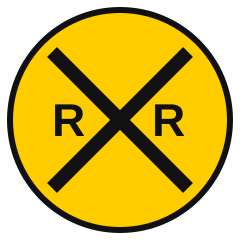
28.What should you do when you see this sign before a crossing?
- Speed up to cross quickly
- Look, listen and slow down
- Sound your horn twice
- Stop at the sign itself
29.You are parked at the curb and about to open your door. Whose responsibility is it to avoid hitting a cyclist?
- No one's if the door opens slowly
- The driver's
- Shared equally
- The cyclist's
30.Where is aftermarket window tint not allowed on a PEI vehicle?
- On any window if mirrors are fitted
- On the rear side windows
- On the windshield and front side windows
- On the rear window
31.How do fatal collisions at night compare with those in daylight, according to the handbook?
- There are three times as many at night
- There are ten times as many at night
- There are about the same number
- There are half as many at night
32.Besides signalling, what does the handbook say the law requires when you pass?
- Sounding your horn
- Turning on hazard lights
- Turning on high beams
- Waving to the other driver
33.If you are not enrolled in driver education, how long must you hold your permit before the road test?
- 365 days
- 275 days
- 180 days
- 90 days
34.Besides separating lanes, what else do white lines mark?
- No-passing zones on hills
- The right shoulder of the road
- Snowmobile crossings
- The left shoulder of ramps
35.Your car breaks down at night on a highway and you can't move it off the road. What should you do?
- Leave it with lights off
- Stand behind the car on the road to wave traffic around it
- Stop in the left lane
- Pull as far right as possible and turn on hazard lights
36.At a red light with no stop line, where must you stop first?
- At the nearest crosswalk
- Beside the traffic light pole
- Past the crosswalk, at the corner
- Halfway into the intersection
37.At a rural stop sign, which direction should you look first when checking traffic?
- Straight ahead
- Behind you in the mirror
- Left, the closest lanes of traffic
- Right, toward oncoming trucks
38.Why should a child never ride on an adult's lap?
- A crash can tear the child from the adult's arms
- Children are safer on laps at low speed
- It distracts the driver's mirrors
- It is only illegal on highways
39.Which way should you pass the object marked by this sign?

- Do not pass it; stop and wait
- On the side the stripes slope up toward
- On whichever side has less traffic
- On the side the stripes slope down toward
40.Driving in town, you must go slower than the flow of traffic. Which lane should you use?
- The centre turning lane
- Whichever lane is emptier
- The left lane
- The right lane
41.Unless a lower limit is posted, what is the speed limit in a signed PEI school zone during school hours?
- 50 km/h
- 60 km/h
- 30 km/h
- 40 km/h
42.For the demerit schedule, who counts as an experienced driver?
- Anyone over age 21
- Licensed over two years and not in the GDL program
- Anyone who has passed a road test
- Someone licensed over one year, even if still in the GDL
43.What does this sign warn you about?

- A side road on the right
- Traffic merging from the side
- Your lane is ending
- A sharp turn ahead
44.What do square information signs along PEI roads usually show?
- A hazard such as a sharp curve
- Nearby services like gas, food or lodging
- The legal speed limit for that stretch of road
- Where passing is not allowed
45.A roadside screening device shows WARN for a driver. What happens right away?
- The licence is suspended for 24 hours
- The driver gets a parking ticket
- Nothing unless it shows FAIL
- The licence is cancelled for one year
46.A railway crossing has a stop sign. Within what distance from the nearest rail must you stop?
- Between 10 and 30 metres
- Between 2 and 10 metres
- Between 5 and 15 metres
- Within 3 metres
47.How much more time and room does the handbook say trucks and buses need to stop than cars?
- About half again as much
- About the same
- Nearly twice as much
- About four times as much
48.When does a PEI vehicle registration expire?
- At the end of March
- On the registered owner's birthday
- On the date the vehicle was bought
- On December 31 each year
49.You are following another vehicle at night. Within what distance should you use low beams?
- 150 metres
- 100 metres
- 60 metres
- 30 metres
50.When may you pass on the right?
- On a road with two or more lanes in your direction
- When the car ahead signals right
- On any road with a paved shoulder wide enough for a car
- When the driver ahead is slow
51.You pass your road test through a driving school. Within how many days must you get your Class 5 photo licence?
- 30 days
- 10 days
- 90 days
- 60 days
52.You see diagonal crosshatch markings before a traffic island. What should you do?
- Drive over them to pass
- Park on them in an emergency only
- Use them as a turning lane
- Keep off them; they are not a travel lane
53.What must you do before leaving your parked vehicle?
- Leave the keys under the seat
- Turn on the hazard lights
- Set the brake, stop the engine and remove the keys
- Leave it running if you'll only be gone a minute or two
54.What must you do at a flashing red light?
- Wait for it to turn green
- Slow down and go with caution
- Stop completely and go when safe
- Stop only if traffic is coming
55.You and another car reach a four-way stop at the same time. The other car is on your right. Who goes first?
- Whichever car is larger
- You, since you are on the left
- The driver who signals first
- The car on your right
56.Injured people are still inside a crashed car and there is no fire. What should you do?
- Pull them out right away
- Leave them in the car until trained help arrives
- Sit them up in their seats to help them breathe easier
- Walk them to your car
57.What does this sign tell you about the street?

- You must turn in the arrow's direction at the corner
- Traffic may travel only in the arrow's direction
- A detour follows the arrow
- The lane ahead ends on that side
58.When should you slow down to leave a highway using a deceleration lane?
- While still in the travel lane
- Only after you reach the end of the exit ramp
- Before you signal
- After you have entered the deceleration lane
59.Unless signs show otherwise, what is the basic speed limit in an urban area of PEI?
- 40 km/h
- 70 km/h
- 60 km/h
- 50 km/h
60.You are caught driving 40 km/h over the posted limit. How many points does the handbook list?
- 3
- 9
- 6
- 12
61.Why does a BRIDGE FREEZES warning sign matter in winter?
- Bridges are salted less often than roads
- Bridge decks stay warmer than the road
- Ice can form on a bridge before the road
- Bridges are closed below freezing
62.Which shape is always used for a yield sign?
- Diamond
- Triangular
- Vertical rectangle
- Eight-sided
63.A fully licensed driver's BAC is between .05 and .08 for the first time. What happens?
- A 30-day suspension
- A 24-hour suspension
- A one-year cancellation
- No penalty below .08
64.What does this sign mean?

- The road ahead is one-way
- Trucks must exit here
- Construction has ended
- Follow a detour route
65.You are about to pass a cyclist. What does the handbook say about your horn?
- Honk only at night
- Don't blow it, as it may startle them
- Honk twice as you pull alongside
- Always give a long blast
66.Your load sticks out 1.5 metres past the back of your truck during the day. What must you display?
- Your hazard lights only
- A slow-moving vehicle sign on the load
- A red flag at the end of the load
- Nothing in daylight
67.An oncoming driver's headlights are blinding you. Where should you look?
- At the centre line
- At the right edge of the road
- Directly at the headlights
- At your speedometer
68.May you pass another vehicle in a school zone?
- Yes, if you stay under the limit
- Yes, if the road is clear
- Yes, outside school hours only
- No, passing is not allowed there
69.Where must a Stage 1 driver display the yellow L decal?
- On the driver's side window
- On the windshield, above the inspection sticker
- On the rear bumper
- On the back window, in the lower right-hand corner
70.What do yellow lines on the road separate?
- Traffic moving in opposite directions
- Bicycle lanes from car lanes
- Parking from travel lanes
- Lanes moving in the same direction
71.What is the closest you may park to a stop sign or traffic signal?
- 12 metres
- 2.5 metres
- 30 metres
- 6 metres
72.What should you do when facing a flashing amber light?
- Stop completely, then go when clear
- Speed up to clear the area
- Treat it like a red light
- Slow down and be prepared to stop
73.Is it legal to roll slowly through a stop sign when the way looks clear?
- Yes, if no one is coming from either side
- Yes, at night
- No, rolling a stop sign is illegal
- Yes, in rural areas only
74.In which type of crash do air bags deploy?
- Frontal impacts
- Side impacts
- Rear-end collisions
- Rollovers
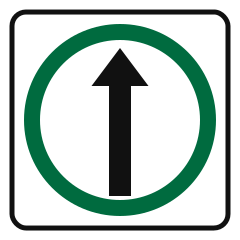
75.What does this lane sign mean?
- Traffic in this lane may turn either left or right
- Traffic in this lane must go straight through
- Passing permitted in this lane
- One-way street ahead
76.In a two-lane roundabout, which lane must you use to turn left?
- The right-hand lane
- Either lane
- The lane with fewer cars
- The left-hand lane
77.You are towing a trailer. What following interval should you use?
- Six seconds
- Three seconds
- Two seconds
- Four seconds
78.How many demerit points are given for failing to wear a seat belt?
- 2
- 12
- 6
- 3
79.What does this sign warn you about?

- A divided highway ahead
- A low underpass ahead
- Road work ahead
- A narrow bridge ahead
80.You pass a playground warning sign. What should you do?
- Change lanes away from the curb
- Reduce speed and be ready to stop suddenly
- Keep your speed and sound your horn
- Stop and wait for a crossing guard
81.When does a 90-day Administrative Driving Prohibition issued at an impaired driving charge take effect?
- Immediately
- Seven days after the charge
- 30 days after the charge
- After the court conviction
82.What does this sign warn of?

- A traffic control person ahead
- A parade route ahead
- A police check ahead
- A school crossing guard just ahead
83.You are beside a large truck and cannot see the driver's face in its side mirror. What does that tell you?
- The truck is about to stop
- The truck driver is busy
- The truck driver cannot see you
- You are at a safe distance
84.Is it legal to drive with only parking lights on when headlights are required?
- Yes, in town only
- Yes, in light fog
- No, it is illegal
- Yes, at dusk
85.Between which dates may studded tires be used in PEI?
- December 1 to March 31
- November 1 to April 30
- October 15 to April 15
- October 1 to May 31
86.The car ahead of you pulls out to pass a truck. What should you do?
- Flash your lights so it speeds up
- Pass the car on the right
- Follow it out and pass both
- Wait until it has completely passed
87.What is the minimum time to complete PEI's GDL program without certified driver education?
- Three years
- 18 months
- Four years
- Two years
88.At an intersection without signals, a pedestrian steps into the crosswalk on your side of the road. What must you do?
- Sound your horn
- Slow down and pass behind
- Stop
- Continue if you got there first
89.When parallel parked, how close to the curb must your wheels be?
- Touching the curb
- Within 0.5 metres
- Within 1 metre
- Within 0.3 metres
90.What is the purpose of the amber light?
- To tell drivers to speed up
- To allow turning vehicles to go first
- To warn that the light is about to turn green
- To let vehicles already in the intersection clear it
91.Where should pedestrians walk on a highway with no sidewalk?
- On the left, facing traffic
- On the right, with traffic
- In the centre of the lane
- On whichever side is smoother
92.You are first to arrive at a serious collision. Where should you park?
- Off the road, a safe distance from the scene
- In the lane behind the crash
- Right beside the damaged cars
- On the opposite shoulder facing traffic
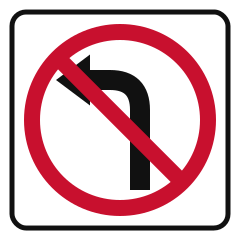
93.What does this sign tell you?
- Turn left only
- Left turns are not permitted
- Sharp curve to the left
- Left lane ends ahead
94.Your right wheels drop onto a soft, low shoulder. What should you do first?
- Brake hard and steer back at once
- Speed up to climb back onto the pavement right away
- Steer sharply left to get back on
- Grip the wheel and ease off the gas; don't brake
95.Under normal conditions, what following distance does the handbook recommend?
- At least three seconds
- At least one second
- At least two car lengths
- At least ten metres
96.An experienced PEI driver reaches 12 demerit points within two years. What happens?
- An interview with Highway Safety
- A three-month licence suspension
- A one-month suspension
- A warning letter
97.You are in the right lane and see this sign. What does it mean?

- Your lane ends ahead; move left safely
- A right turn is required ahead
- The road widens to two lanes
- Slow traffic must use the right lane
98.On PEI traffic signs, what does the colour red generally indicate?
- A permitted movement
- A prohibited manoeuvre
- A tourist service
- A temporary hazard
99.A new driver with a zero-BAC requirement registers alcohol on a roadside screening device. What follows?
- A one-year licence cancellation
- A warning letter and a small fine
- A 24-hour suspension and 90-day prohibition
- A 30-day suspension and no prohibition
100.A construction sign warns of a low shoulder ahead. What does it mean?
- The shoulder is lower than the road surface
- A soft gravel lane is ahead
- The shoulder is closed to parking
- The road is lower than the shoulder
Answer key with explanations
1. B — To the right or the left
On one-way streets you may pull to the right or the left to let the emergency vehicle through.
Right of way and pedestrians · Based on: PEI Driver's Handbook (2022 PDF edition), Ch. 2 Rules of the Road, p. 55
2. A — Your name and cell number
Give your name and cell phone number with area code first, so the call-taker can call you back if the connection breaks.
Seat belts, child seats and collisions · Based on: PEI Driver's Handbook (2022 PDF edition), Ch. 2 & 8 Driver Responsibility; Collisions, p. 180
3. D — Slow down and be prepared to stop
When the amber lights on the school bus stop ahead sign are activated, slow down and be prepared to stop.
Regulatory signs and lane arrows · Based on: PEI Driver's Handbook (2022 PDF edition), Ch. 3 Signs, Pavement Markings and Work Zones, p. 75
4. A — Speed up to match highway traffic and merge
The acceleration lane is for bringing your vehicle up to highway speed so you can blend into a gap at or near the speed of traffic.
Highways, town driving and roundabouts · Based on: PEI Driver's Handbook (2022 PDF edition), Ch. 4 Speed Limits, Following Distances and Driving Skills, p. 106
5. A — 8 a.m. to 4 p.m., Monday to Friday
The limit applies from 8 a.m. to 4 p.m., Monday to Friday, during the months of September to June, in zones signed at the entrance and exit.
Speed limits and following distance · Based on: PEI Driver's Handbook (2022 PDF edition), Ch. 4 Speed Limits, Following Distances and Driving Skills, p. 84
6. C — 12 points and a three-month suspension
Lending or altering a licence, or giving false information to the registrar, brings 12 demerit points and a three-month suspension on conviction.
Demerit points and suspensions · Based on: PEI Driver's Handbook (2022 PDF edition), Ch. 7 Highway Safety Programs, p. 173
7. A — Traffic signal lights ahead
A drawing of a traffic light on a warning sign means signal lights are ahead, so be ready for them to change.
Warning signs · Based on: PEI Driver's Handbook (2022 PDF edition), Ch. 3 & 4 Signs, Pavement Markings and Work Zones; Driving Skills, p. 77
8. A — Eight-sided
The handbook says stop signs always have eight sides, so you can recognise one even when the word STOP cannot be read.
Sign shapes and colours · Based on: PEI Driver's Handbook (2022 PDF edition), Ch. 3 Signs, Pavement Markings and Work Zones, p. 69
9. C — Four ounces of wine
The handbook says one bottle of beer equals 1¼ ounces of liquor or four ounces of wine.
Impaired and distracted driving · Based on: PEI Driver's Handbook (2022 PDF edition), Ch. 4 & 7 Impaired Driving; Highway Safety Programs, p. 127
10. D — Road work ahead
A figure with a shovel on an orange sign means road work ahead. Slow down and watch for workers and equipment.
Construction zones and railway crossings · Based on: PEI Driver's Handbook (2022 PDF edition), Ch. 3 & 4 Signs, Pavement Markings and Work Zones; Driving Skills, p. 71
11. A — It is about to stop; slow down and be alert
Flashing amber lights come on before the bus stops; when meeting or overtaking it, reduce speed and proceed with caution.
School buses, trucks and cyclists · Based on: PEI Driver's Handbook (2022 PDF edition), Ch. 4 & 6 Driving Skills; Bicycles, p. 97
12. C — All vehicles from 1990 and newer
All vehicles 1990 and newer must be equipped with daytime driving lights that come on automatically when the engine starts.
Vehicle registration and equipment · Based on: PEI Driver's Handbook (2022 PDF edition), Ch. 1 Your Driver's Licence, p. 31
13. D — Press and hold the brake pedal down
With ABS, don't pump the brakes; hold the pedal down. ABS lets you steer and brake at the same time.
Night, winter and bad weather · Based on: PEI Driver's Handbook (2022 PDF edition), Ch. 4 Speed Limits, Following Distances and Driving Skills, p. 115
14. C — When pulling out from a parked position
Signals are required before changing lanes, turning, pulling over, pulling out from parking, passing, and after passing when returning to the right lane.
Turning, signalling and passing · Based on: PEI Driver's Handbook (2022 PDF edition), Ch. 4 Speed Limits, Following Distances and Driving Skills, p. 90
15. C — The permit is cancelled at once
Parents or legal guardians may withdraw consent, and once written notice reaches the registrar, the permit or licence is cancelled immediately.
Class 7 permit and graduated licensing · Based on: PEI Driver's Handbook (2022 PDF edition), Ch. 1 Your Driver's Licence, p. 4
16. C — Stop before entering the crosswalk
When the beacons of a special crosswalk are flashing, drivers must stop before entering the crosswalk.
Pavement markings and crosswalks · Based on: PEI Driver's Handbook (2022 PDF edition), Ch. 3 Signs, Pavement Markings and Work Zones, p. 66
17. B — Both drivers
When meeting on a narrow street or road, both drivers must slow down or stop and help each other pass safely.
Parking, stopping and backing · Based on: PEI Driver's Handbook (2022 PDF edition), Ch. 4 Speed Limits, Following Distances and Driving Skills, p. 100
18. B — Follow the officer's direction
Drivers must obey traffic lights except when a police or traffic officer directs otherwise.
Traffic lights and signals · Based on: PEI Driver's Handbook (2022 PDF edition), Ch. 2 & 3 Rules of the Road; Signs, Pavement Markings and Work Zones, p. 62
19. C — Vehicles and pedestrians close enough to collide
A driver turning left must be in the proper lane, signal and yield to any vehicle or pedestrian within or so close to the intersection that a collision could result.
Right of way and pedestrians · Based on: PEI Driver's Handbook (2022 PDF edition), Ch. 2 Rules of the Road, p. 53
20. D — In a seat with an active air bag
If the air bag deploys, a rear-facing infant seat will be thrown into the back of the seat, so never install one in front of an air bag.
Seat belts, child seats and collisions · Based on: PEI Driver's Handbook (2022 PDF edition), Ch. 2 & 8 Driver Responsibility; Collisions, p. 50
21. D — All traffic must stop
When the sign's red lights are activated and flashing, all traffic must stop.
Regulatory signs and lane arrows · Based on: PEI Driver's Handbook (2022 PDF edition), Ch. 3 Signs, Pavement Markings and Work Zones, p. 75
22. C — Left on entry, right before exiting
For a left turn or U-turn, signal left before entering the roundabout and signal right before exiting.
Highways, town driving and roundabouts · Based on: PEI Driver's Handbook (2022 PDF edition), Ch. 4 Speed Limits, Following Distances and Driving Skills, p. 109
23. B — They are doubled
Amendments to the Highway Traffic Act doubled the fines for speeding in a signed school zone.
Speed limits and following distance · Based on: PEI Driver's Handbook (2022 PDF edition), Ch. 4 Speed Limits, Following Distances and Driving Skills, p. 84
24. A — Six months
Drivers suspended under the Demerit Point System must complete the Driver Improvement Course within six months after their licence is reinstated.
Demerit points and suspensions · Based on: PEI Driver's Handbook (2022 PDF edition), Ch. 7 Highway Safety Programs, p. 167
25. A — A steep incline ahead
A truck on a slope is the steep incline ahead sign. Be prepared for a steep grade.
Warning signs · Based on: PEI Driver's Handbook (2022 PDF edition), Ch. 3 & 4 Signs, Pavement Markings and Work Zones; Driving Skills, p. 76
26. A — Those that cannot keep a speed over 40 km/h
Any motor vehicle unable to exceed 40 km/h under normal conditions, and every farm tractor, must show the slow-moving vehicle sign at the back.
Sign shapes and colours · Based on: PEI Driver's Handbook (2022 PDF edition), Ch. 3 Signs, Pavement Markings and Work Zones, p. 35
27. B — Five
Mixing drugs and alcohol multiplies the effect: two drinks with a light dose of marijuana can equal the impairment of five drinks.
Impaired and distracted driving · Based on: PEI Driver's Handbook (2022 PDF edition), Ch. 4 & 7 Impaired Driving; Highway Safety Programs, p. 127
28. B — Look, listen and slow down
Railway advance warning signs tell you to look, listen and slow down because you may have to stop.
Construction zones and railway crossings · Based on: PEI Driver's Handbook (2022 PDF edition), Ch. 3 & 4 Signs, Pavement Markings and Work Zones; Driving Skills, p. 64
29. B — The driver's
Always check for cyclists before opening your door; it is the driver's responsibility not to open it into oncoming traffic.
School buses, trucks and cyclists · Based on: PEI Driver's Handbook (2022 PDF edition), Ch. 4 & 6 Driving Skills; Bicycles, p. 158
30. C — On the windshield and front side windows
Aftermarket darkening material is illegal on the windshield and front side windows; it is permitted on rear side and rear windows if you have two side mirrors.
Vehicle registration and equipment · Based on: PEI Driver's Handbook (2022 PDF edition), Ch. 1 Your Driver's Licence, p. 35
31. A — There are three times as many at night
There are three times as many fatal collisions at night as during daylight because the distance you can see is greatly reduced.
Night, winter and bad weather · Based on: PEI Driver's Handbook (2022 PDF edition), Ch. 4 Speed Limits, Following Distances and Driving Skills, p. 112
32. A — Sounding your horn
The handbook notes that when passing, the law requires you to signal your intention and sound your horn.
Turning, signalling and passing · Based on: PEI Driver's Handbook (2022 PDF edition), Ch. 4 Speed Limits, Following Distances and Driving Skills, p. 96
33. A — 365 days
The wait is 365 days, reduced to 275 days if you are enrolled in a driver education program.
Class 7 permit and graduated licensing · Based on: PEI Driver's Handbook (2022 PDF edition), Ch. 1 Your Driver's Licence, p. 5
34. B — The right shoulder of the road
White lines separate same-direction lanes and mark the right shoulder line. Yellow lines mark the left shoulder on ramps and multi-lane highways.
Pavement markings and crosswalks · Based on: PEI Driver's Handbook (2022 PDF edition), Ch. 3 Signs, Pavement Markings and Work Zones, p. 67
35. D — Pull as far right as possible and turn on hazard lights
Get as far to the right as you can and turn on parking or hazard lights; don't stand on the highway while making repairs.
Parking, stopping and backing · Based on: PEI Driver's Handbook (2022 PDF edition), Ch. 4 Speed Limits, Following Distances and Driving Skills, p. 101
36. A — At the nearest crosswalk
Stop at the marked stop line; if there is none, at the nearest crosswalk; and if there is no crosswalk, before entering the intersection.
Traffic lights and signals · Based on: PEI Driver's Handbook (2022 PDF edition), Ch. 2 & 3 Rules of the Road; Signs, Pavement Markings and Work Zones, p. 63
37. C — Left, the closest lanes of traffic
In rural areas, look twice in both directions, starting with the left, which carries the closest lanes of traffic.
Right of way and pedestrians · Based on: PEI Driver's Handbook (2022 PDF edition), Ch. 2 Rules of the Road, p. 54
38. A — A crash can tear the child from the adult's arms
The force of a collision may tear a child from the adult's arms, and the child may be crushed if the adult isn't belted.
Seat belts, child seats and collisions · Based on: PEI Driver's Handbook (2022 PDF edition), Ch. 2 & 8 Driver Responsibility; Collisions, p. 50
39. D — On the side the stripes slope down toward
For the hazard warning marker, the handbook says to drive in the direction the slopes are pointing.
Regulatory signs and lane arrows · Based on: PEI Driver's Handbook (2022 PDF edition), Ch. 3 Signs, Pavement Markings and Work Zones, p. 74
40. D — The right lane
In a village, town or city, if you must drive slower than the flow of traffic, keep to the right lane so others can pass.
Highways, town driving and roundabouts · Based on: PEI Driver's Handbook (2022 PDF edition), Ch. 4 Speed Limits, Following Distances and Driving Skills, p. 105
41. B — 60 km/h
In a properly signed school zone the limit is 60 km/h unless a lower limit is posted, so watch for a lower sign.
Speed limits and following distance · Based on: PEI Driver's Handbook (2022 PDF edition), Ch. 4 Speed Limits, Following Distances and Driving Skills, p. 84
42. B — Licensed over two years and not in the GDL program
An experienced driver has held a valid licence for more than two years and is not a newly licensed driver under the GDL Program.
Demerit points and suspensions · Based on: PEI Driver's Handbook (2022 PDF edition), Ch. 7 Highway Safety Programs, p. 168
43. B — Traffic merging from the side
The merge sign warns that traffic from another road will be joining your lane, so adjust speed and leave room.
Warning signs · Based on: PEI Driver's Handbook (2022 PDF edition), Ch. 3 & 4 Signs, Pavement Markings and Work Zones; Driving Skills, p. 76
44. B — Nearby services like gas, food or lodging
Information or guide signs are square and point drivers to facilities like gas, hospitals, food, lodging and campgrounds.
Sign shapes and colours · Based on: PEI Driver's Handbook (2022 PDF edition), Ch. 3 Signs, Pavement Markings and Work Zones, p. 72
45. A — The licence is suspended for 24 hours
A WARN or FAIL reading means the officer requests the licence and the driver's privileges are suspended for 24 hours.
Impaired and distracted driving · Based on: PEI Driver's Handbook (2022 PDF edition), Ch. 4 & 7 Impaired Driving; Highway Safety Programs, p. 173
46. C — Between 5 and 15 metres
At a crossing with a stop sign, stop no closer than 5 metres and no farther than 15 metres from the nearest rail.
Construction zones and railway crossings · Based on: PEI Driver's Handbook (2022 PDF edition), Ch. 3 & 4 Signs, Pavement Markings and Work Zones; Driving Skills, p. 65
47. C — Nearly twice as much
Truck and bus drivers need nearly twice the time and room to stop, which is why cutting in front of them is dangerous.
School buses, trucks and cyclists · Based on: PEI Driver's Handbook (2022 PDF edition), Ch. 4 & 6 Driving Skills; Bicycles, p. 99
48. B — On the registered owner's birthday
All vehicle registrations, including plate, marker and permit, expire on the registered owner's birthday or a company's registration date.
Vehicle registration and equipment · Based on: PEI Driver's Handbook (2022 PDF edition), Ch. 1 Your Driver's Licence, p. 28
49. C — 60 metres
Use low beams within 60 metres (200 feet) of a vehicle you are following, or your high beams will reflect in its mirror and blind the driver.
Night, winter and bad weather · Based on: PEI Driver's Handbook (2022 PDF edition), Ch. 4 Speed Limits, Following Distances and Driving Skills, p. 113
50. A — On a road with two or more lanes in your direction
You must not pass on the right except on a street with two or more lanes travelling in the same direction.
Turning, signalling and passing · Based on: PEI Driver's Handbook (2022 PDF edition), Ch. 4 Speed Limits, Following Distances and Driving Skills, p. 95
51. A — 30 days
You must get your Class 5 photo licence within 30 days of passing the road test, or you may have to be retested and pay the fees.
Class 7 permit and graduated licensing · Based on: PEI Driver's Handbook (2022 PDF edition), Ch. 1 Your Driver's Licence, p. 8
52. D — Keep off them; they are not a travel lane
Diagonal markings warn that the paved area is not intended as a traffic lane. Keep to the correct side according to their colour.
Pavement markings and crosswalks · Based on: PEI Driver's Handbook (2022 PDF edition), Ch. 3 Signs, Pavement Markings and Work Zones, p. 68
53. C — Set the brake, stop the engine and remove the keys
When you park you must set your hand or foot brake, stop the motor and remove the keys from the ignition.
Parking, stopping and backing · Based on: PEI Driver's Handbook (2022 PDF edition), Ch. 4 Speed Limits, Following Distances and Driving Skills, p. 101
54. C — Stop completely and go when safe
A flashing red light means bring your vehicle to a complete stop, then proceed only when it is safe.
Traffic lights and signals · Based on: PEI Driver's Handbook (2022 PDF edition), Ch. 2 & 3 Rules of the Road; Signs, Pavement Markings and Work Zones, p. 63
55. D — The car on your right
At three- or four-way stops, when vehicles arrive at about the same time, the vehicle on the left yields to the vehicle on the right.
Right of way and pedestrians · Based on: PEI Driver's Handbook (2022 PDF edition), Ch. 2 Rules of the Road, p. 52
56. B — Leave them in the car until trained help arrives
Moving injured people can worsen possible spine or neck injuries, so leave them in place, keep them warm and reassure them.
Seat belts, child seats and collisions · Based on: PEI Driver's Handbook (2022 PDF edition), Ch. 2 & 8 Driver Responsibility; Collisions, p. 179
57. B — Traffic may travel only in the arrow's direction
A one-way sign marks a street or highway where traffic is allowed in one direction only.
Regulatory signs and lane arrows · Based on: PEI Driver's Handbook (2022 PDF edition), Ch. 3 Signs, Pavement Markings and Work Zones, p. 70
58. D — After you have entered the deceleration lane
Signal before entering the deceleration lane and slow down after you have entered it, so you don't slow traffic on the highway.
Highways, town driving and roundabouts · Based on: PEI Driver's Handbook (2022 PDF edition), Ch. 4 Speed Limits, Following Distances and Driving Skills, p. 106
59. D — 50 km/h
The handbook lists 50 km/h as the basic limit in urban areas when no other limit is posted.
Speed limits and following distance · Based on: PEI Driver's Handbook (2022 PDF edition), Ch. 4 Speed Limits, Following Distances and Driving Skills, p. 84
60. C — 6
Speeding by 30 or more but less than 60 km/h over the limit carries 6 points; less than 30 km/h over carries 3.
Demerit points and suspensions · Based on: PEI Driver's Handbook (2022 PDF edition), Ch. 7 Highway Safety Programs, p. 169
61. C — Ice can form on a bridge before the road
During winter, bridges get ice on their surface before ice forms on the rest of the highway, so approach them with caution.
Warning signs · Based on: PEI Driver's Handbook (2022 PDF edition), Ch. 3 & 4 Signs, Pavement Markings and Work Zones; Driving Skills, p. 116
62. B — Triangular
Yield signs are always triangles. The unique shape tells you to give way even if snow or dirt covers the sign.
Sign shapes and colours · Based on: PEI Driver's Handbook (2022 PDF edition), Ch. 3 Signs, Pavement Markings and Work Zones, p. 69
63. B — A 24-hour suspension
Drivers whose BAC is over .05 but not over .08 are suspended for 24 hours for a first offence.
Impaired and distracted driving · Based on: PEI Driver's Handbook (2022 PDF edition), Ch. 4 & 7 Impaired Driving; Highway Safety Programs, p. 128
64. D — Follow a detour route
A detour sign means the normal route is closed and you should follow the temporary route shown.
Construction zones and railway crossings · Based on: PEI Driver's Handbook (2022 PDF edition), Ch. 3 & 4 Signs, Pavement Markings and Work Zones; Driving Skills, p. 71
65. B — Don't blow it, as it may startle them
Blowing the horn may frighten a cyclist into steering into your path; if you must, tap it lightly while still some distance away.
School buses, trucks and cyclists · Based on: PEI Driver's Handbook (2022 PDF edition), Ch. 4 & 6 Driving Skills; Bicycles, p. 159
66. C — A red flag at the end of the load
A load extending more than 1.2 metres beyond the rear needs a red flag at least 0.3 metres square by day and a red light visible from 150 metres at night.
Vehicle registration and equipment · Based on: PEI Driver's Handbook (2022 PDF edition), Ch. 1 Your Driver's Licence, p. 35
67. B — At the right edge of the road
To avoid being blinded, watch the right edge of the roadway, and slow down if you are blinded.
Night, winter and bad weather · Based on: PEI Driver's Handbook (2022 PDF edition), Ch. 4 Speed Limits, Following Distances and Driving Skills, p. 112
68. D — No, passing is not allowed there
The handbook lists a school zone among the places where you must not pass.
Turning, signalling and passing · Based on: PEI Driver's Handbook (2022 PDF edition), Ch. 4 Speed Limits, Following Distances and Driving Skills, p. 95
69. B — On the windshield, above the inspection sticker
The bright yellow decal with a black L goes just above the motor vehicle inspection sticker, and it can be moved to other vehicles.
Class 7 permit and graduated licensing · Based on: PEI Driver's Handbook (2022 PDF edition), Ch. 1 Your Driver's Licence, p. 5
70. A — Traffic moving in opposite directions
Yellow lines divide traffic travelling in opposite directions. White lines separate lanes going the same way.
Pavement markings and crosswalks · Based on: PEI Driver's Handbook (2022 PDF edition), Ch. 3 Signs, Pavement Markings and Work Zones, p. 67
71. A — 12 metres
You may not stop or park within 12 metres (40 feet) of a stop sign or traffic signal.
Parking, stopping and backing · Based on: PEI Driver's Handbook (2022 PDF edition), Ch. 4 Speed Limits, Following Distances and Driving Skills, p. 101
72. D — Slow down and be prepared to stop
A flashing amber light means caution: slow down, be ready to stop and yield to pedestrians in the crosswalk.
Traffic lights and signals · Based on: PEI Driver's Handbook (2022 PDF edition), Ch. 2 & 3 Rules of the Road; Signs, Pavement Markings and Work Zones, p. 64
73. C — No, rolling a stop sign is illegal
Rolling a stop sign is illegal. Beginners should develop the habit of always making a full stop.
Right of way and pedestrians · Based on: PEI Driver's Handbook (2022 PDF edition), Ch. 2 Rules of the Road, p. 55
74. A — Frontal impacts
Air bags deploy in frontal impacts only. Seat belts protect the whole body in every type of collision.
Seat belts, child seats and collisions · Based on: PEI Driver's Handbook (2022 PDF edition), Ch. 2 & 8 Driver Responsibility; Collisions, p. 49
75. B — Traffic in this lane must go straight through
The straight-through-only arrow means vehicles in this lane may not turn at the intersection.
Regulatory signs and lane arrows · Based on: PEI Driver's Handbook (2022 PDF edition), Ch. 3 Signs, Pavement Markings and Work Zones, p. 79
76. D — The left-hand lane
In dual-lane roundabouts, left turns and U-turns are made from the left lane, right turns from the right lane, and straight through from either.
Highways, town driving and roundabouts · Based on: PEI Driver's Handbook (2022 PDF edition), Ch. 4 Speed Limits, Following Distances and Driving Skills, p. 110
77. D — Four seconds
When pulling a trailer, increase your interval to four seconds because you need more time and space to stop.
Speed limits and following distance · Based on: PEI Driver's Handbook (2022 PDF edition), Ch. 4 Speed Limits, Following Distances and Driving Skills, p. 86
78. D — 3
Failing to wear a seat belt is a 3-point offence. For a GDL driver it also leads to a licence suspension.
Demerit points and suspensions · Based on: PEI Driver's Handbook (2022 PDF edition), Ch. 7 Highway Safety Programs, p. 169
79. D — A narrow bridge ahead
Two lines that pinch inward show a narrow structure such as a bridge ahead. Slow down and watch for oncoming vehicles.
Warning signs · Based on: PEI Driver's Handbook (2022 PDF edition), Ch. 3 & 4 Signs, Pavement Markings and Work Zones; Driving Skills, p. 76
80. B — Reduce speed and be ready to stop suddenly
Children may run onto the road near playgrounds, so the handbook says to slow down and be prepared to make an emergency stop.
Sign shapes and colours · Based on: PEI Driver's Handbook (2022 PDF edition), Ch. 3 Signs, Pavement Markings and Work Zones, p. 70
81. B — Seven days after the charge
Police can issue a 90-day prohibition when charging a driver; it becomes effective seven days after the date of the charge.
Impaired and distracted driving · Based on: PEI Driver's Handbook (2022 PDF edition), Ch. 4 & 7 Impaired Driving; Highway Safety Programs, p. 128
82. A — A traffic control person ahead
A person holding a flag on an orange sign warns of a traffic control person ahead. Obey their signals.
Construction zones and railway crossings · Based on: PEI Driver's Handbook (2022 PDF edition), Ch. 3 & 4 Signs, Pavement Markings and Work Zones; Driving Skills, p. 72
83. C — The truck driver cannot see you
Trucks and buses have large side No-Zones. If you can't see the driver's face in the side mirror, the driver can't see you.
School buses, trucks and cyclists · Based on: PEI Driver's Handbook (2022 PDF edition), Ch. 4 & 6 Driving Skills; Bicycles, p. 98
84. C — No, it is illegal
At times when lights are required, it is illegal to use parking lights alone.
Vehicle registration and equipment · Based on: PEI Driver's Handbook (2022 PDF edition), Ch. 1 Your Driver's Licence, p. 31
85. D — October 1 to May 31
Studded tires may be used only between October 1 and May 31; using them at any other time is unlawful.
Night, winter and bad weather · Based on: PEI Driver's Handbook (2022 PDF edition), Ch. 4 Speed Limits, Following Distances and Driving Skills, p. 114
86. D — Wait until it has completely passed
Never pull out to pass behind another vehicle that is also passing; wait until the first car has completely passed and your view is clear.
Turning, signalling and passing · Based on: PEI Driver's Handbook (2022 PDF edition), Ch. 4 Speed Limits, Following Distances and Driving Skills, p. 96
87. A — Three years
The GDL program takes at least three years; drivers in a certified driver education program can finish in two years plus 275 days.
Class 7 permit and graduated licensing · Based on: PEI Driver's Handbook (2022 PDF edition), Ch. 1 Your Driver's Licence, GDL booklet (Aug. 2023) p. 16
88. C — Stop
At intersections without traffic signals, drivers must stop when a pedestrian enters the crosswalk on or close to their side of the road.
Pavement markings and crosswalks · Based on: PEI Driver's Handbook (2022 PDF edition), Ch. 3 Signs, Pavement Markings and Work Zones, p. 66
89. D — Within 0.3 metres
Where parallel parking is permitted, the vehicle's wheels must be within 0.3 metres (12 inches) of the curb.
Parking, stopping and backing · Based on: PEI Driver's Handbook (2022 PDF edition), Ch. 4 Speed Limits, Following Distances and Driving Skills, p. 101
90. D — To let vehicles already in the intersection clear it
The amber light gives those already within the intersection time to clear it before the light changes.
Traffic lights and signals · Based on: PEI Driver's Handbook (2022 PDF edition), Ch. 2 & 3 Rules of the Road; Signs, Pavement Markings and Work Zones, p. 62
91. A — On the left, facing traffic
On highways pedestrians should walk on the left facing traffic so they can see approaching vehicles, and stay off the pavement when possible.
Right of way and pedestrians · Based on: PEI Driver's Handbook (2022 PDF edition), Ch. 2 Rules of the Road, p. 59
92. A — Off the road, a safe distance from the scene
Park off the road, far enough away to protect the vehicles from further collisions, then call 911 or send someone to call.
Seat belts, child seats and collisions · Based on: PEI Driver's Handbook (2022 PDF edition), Ch. 2 & 8 Driver Responsibility; Collisions, p. 178
93. B — Left turns are not permitted
A red circle and slash over a left-turn arrow means no left turn is permitted at this location.
Regulatory signs and lane arrows · Based on: PEI Driver's Handbook (2022 PDF edition), Ch. 3 Signs, Pavement Markings and Work Zones, p. 73
94. D — Grip the wheel and ease off the gas; don't brake
Steer firmly with both hands, straddle the edge, lift your foot from the accelerator without braking, and return at a 45-degree angle once slowed.
Highways, town driving and roundabouts · Based on: PEI Driver's Handbook (2022 PDF edition), Ch. 4 Speed Limits, Following Distances and Driving Skills, p. 107
95. A — At least three seconds
Use the time-interval method: count at least three seconds from when the vehicle ahead passes a fixed marker.
Speed limits and following distance · Based on: PEI Driver's Handbook (2022 PDF edition), Ch. 4 Speed Limits, Following Distances and Driving Skills, p. 85
96. B — A three-month licence suspension
Experienced drivers lose their licence for three months when 12 or more demerit points build up within a two-year period.
Demerit points and suspensions · Based on: PEI Driver's Handbook (2022 PDF edition), Ch. 7 Highway Safety Programs, p. 168
97. A — Your lane ends ahead; move left safely
The right lane ends sign warns that the right lane is ending, so you will need to merge into the lane to your left.
Warning signs · Based on: PEI Driver's Handbook (2022 PDF edition), Ch. 3 & 4 Signs, Pavement Markings and Work Zones; Driving Skills, p. 76
98. B — A prohibited manoeuvre
Red is used for manoeuvres that are not allowed, such as a red circle and slash over a turn arrow.
Sign shapes and colours · Based on: PEI Driver's Handbook (2022 PDF edition), Ch. 3 Signs, Pavement Markings and Work Zones, p. 69
99. C — A 24-hour suspension and 90-day prohibition
Breaking the zero BAC rule for new drivers results in a 24-hour roadside suspension and a 90-day administrative prohibition.
Impaired and distracted driving · Based on: PEI Driver's Handbook (2022 PDF edition), Ch. 4 & 7 Impaired Driving; Highway Safety Programs, p. 172
100. A — The shoulder is lower than the road surface
Low and high shoulder signs warn of a difference in elevation between the road and shoulder caused by construction.
Construction zones and railway crossings · Based on: PEI Driver's Handbook (2022 PDF edition), Ch. 3 & 4 Signs, Pavement Markings and Work Zones; Driving Skills, p. 72
Original practice questions by Canada Exam Prep, written from the official handbook. Not official test questions. Free to print for personal study.
FAQ
PEI driving test practice (PDF): common questions
Can I download the real PEI driving test as a PDF?
No. The real questions are not published. The official free PDFs are the Prince Edward Island Driver's Handbook, its French edition, the Guide du conducteur, and the Graduated Driver Licensing booklet. Practice question PDFs, including this one, are written by third parties.
How do I save this practice test as a PDF?
Press Print or save as PDF and choose Save as PDF as the printer. On a phone, the same option is in the share or print menu. Menus, buttons and ads are left off the printed pages.
What score should I aim for on the printed test?
The handbook does not state a pass mark, so ask Highway Safety when you book. We suggest 80 or more out of 100 on this sheet before you sit two of our online mock exams.
Keep practising
- PEI road signs chartAll 39 sign drawings from our PEI Class 7 questions on one page, with meanings: shapes and colours, regulatory, warning, construction and railway signs.
- How to get a learner's permit in PEI
- PEI Class 7 study guide
- PEI Class 7 Mock Exam 1 – 30 QuestionsUntimed practice · answers explained
- PEI Class 7 Mock Exam 2 – 30 QuestionsUntimed practice · answers explained
- PEI Class 7 Practice Test 130 questions with explanations
- PEI Class 7 Practice Test 230 questions with explanations
- PEI Class 7 Practice Test 330 questions with explanations
Practice by topic
- Sign shapes and coloursThe stop, yield and speed limit shapes, what red and green mean on a sign, regulatory, school zone and slow-moving vehicle shapes, wrong-way and playground signs, and square information signs.
- Regulatory signs and lane arrowsDo not enter, no turn and no U-turn signs, one-way and keep right signs, no stopping and no parking, lane arrow signs, the hazard warning marker, school bus stop ahead lights and pedestrian and cycling prohibitions.
- Warning signsNarrow bridges, divided highways, lane endings, stop and signal ahead, chevrons and curve speeds, merges, hills, slippery roads, trucks, T intersections, bicycles, snowmobiles and bridges that freeze first.
- Construction zones and railway crossingsOrange construction signs, flagpersons, the 60 km/h construction zone limit, and railway crossing signs, lights and stopping distances for driving outside PEI, which has no railways.
- Traffic lights and signalsGreen, amber and red lights, green arrows, right turns on red, flashing red and amber lights, school signal lights, pedestrians at signals and police directions.
- Pavement markings and crosswalksYellow and white lines, solid and broken lines, crosshatch markings, stop lines, crosswalk lines, intersection arrows, school crosswalks and special crosswalks with flashing beacons.
- Class 7 permit and graduated licensingWho may apply, documents, the knowledge and vision tests, Stage 1 supervision, passenger and night-time rules, the L decal, waiting periods, the Novice Driver Course and Stages 2 and 3.
- Demerit points and suspensionsWarning, interview and suspension thresholds, new-driver point limits in Stages 2 and 3, point values for common offences, probation, courses that affect points and impoundment.
- Impaired and distracted drivingZero BAC for GDL drivers, the .05 to .08 range, 24-hour and 90-day suspensions, cancellations for convictions, rehabilitation and ignition interlock, alcohol and drug effects, and the hand-held phone ban.
- Speed limits and following distancePEI's basic urban, construction zone and unpaved road limits, the 60 km/h school zone and its hours, doubled fines, slow driving, the three-second rule and stopping distance.
- Right of way and pedestriansFour-way stops, left turns, driveways, stop and yield signs, emergency vehicles, funeral processions with purple lights, crosswalks, white canes and walking on highways.
- Turning, signalling and passingLane changes and blind spots, signalling distances, safe turns, waiting to turn left, right on red, U-turn rules, where passing is forbidden and being passed.
- School buses, trucks and cyclistsAmber and red school bus lights and the 6-metre rule, truck and bus No-Zones, wide right turns, sharing the road with cyclists, bicycle equipment and e-bikes.
- Parking, stopping and backingNo-parking distances from hydrants, crosswalks, stop signs and railway tracks, parallel and angle parking, leaving a vehicle, breakdowns and safe backing.
- Highways, town driving and roundaboutsAcceleration and deceleration lanes, merging, low shoulders, lane use on four-lane highways, town driving, and signalling and lane choice in single- and dual-lane roundabouts.
- Night, winter and bad weatherDimming headlights, over-driving headlights, studded tire dates, winter stopping distances, ABS, black ice, being stranded, skids, wet roads, hydroplaning and fog.
- Seat belts, child seats and collisionsWho must buckle up, infant, toddler and booster seats, belt fit and air bags, when to report a collision, what to report and what to do first at a crash scene.
- Vehicle registration and equipmentRegistration, ownership transfer and inspection, rejected vehicles, headlights and daytime running lights, horn, mirrors, window tint, loads, tires and non-resident vehicles.